10 Betta Enrichment Ideas — Things a Bored Betta Actually Uses
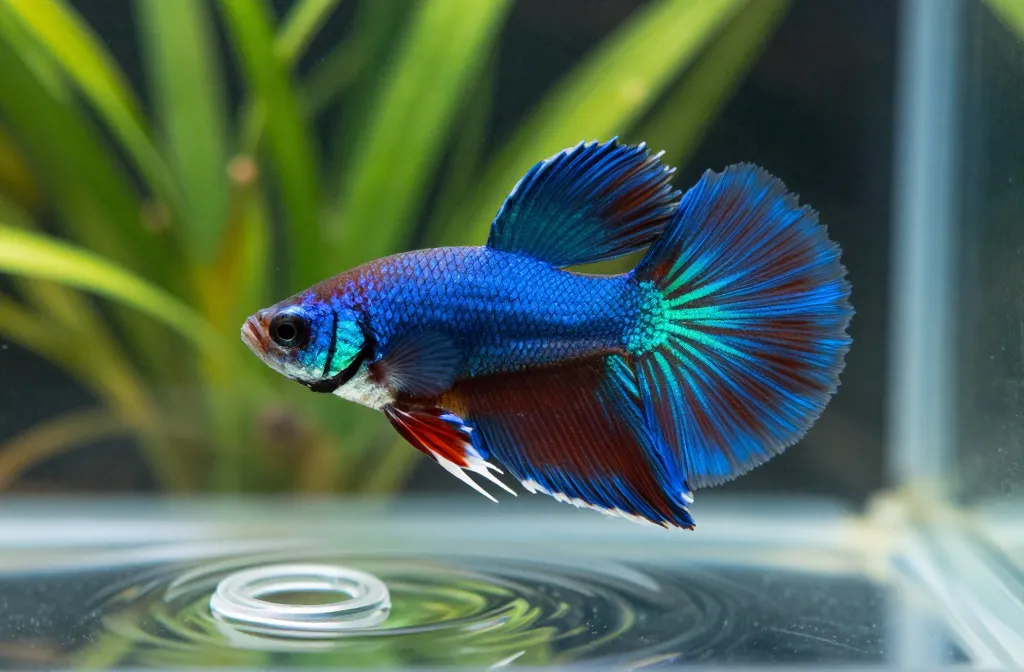
My betta sits on my desk, and when I learned what betta enrichment ideas actually land, his routine got steadier in a week. Betta enrichment ideas don’t have to be fancy or pricey — most of what he uses cost me under $15 and took under 10 minutes to set up. By the end of this, you’ll have a short list you can buy or DIY this month, plus what to skip. The only non-negotiables are a heated, filtered, cycled tank of at least 5 gallons and safe decor with no sharp edges. Everything here layers on top of that base so your fish has reasons to move, hunt, and explore.
1. Floating Feeding Ring: Keeps Food in One Place
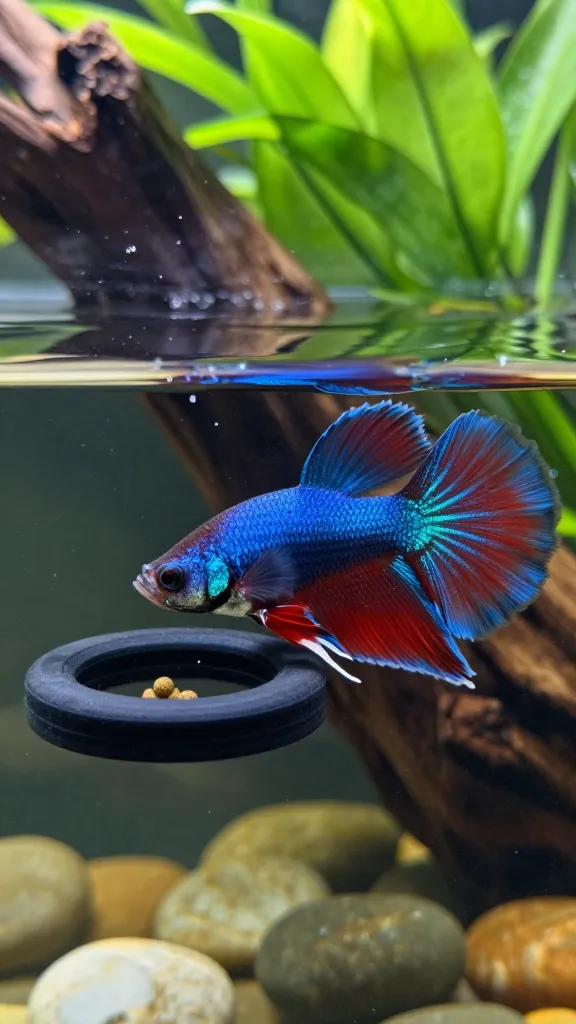
A simple floating ring (foam or silicone) pins pellets to one spot so your betta learns a “table,” reducing frantic surface dashes. Mine cost $3 and turned scatter feeding into a 90-second calm routine, twice a day. If your tank has strong surface flow, this won’t work without dialing the output down — bettas hate surfing to dinner, and surface turbulence should be gentle.
2. The Betta Mirror: 30–60 Seconds, 3 Times a Week
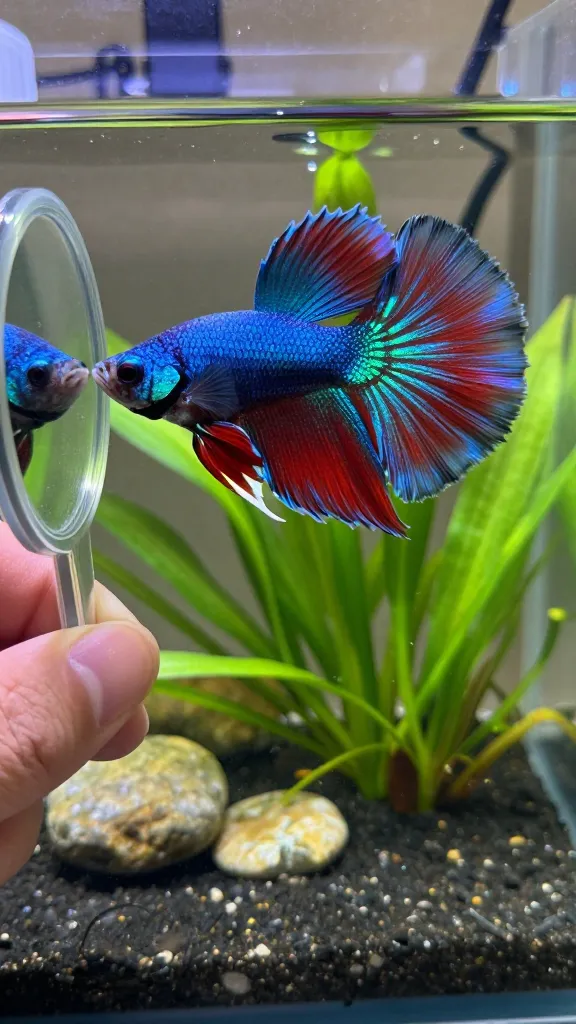
A small handheld mirror triggers short display sessions that exercise fins and build confidence, like calisthenics. I hold mine to the glass for 45 seconds on Monday, Wednesday, and Friday; it took 2 weeks to see fuller flares and quicker color after feeding. Use a timer: more than 2 minutes at a time or daily use can tip into stress, especially in tanks under 5 gallons.
3. Live Food Hunt: – for a Month of Enrichment
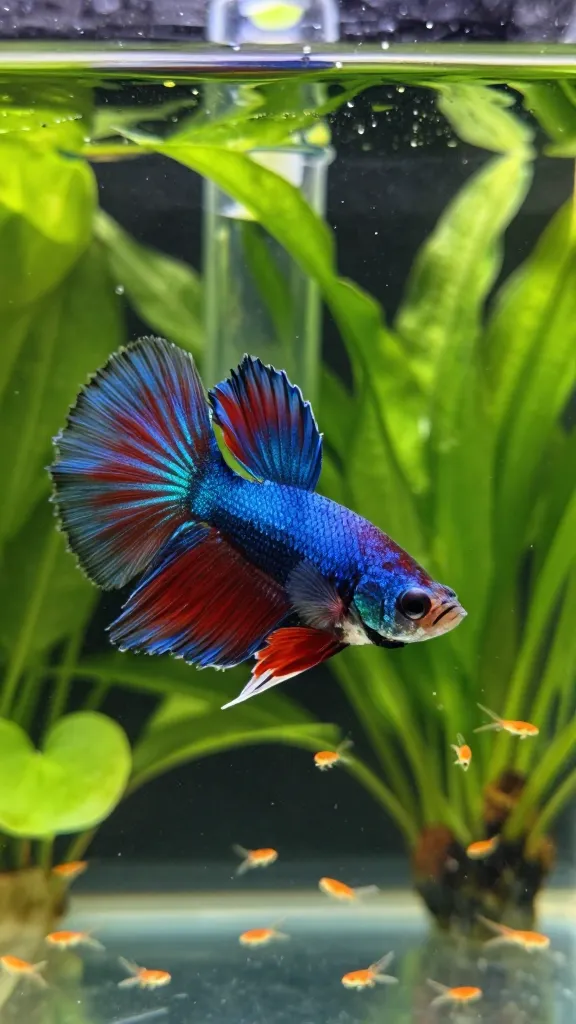
Offer live baby brine shrimp or white worms once or twice a week so your betta chases real prey through plants. A $10 brine shrimp hatchery kit lasted me 5 weeks; one hatch (about a teaspoon of shrimp) fuels a 5-minute hunt that’s clearly the highlight of his week. Skip this if you’re not up for rinsing well — leftover salt or culture water can creep parameters the wrong way in a small tank.
4. Leaf Hammock at the Meniscus: 1 Minute,

A soft, broad leaf placed just under the surface gives your betta a lounge spot to rest his labyrinth organ close to air. I used a $2 silicone leaf and set it at a slight angle; within 24 hours he adopted it for 3–5 minute rests after meals. If the leaf sits too high or right under a light hotspot, it gets ignored — aim for a shaded corner with very low ripple.
5. Low-Flow Maze: 3 Plants, 2 Caves, 1 Hour to Rearrange

Rebuild the scape as a slow labyrinth using three bushy plants (I use Cryptocoryne wendtii, Hygrophila polysperma, and java fern) plus two smooth caves. I spent about $18 on plants and 60 minutes moving hardscape so there’s a clear circuit he can patrol. New scapes take 1–2 weeks to “settle” behavior-wise; if your fish is skittish, change one thing per weekend, not the whole tank at once.
6. Ping-Pong Target Training: 5 Minutes a Day for 10 Days
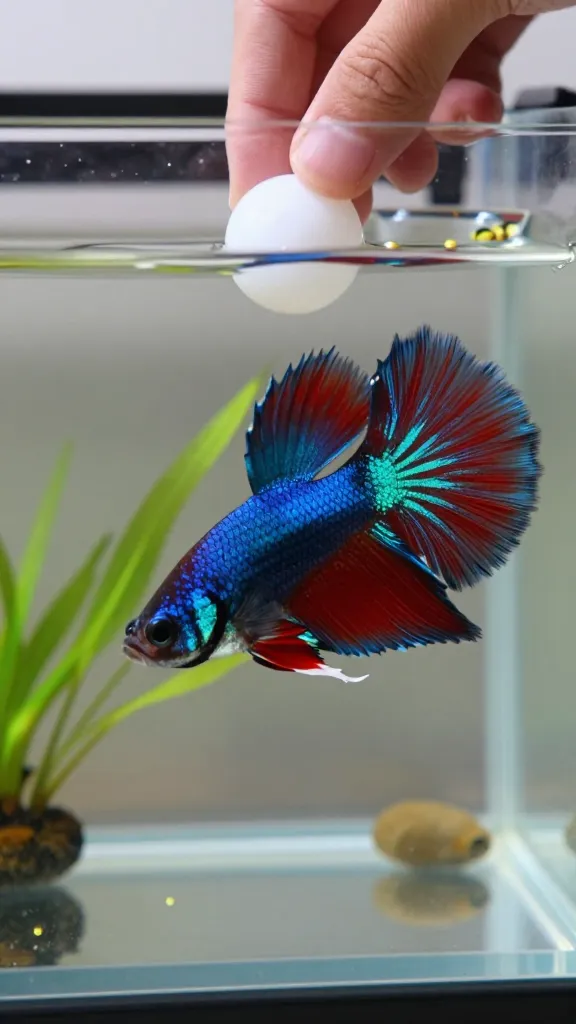
Tap a floating ping-pong ball and reward him with one pellet when he nudges it; bettas learn fast and start pushing the ball on their own. I used a $1 ball and saw consistent “targeting” by day 7 with 5-minute sessions. Use tiny pellets and count them — more than 4–6 pellets per feeding adds up, and constipation is a real risk in a 1-fish tank.
7. Gentle Bubble Curtain: Air Valve at 10–20% Output
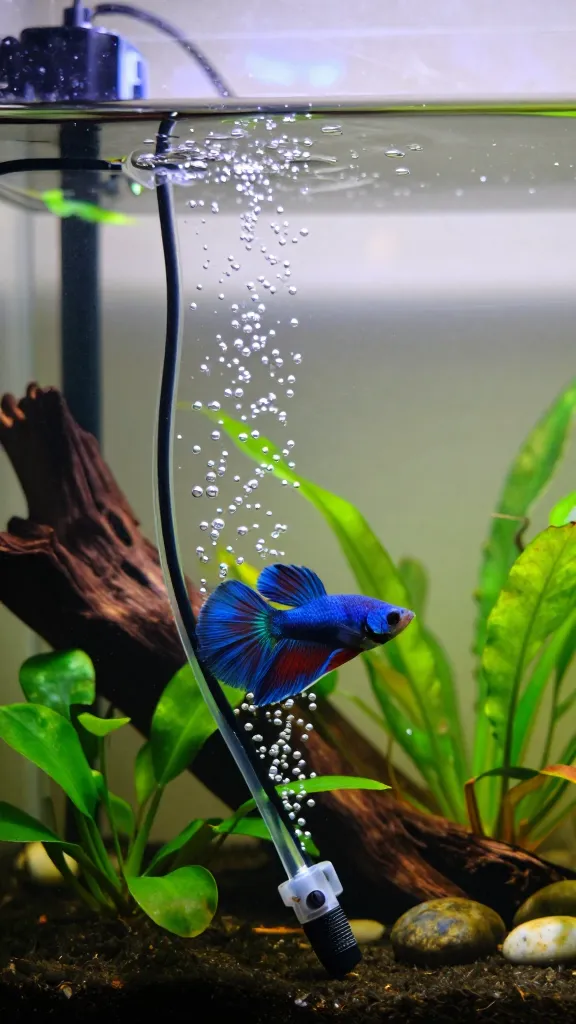
A nano air pump, valve, and a short wand can make a lazy bubble line that breaks boredom without blasting fins. My setup was $15 total; at 10–20% output, he cruises through the slow stream for about 2 minutes after lights on. This is the one thing I feel strongly about: never run vigorous bubbles or a powerhead in a betta tank — still water with mild circulation is welfare, not an aesthetic preference.
8. Dappled Light Window: 6-Hour Photoperiod,
8. Dappled Light Window: 6-Hour Photoperiod, $0
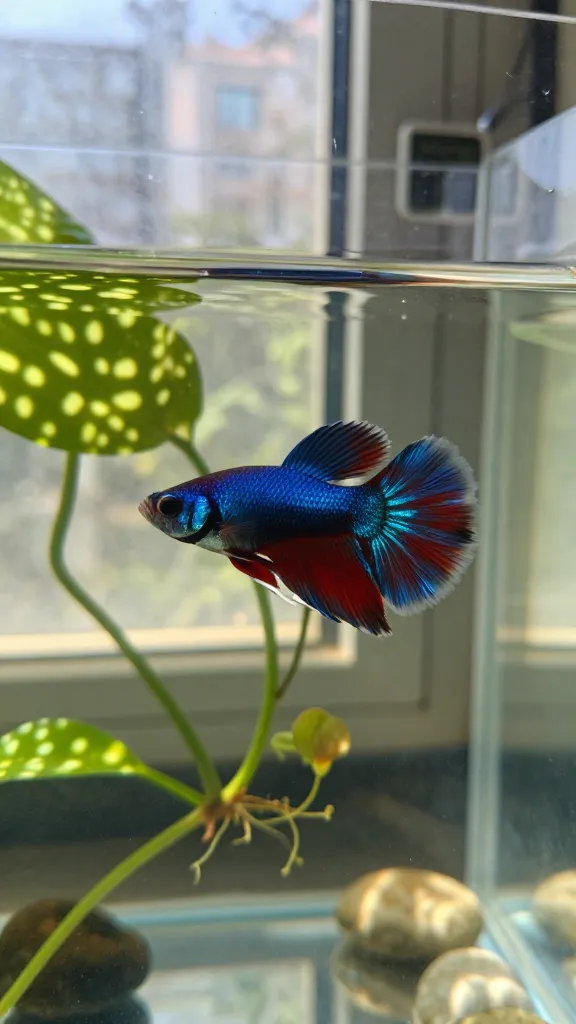
Create moving shade by clipping a piece of window film or a houseplant leaf to cast patterns across the tank, then set a modest 6–8 hour photoperiod. I spent $0 using a spare pothos cutting and watched him “stalk shadows” for 3–4 minutes at a time. If algae starts creeping after 2 weeks, you either need more floating plants or to shave 1 hour off the timer — don’t boost light intensity in a small tank to compensate.
9. Floating Plants as Cover: 2 Species, 3 Weeks to Fill In

A mat of Salvinia minima or Amazon frogbit (Limnobium laevigatum) turns bare glass into a forest canopy your betta will patrol under. I bought two small portions for $8 and they covered half the surface in 3 weeks, which cut his startle response during room movement by half, judging by how often he hid. Keep 30–50% of the surface clear so he can breathe easily; trim weekly so roots don’t choke filtration intakes.
10. Rotating “New Thing” Box: 4 Items, Swap Weekly
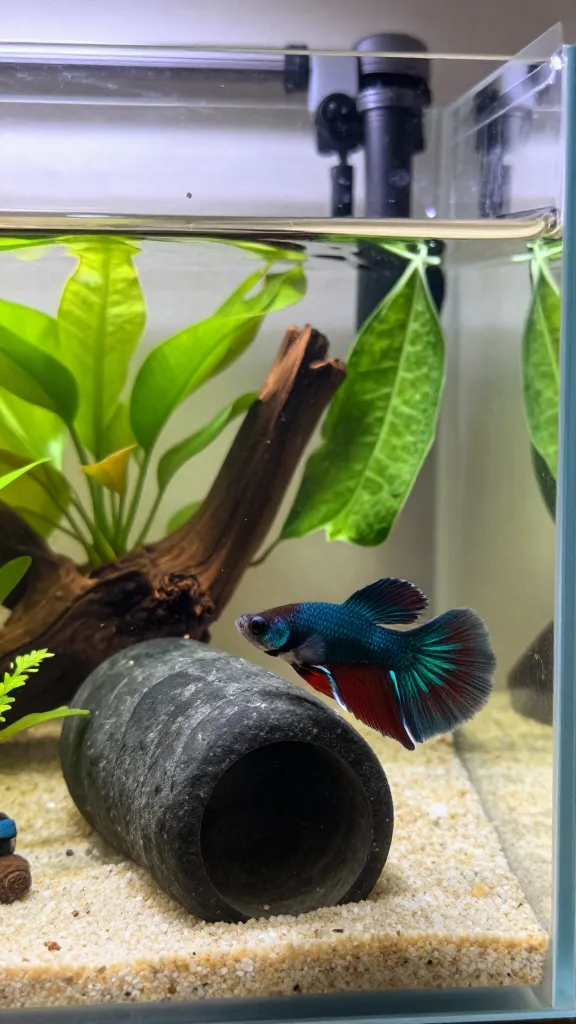
Keep a shoebox with four safe props — a smooth tunnel, a silk plant, a small driftwood branch, and a leaf hammock — and rotate one in every Sunday. Mine cost $24 total and stretched novelty for 2 months before I repeated an arrangement. Some bettas spook at big changes; in a 5-gallon, add one object at a time and leave it for 7 days so exploration beats anxiety.
Frequently Asked Questions
How often should I use a betta mirror?
Limit it to 30–60 seconds, 3 times a week. Short, predictable sessions give exercise without chronic stress, and you should see brighter display within 1–2 weeks if your other parameters are stable. Skip it entirely if your fish shows clamped fins or hides afterward.
What are cheap betta enrichment ideas I can set up this week?
A feeding ring ($3), a ping-pong ball ($1), and a $0 leaf shade are all realistic in one evening. Add floating plants for $6–$12 and you’ll see behavior shifts within 2–3 weeks as roots develop and cover builds. Keep changes small and give each one at least 7 days before judging.
Do I need live plants for a betta tank, or will silk work?
Both work, but live plants add water quality benefits and microfauna that enrich behavior. A couple of crypts and java fern ($12–$20) can establish in 3–6 weeks and noticeably settle a nervous fish. Silk is fine as long as seams are smooth and edges don’t snag fins.
How big should a betta tank be for these enrichment ideas?
Use at least 5 gallons with a heater and gentle filter if you want to layer multiple ideas safely. The extra water volume buffers mistakes and gives room for plants and objects without crowding. In smaller tanks, rotate one enrichment at a time and be stricter about flow.
Are bubbles bad for betta fish?
Strong bubbles are, but a very gentle bubble curtain can be fine and even enriching. Keep output at roughly 10–20% with an air valve and aim for minimal surface agitation so breathing isn’t work. If your betta is avoiding the area or resting more, dial it back or remove it.
Start Small and Let Him Tell You
The pattern that works is simple: one change, one week, watch what your fish repeats. If you do nothing else, spend $3 on a feeding ring and add one handful of floating plants — that’s a 15-minute, under-$15 start you can do on a weeknight.
Questions about your own betta’s setup? Drop them in the comments — I answer all of them. — Maya