10 10-Gallon Betta Tank Setups — Room for Plants, Tankmates and Mistakes

My first 10-gallon betta tank setups lived on a $20 thrifted shelf, and I learned quickly how forgiving 10 gallons can be compared to 3. A 10-gallon betta tank spreads mistakes out — extra room for plants, a small snail crew, and the two weeks it takes beneficial bacteria to catch up. By the end of this, you’ll have ten concrete builds you can set up this month, with parts lists you can price in a single cart and costs that land between $90 and $220 depending on plants and extras. None of them require fancy gear; all of them require a cycled filter before your fish goes in. I’m writing from a desk-and-bookshelf hobby where every dollar has to do real work.
1. The Heavily Planted Calm Water: 0 and 6 Weeks to Settle
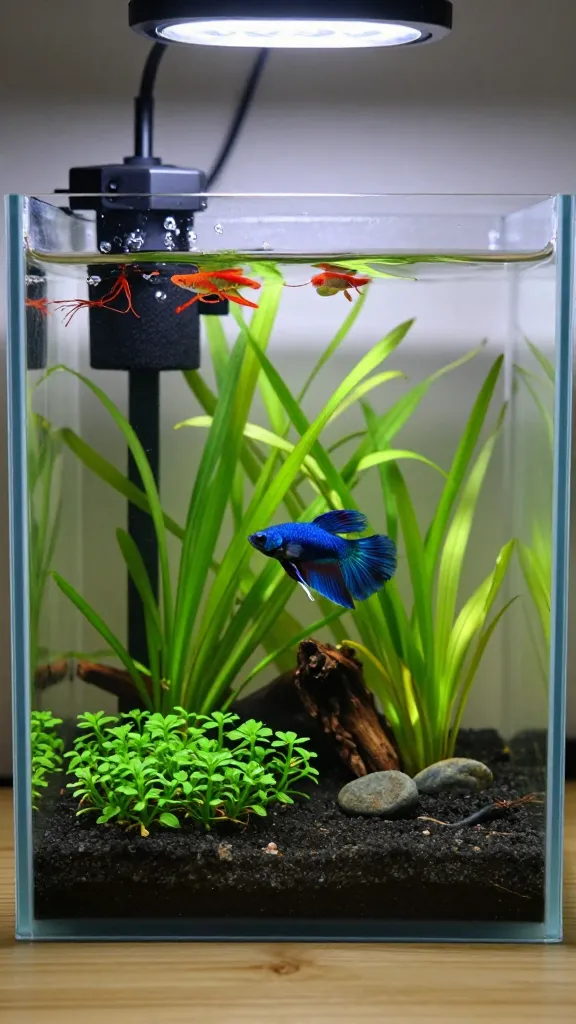
This is a classic: sponge filter, adjustable heater set to 78°F, black sand, and dense stems plus floaters for cover. I used water wisteria (Hygrophila difformis), dwarf sagittaria (Sagittaria subulata), and red root floaters, then added a betta after 6 weeks of plant growth and cycling. My total was about $120 including hardscape and a basic clip-on light. It’s not for anyone wanting instant color — stems can melt in week one and look rough for 10–14 days before bouncing back.
2. The “I Want Tankmates” Betta Community: 0 With 10 Corydoras Pygmaeus
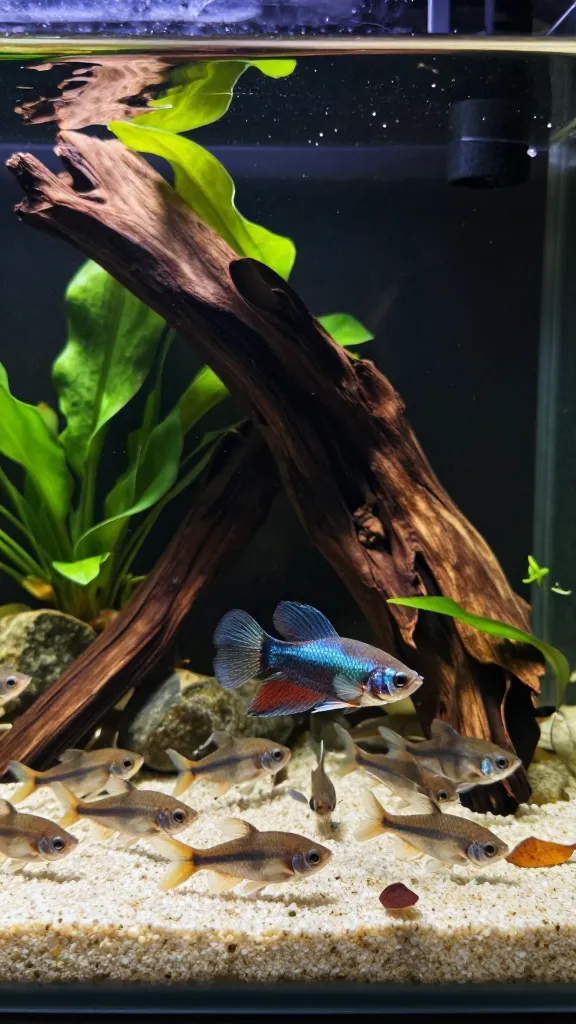
Built around a single betta with a school of 10 Corydoras pygmaeus (adult size ~1 inch), this uses fine sand, big leaf plants like Anubias barteri, and driftwood to break sight lines. I let it run 8 weeks before adding fish so the sand bed matured; the bill was roughly $160–$190 depending on plant count. Skip this if your betta has a track record of harassing bottom dwellers; stress goes both ways and a 10 can feel small when the personality mismatch is real.
3. The 10-Gallon Betta Tank With Shrimp Refuge: 0 and a Moss Wall

I wanted shrimp, so I committed to piles of java moss (Taxiphyllum barbieri), a coarse rock pile, and a breeder box stuffed with subwassertang to seed the main tank with biofilm. After 7 weeks, I introduced 12 cherry shrimp, then the betta two weeks later; I still see baby shrimp monthly. Gear and plants ran about $140. Not all bettas will allow visible shrimp — this only works if you overbuild cover and accept you may still end up with a shrimp-only side colony.
4. The Low-Light, No-CO2 Jungle: 0 and Trims Every 3 Weeks

This one leans on shade-tolerant plants: two Anubias nana, three Java ferns (Microsorum pteropus), and a crypt mix (Cryptocoryne wendtii “brown” and “green”) over inert sand, with a single sponge filter on low air. I run the light 6 hours daily and trim every 3 weeks; it cost around $110. If your room is very bright, algae will push back on the slow growers — floating Salvinia for extra shade fixes that, but it needs weekly scooping.
5. The Betta and Nerite Cleanup Crew: 0 and 1 Algae Film Solved
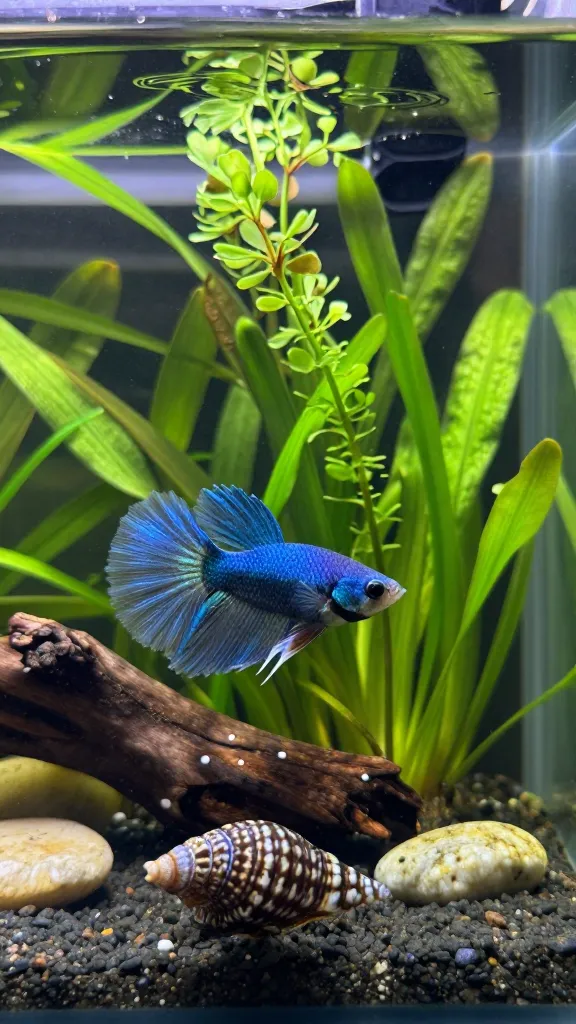
For people who fear algae, I paired one zebra nerite snail with the betta and planted fast: hornwort (Ceratophyllum demersum), Hygrophila polysperma, and Bacopa caroliniana. My brown diatom film disappeared in about 10 days; all-in was about $130. Nerites lay white eggs that don’t hatch in freshwater — they’re harmless dots — so if you hate the look of tiny polka-dots on hardscape, this will annoy you.
6. The Wood and Leaf Betta “Creek”: 0 and Tannins for 2 Months

Branchy spider wood, catappa leaves, and alder cones over dark sand give tea-colored water and calm flow, with Cryptocoryne lutea and Anubias tied to wood. Tannins stayed noticeable for about 2 months between partial water changes; cost landed near $150 thanks to the wood pieces. Some clip-on lights look harsh against amber water — if you care about color, pick one with adjustable white spectrum so your betta’s reds don’t look brown.
7. The High-Flow-compensated “Swimmer” Betta: 0 With Baffle and Staggered Spray
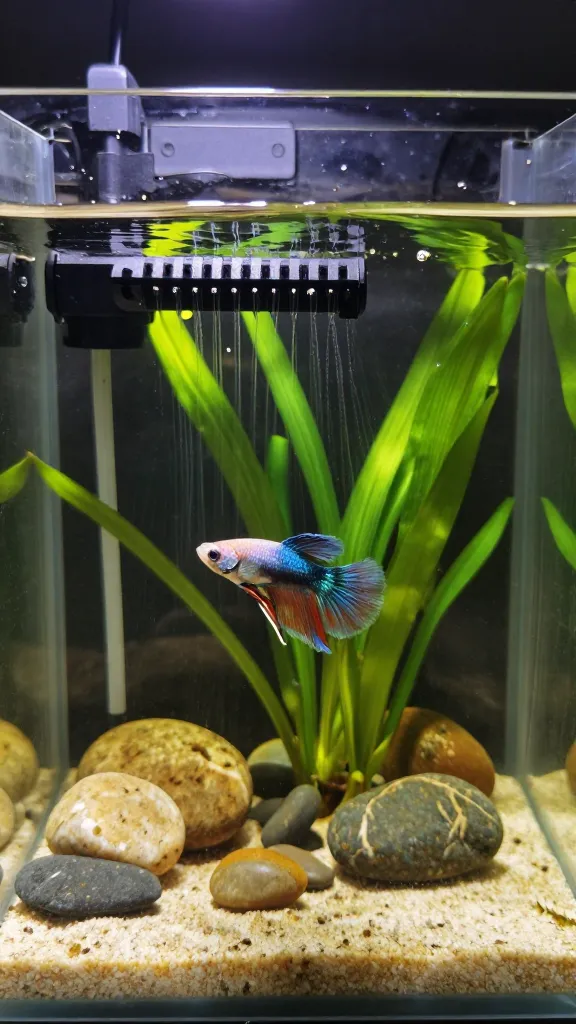
Not every betta hates current; one of mine cruised happily once I baffled a small internal filter and split its return through a staggered spray bar set just under the surface. I planted Vallisneria to sway and used river stones to break flow; the betta chose calm pockets. It was about $170 including extra hardscape and a second sponge backup. This is the one place I’m opinionated: don’t run unbaffled power filters in 10s with a betta — surface rest matters for their labyrinth organ, and you can always add flow but it’s hard to subtract.
8. The Floating Garden: 5 and 5-Minute Weekly Skims

If you love surface action, go heavy on floaters: frogbit (Limnobium laevigatum), Salvinia, and red root floaters, with rooted crypts and a mid-height sword (Echinodorus bleheri) underneath. My maintenance is 5 minutes weekly to thin floaters so the filter intake stays clear; setup was about $115. Leaves will wick water and drip — keep cables tidy and expect to mop tiny rings off the lid or rim now and then.
9. The Cold-Room Winter-Proof: 0 and a Heater Guard

For a room that drops to 66°F at night, I upsized the heater slightly, added a guard so fins can’t touch hot glass, and insulated the back with a foam sheet. It holds a steady 78°F with a 1°F swing, and cost around $140 including the guard and foam. If your house dips below 62°F for long stretches, budget for a second thermometer to double-check — I’ve had a cheap one read 3 degrees off.
10. The “Start Dry, Plant First” Dirt-Cap Experiment: 0 and 4 Weeks Dry Start

I capped a thin layer of organic soil with 1 inch of sand, hardscaped stone, and dry-started dwarf sagittaria and Hydrocotyle tripartita for 4 weeks under plastic wrap before flooding. The carpet took, the betta moved in after the cycle completed at week 7, and the total was about $100 since the plant load came from clippings. Soil methods can go anaerobic if you dig later — decide your layout early and resist the urge to move rocks once it’s flooded.
Frequently Asked Questions
What size heater and filter do I need for a 10-gallon betta tank?
A 50W adjustable heater and a small sponge filter are a solid baseline for a 10. That combo holds 78°F in an average room and provides gentle, oxygen-rich flow. Expect to spend $25–$45 for both pieces together.
How long should I cycle a 10-gallon betta tank before adding the fish?
Give it 4–6 weeks, with plants in from day one and an ammonia source. Testing for 0 ppm ammonia and 0 ppm nitrite on two separate days is the green light. Most stalls I see happen when plants go in late or the filter media is rinsed in tap water.
Can I keep shrimp in a 10-gallon betta tank without them getting eaten?
Yes, but only with heavy cover and a betta that tolerates motion — plan on moss piles, rock crevices, and floaters, and start with 10–15 shrimp so a few losses don’t crash the group. I wait 2 weeks after shrimp before adding the betta to let biofilm build. Budget $25–$50 for the extra plants and hardscape that make this work.
How many tankmates can a betta have in a 10-gallon?
Think in bioload and space, not a number: a betta plus one small group that stays out of his lane works, like 10 pygmy corydoras or a single nerite snail. Add groups at least 2 weeks apart so you can read behavior and water parameters. Skip fin-nippers and anything reaching over 1.5 inches in a 10.
What light schedule grows plants without fueling algae in a 10-gallon betta tank?
Start at 6 hours daily and adjust by 30 minutes every 2 weeks based on growth. Floaters or a dimmable light help if you see film algae — aim for visible pearling on fast stems and slow, steady crypt growth. Most clip-ons that cover a 10-gallon cost $25–$60.
Start Small, Plant Heavy, Leave Room for Course Corrections
If you remember one thing, let it be this: plants and patience turn a 10 into the safest home a betta can get on a desk. This week, buy the sponge filter, heater, and three hardy plants, fill the tank, and start the clock — fish later, not now.
Questions about your own build? Leave them in the comments — I answer all of them. — Maya