10 Goldfish Tank Ideas — Setups Built for the Bioload
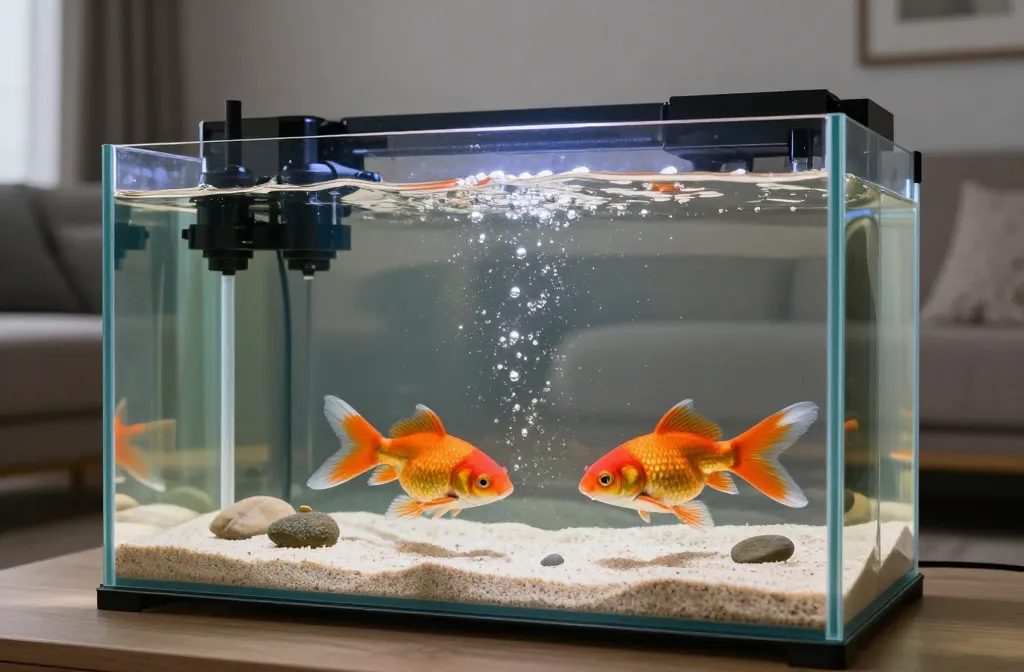
Most goldfish tank ideas fail for the same reason: the fish’s metabolism overwhelms the filter and oxygen supply long before the box rating does. The phrase “goldfish tank ideas” only makes sense when you design for the species’ waste load and constant grazing, not the glass volume on the sticker. By the end of this list, you’ll know which layouts match your room and how to spec filtration, flow, and water changes so ammonia stays at 0 ppm and your water stays clear. These builds range from humble tubs to living-room showpieces, all sized to the fish you actually keep. The numbers are the point — gallons, GPH, watts, and inches so you can pick, not hope.
1. The 40-Breeder “Feeder-Safe” Start: Wide Footprint, Heavy Flow
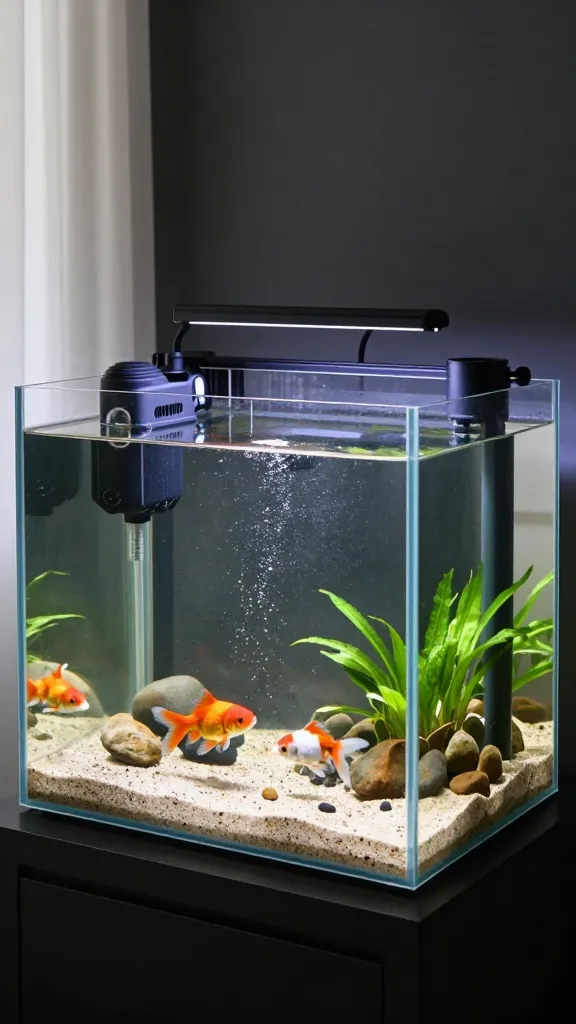
Goldfish excrete ammonia directly across their gills and in copious feces, so dilution and bacterial surface area matter more than height. A 40-breeder’s 36×18 in footprint keeps waste from piling in tight corners and gives space for foraging without deep water pressure on their swim bladders. Pair the tank with 300–400 GPH total filtration (7–10× turnover) split between two filters to spread intake and outflow, and add an airstone running on 2–4 watts to stabilize oxygen. This prevents the classic afternoon oxygen dip that shows up as gulping near the surface. The limit is headcount: this is appropriate for two fancy goldfish to 7–8 in adult size; pushing a third raises nitrate faster than a weekly 50% change can safely remove.
2. River-Style Flow Loop: Oxygen First, Waste Suspended
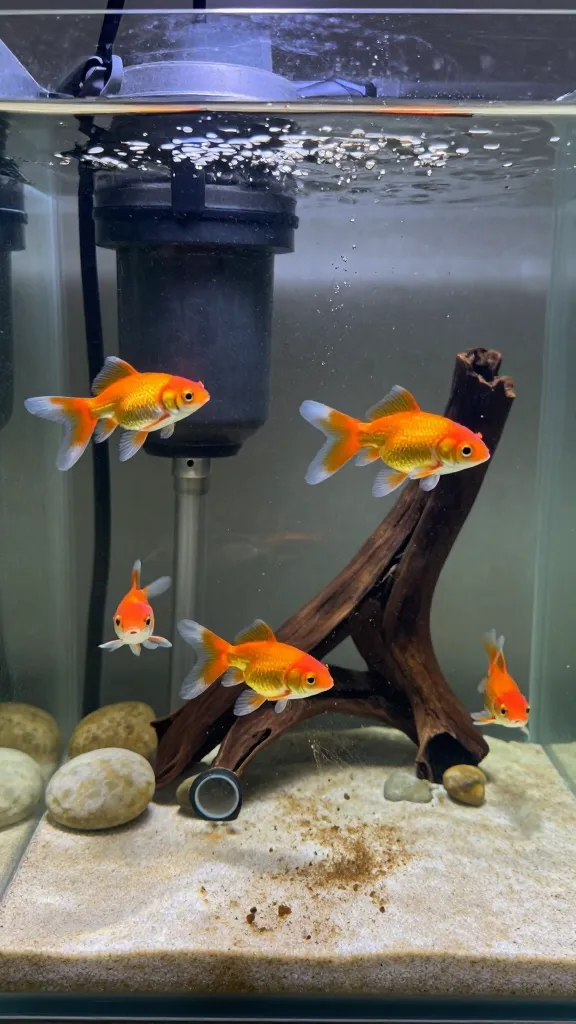
Waste breaks down aerobically only if oxygen reaches the biofilm; fast, directional flow keeps solids suspended long enough to be trapped. Create a loop with two opposing outlets: one pump or canister returns along the back left to right, the second creates a lower countercurrent to sweep debris forward. Aim for 8–12× tank volume per hour in combined flow with outlets angled to ripple the surface, not blast the fish. This setup dramatically reduces dead zones behind decor and increases dissolved oxygen, keeping pH steadier between 7.2–8.0 as CO2 off-gasses. The boundary is fancy varieties with delicate fins: if long-tailed fish pinwheel, dial back to 6–8× and widen the outlet with a spray bar.
3. Sump Under a Stand: Media Volume You Can Rinse Forever
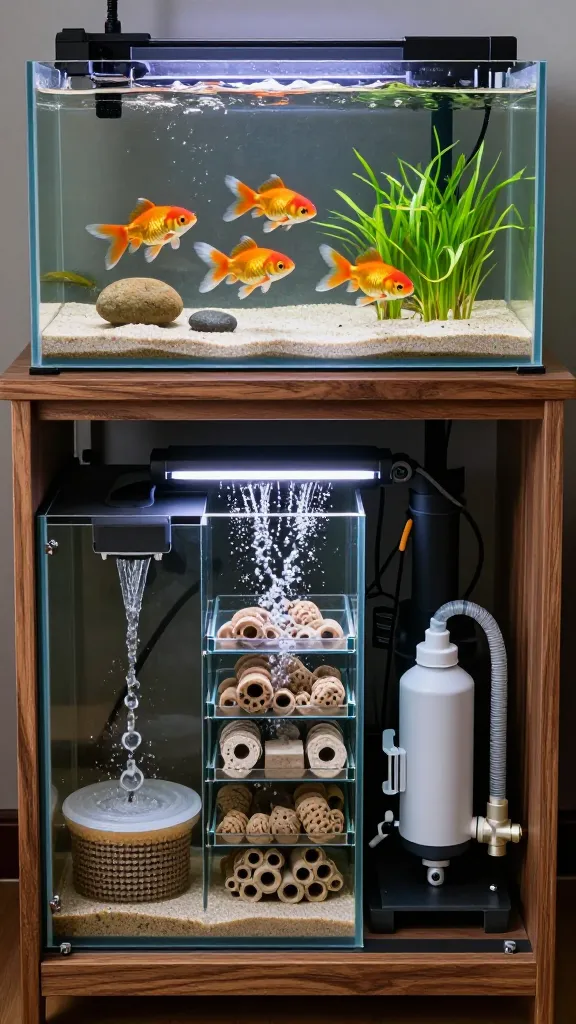
Biological filtration scales with wetted surface area, and sumps let you stack porous media without choking the display with hardware. Water overflows, is skimmed and oxygenated in the drop, then passes through mechanical then biological chambers where high-oxygen water supports nitrifying bacteria. Size a sump to 20–30% of display volume with a return pump delivering 5–7× the display per hour after head loss; pack at least 1–2 liters of high-surface media per goldfish. This build swallows uneaten gel food and poop before it dissolves, so you rinse pads weekly and leave colonies undisturbed. The tradeoff is plumbing and flood risk — you must set the sump waterline so a power cut won’t overflow the sump or drain the tank.
4. Tall Storage Tote Grow-Out: Cheap Volume, Big Water Changes
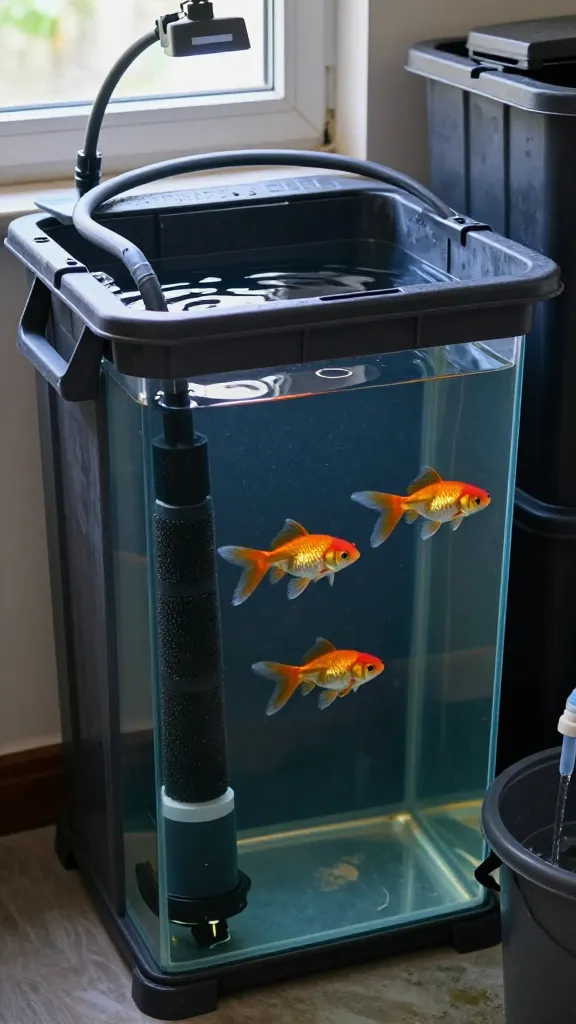
In bare, food-safe totes, the mechanism is simple dilution: big water volume and smooth walls that don’t trap mulm make maintenance faster than any glass box at the same price band. A dark HDPE tote of 50–100 gallons with a tight lid to control jump risk and heat loss, plus dual sponge filters driven by a 4–6 watt air pump, provides huge biofilm area and excellent oxygenation. Run 60–80% weekly water changes by siphon; the rectangular floor keeps detritus collectable. Limits are viewing and heat: totes shed warmth quickly, so use an adjustable heater at 3–5 watts per gallon in rooms below 68°F, and accept that this is function, not furniture.
5. Planted Low-Tech with River Stones: Roots as Nitrate Sinks
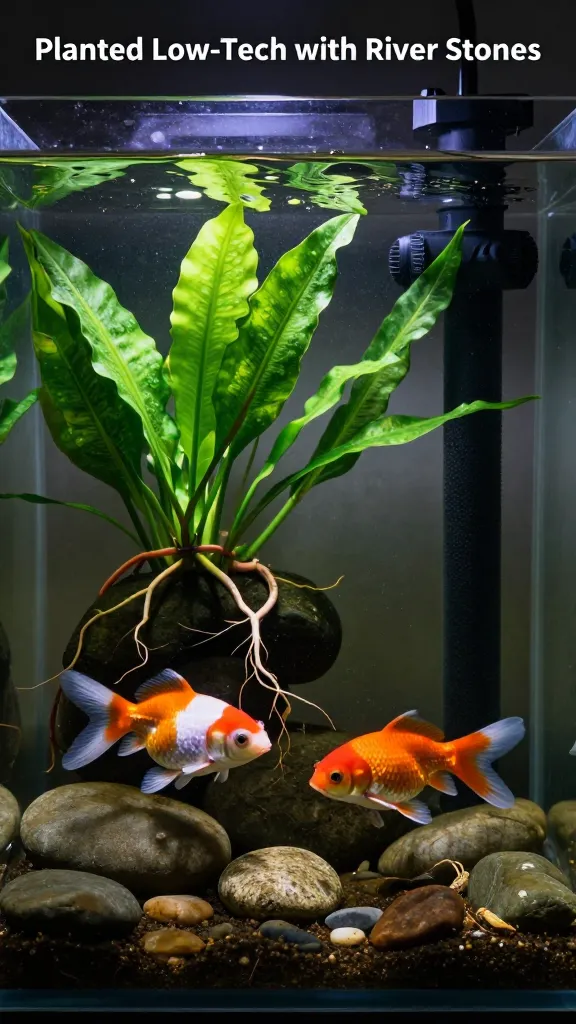
Plants don’t “eat poop”; they take up ammonia and nitrate, shunting nitrogen into leaves and rhizomes while roots stabilize mulm so bacteria finish the job. Hardy species that goldfish rarely decimate (Anubias, Java fern, Bolbitis) tied to 4–6 in rounded river stones add mass the fish can’t uproot and protect rhizomes from nibbling. Provide 40–60 PAR at substrate with a full-spectrum LED on a 7–8 hour photoperiod, keep KH 4–8 dKH so pH doesn’t crash, and still filter at 7–10×. This reduces nitrate rise by roughly a weekly water change’s worth in lightly stocked tanks, but it won’t rescue an overstock — two commons at 10–12 in will outpace plant uptake regardless.
6. Dual Sponge Stack: Surface Area, Redundancy, and Gentle Intake
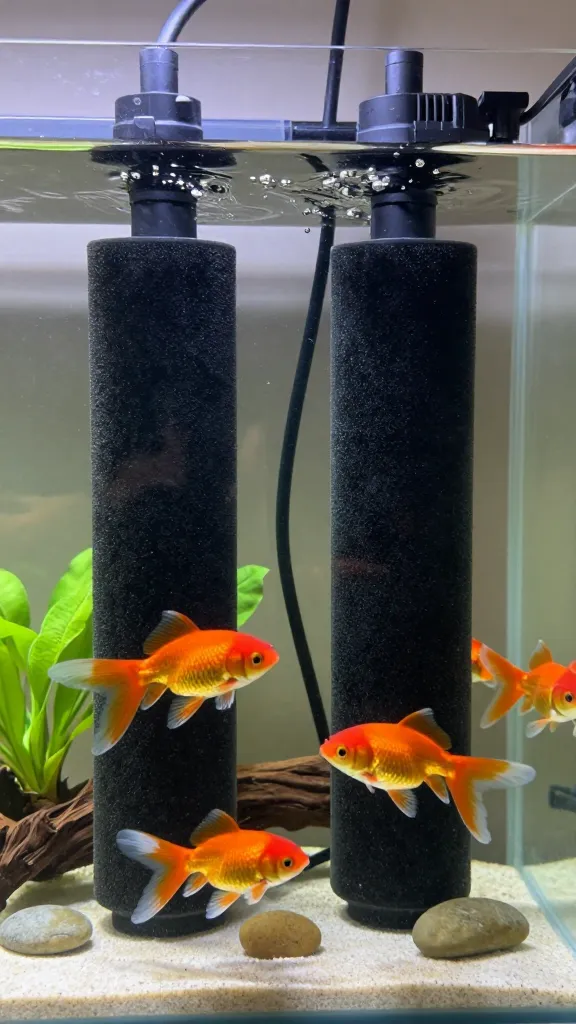
Air-driven sponges move water through thick foam where nitrifiers live; because pores trap particulates, you get mechanical and biological filtration in one piece that can’t crash when the power flickers. Run two large cylinders sized at 2× your tank volume each on an air pump delivering 0.5–1.0 L/min per sponge; set the lift tubes to break the surface for gas exchange. Rinse one sponge every week alternating, in tank water, to maintain colony density and flow. The downside is polish: water won’t be “crystal” like with a fine floss canister, so add a small polishing pad in a hang-on-back if microfine clarity matters to you.
7. Bare-Bottom with Matten Wall: The Detritus Conveyor Belt
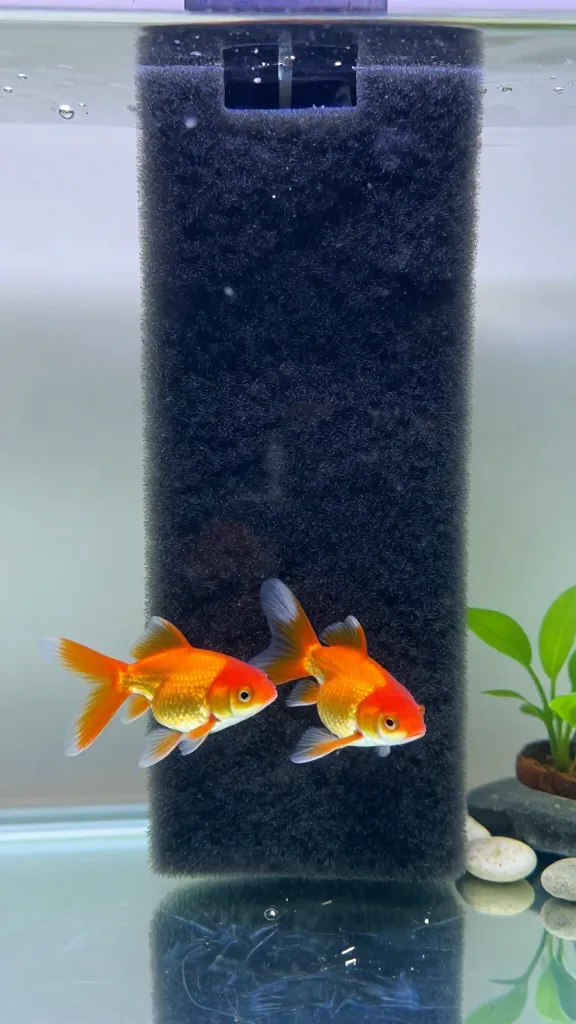
A vertical foam wall across one end of the tank turns the entire panel into a slow, even intake, preventing mulm piles and keeping fry or delicate fins safe. Water pulled through 1–2 in thick PPI 20–30 foam travels uniformly into a pump chamber; the vast surface supports a dense nitrifying biofilm at high oxygen. Size the pump for 6–8× turnover and cut the wall to tight fit so bypass is near zero; the bare glass floor makes daily spot-vacuuming take minutes. Limits are aesthetics and initial cut/fit time; also, if you starve the wall of flow, the front can trap fine solids and channel, so keep the full panel gently drawing at all times.
8. Outdoor Stock Tank Pond: Sunlight, Volume, and Algae Managed
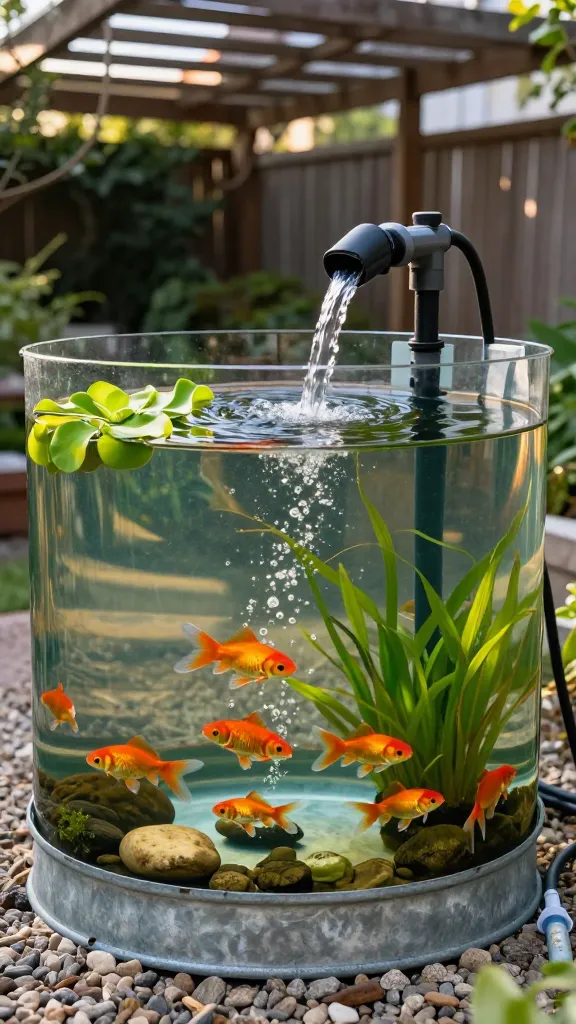
Large volume dilutes waste, and sunlight accelerates photosynthesis, which raises oxygen by day; a waterfall returns oxygenates and strips CO2, stabilizing pH swings. Choose a structural stock tank of 150–300 gallons with a pressurized filter and pump delivering 1–1.5× per hour through a small falls; add shade for 30–50% of the surface to temper noon spikes. Test ammonia 0 ppm, nitrite 0 ppm, nitrate under 40 ppm and run 30–50% changes every 1–2 weeks in summer; airstone at night prevents pre-dawn oxygen dips. The constraint is climate: below 40°F water temperature, heavy-bodied fancy goldfish risk buoyancy issues, and ice cover without aeration can trap gases — plan accordingly or bring fish indoors.
9. The “Two Fancies, One Canister, One HOB” Redundancy Stack
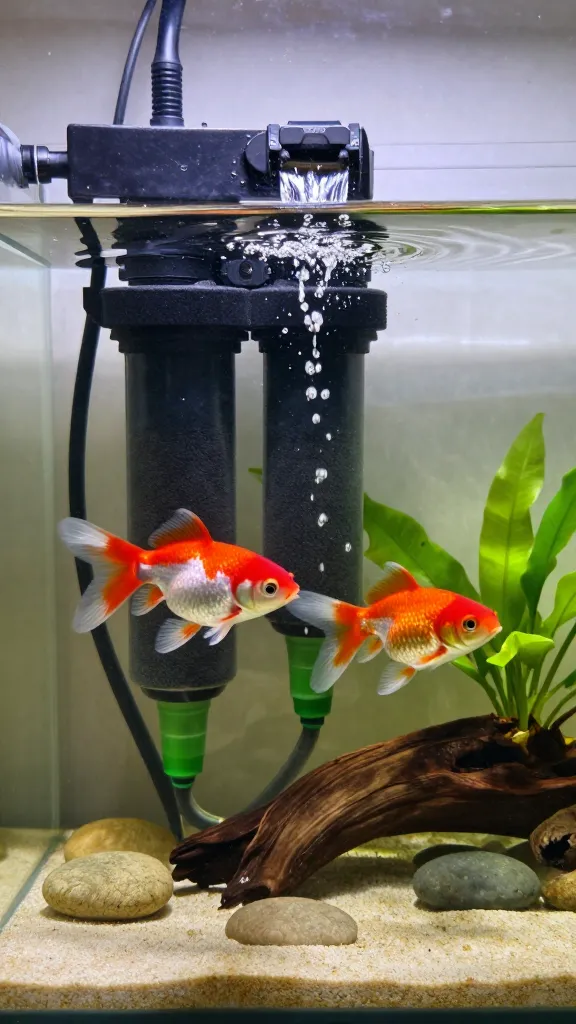
Filtration fails in modes: impellers clog, bio media stalls if starved of oxygen, and power cuts stop everything at once. Running a canister for bulk bio and a hang-on-back for circulation and surface skimming means one device can carry you for days if the other stops. Target 5–6× display volume from the canister and 3–4× from the HOB, with prefilters on both intakes so goldfish waste doesn’t pack the impeller housing; clean prefilters every 3–4 days and deep-clean one unit per month, alternating. I ran both on identical 40-breeders for 6 weeks and the dual-stack held 0 ppm ammonia through a deliberate overfeed that spiked a single-filter control in 36 hours. The cost is more plugs and media, but the safety margin is real.
10. High-Oxygen Warmth: Heater and Air as Insurance, Not Decoration
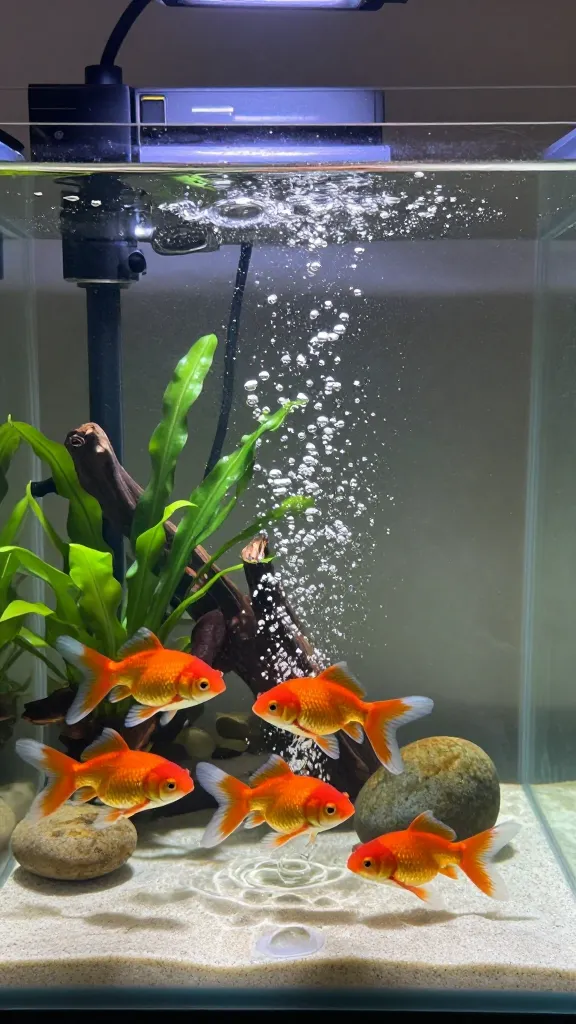
Metabolic rate and the nitrifying bacteria’s activity both track temperature; too cold slows digestion and biofiltration, too warm lowers oxygen solubility. Keep fancies at 70–74°F with an adjustable heater at 3–5 watts per gallon and run an airstone sized to keep the surface perpetually broken; this keeps dissolved oxygen near saturation while bacteria clear ammonia efficiently. This pairing smooths seasonal swings that otherwise show up as constipation and mini-cycles after heavy feeds. The honest limit is summer: above 78°F, oxygen drops fast — if your room runs hot, add a fan across the surface and reduce the photoperiod to limit heat gain.
Frequently Asked Questions
How many goldfish can live in a 40-gallon tank?
Two fancy goldfish are the practical maximum for a 40-gallon. Their adult size of 7–8 in and heavy waste load require 7–10× turnover and 50% weekly water changes to keep ammonia at 0 ppm and nitrate under 40 ppm. Commons and comets outgrow this quickly at 10–12 in and need much larger volumes.
What size filter do I need for a goldfish tank?
Spec filtration by flow and media volume: aim for 7–10× tank volume per hour and enough biomedia to avoid ammonia between cleanings. For a 55-gallon, that’s 385–550 GPH combined, ideally split across two units for redundancy and better oxygenation. Add an airstone so the bacteria always see high oxygen water.
Are planted goldfish aquariums realistic without CO2?
Yes, with tough rhizome plants and the right light. Keep 40–60 PAR at the substrate on a 7–8 hour photoperiod, tie plants to stones or wood, and maintain KH 4–8 dKH to keep pH stable. Stock lightly; plants reduce nitrate rise but don’t replace filtration or water changes.
Do goldfish need a heater if my house is room temperature?
Often, yes. Room air swings more than water, and below 68°F digestion and biofiltration slow while buoyancy issues increase in fancies; hold 70–74°F with a heater rated at 3–5 watts per gallon. If summer temps exceed 78°F, add surface agitation or a fan to preserve oxygen.
What water change schedule should I plan for a stocked goldfish aquarium?
Plan on 50% weekly as a baseline. This reliably controls nitrate under 40 ppm and resets dissolved organics that suppress oxygen transfer, especially with heavy feeding. If nitrate exceeds 40 ppm before week’s end, move to 2× per week at 30–40% or increase plant mass and filtration.
Design for Waste, and the Fish Will Thrive
Goldfish success comes down to oxygen and turnover: hit 7–10× flow and keep the surface broken, and the bacteria will match the bioload. Tonight, time your filter output into a bucket — if you’re not moving at least the tank’s full volume every 6–9 minutes, you know exactly what to fix.
Questions about your own setup? Leave them in the comments and I will work through them. — Nate