10 Small Betta Fish Tank Ideas — Small Done Right, Not Small Done Cheap
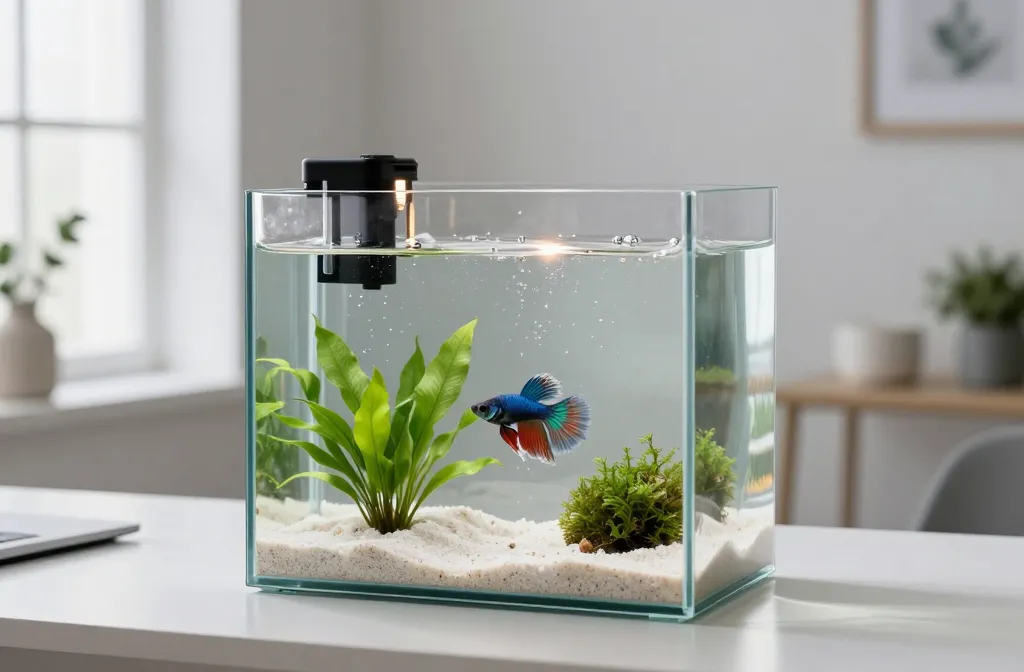
I keep my aquarium hobby on one desk and one bookshelf, so small betta fish tank ideas are personal for me — my first success was a 5-gallon cube that cost me about $95 all in, not counting the fish. Small done right still means filtered, heated, and cycled; small done cheap is where bettas get hurt. By the end of this, you’ll know ten concrete builds, what to buy, what to skip, and the honest cost bands. If you start this week, you can have plants growing in 2 days, a cycle established in 3 to 5 weeks, and a betta cruising under a clip-on light after that.
1. The 5-Gallon Cube: The 0 Starter That Actually Works
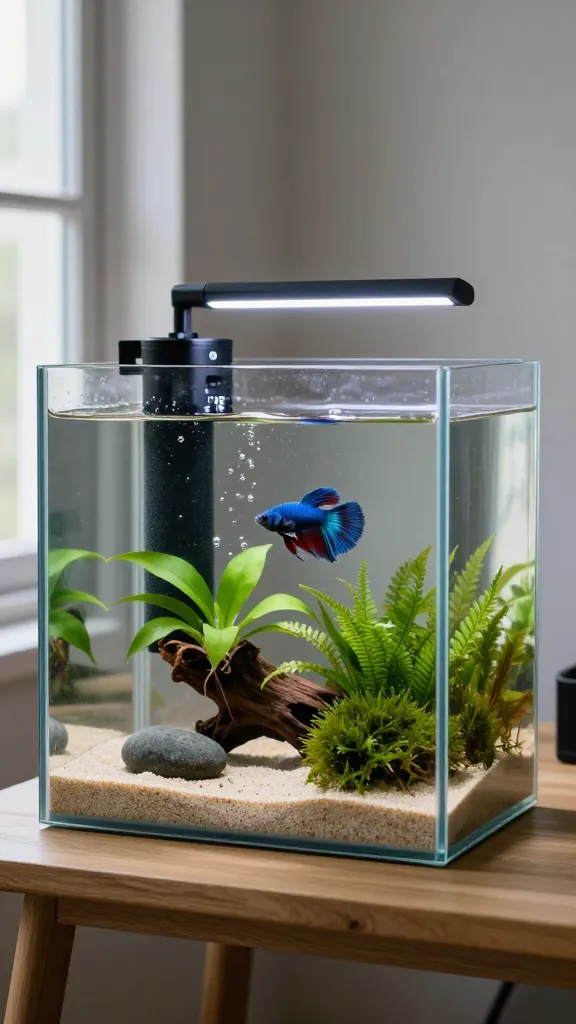
A 5-gallon glass cube with a small sponge filter, an adjustable 50W heater set to 78°F, and a clip-on light is the baseline that keeps a single male Betta splendens comfortable. Add an inch of inert sand and three beginner plants: Anubias barteri, java fern (Microsorum pteropus), and a clump of java moss (Taxiphyllum barbieri). My cube cost $95–$125 depending on plant availability and has run 18 months with weekly 30% water changes. If your home is under 74°F in winter, the heater isn’t optional — skipping it is the fastest way to a lethargic, sick betta.
2. The Long 6-Gallon: Surface for Fins, Calm for Naps
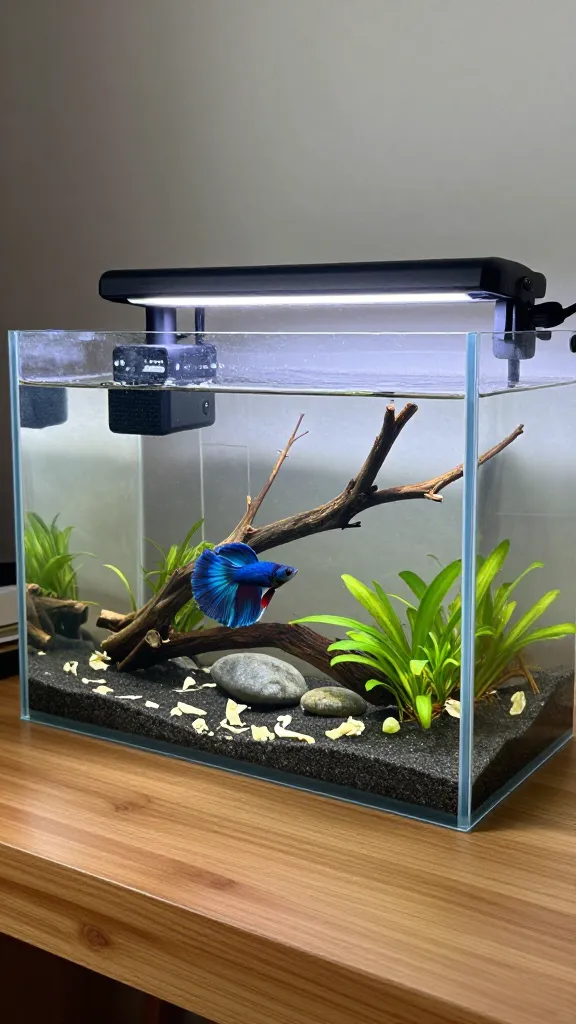
A shallow, longer footprint (about 18–20 inches) lets a betta breathe easily and patrol without sprinting. Pair a baffled sponge filter to keep current gentle, a 50W heater at 78–80°F, and a light that reaches the ends. I paid $120–$160 with hardscape: one spiderwood branch and a few river stones. Long tanks evaporate faster; top off with dechlorinated water midweek so your KH and GH don’t creep upward between water changes.
3. The Planted 7.5-Gallon: Low-Tech Jungle Under 0
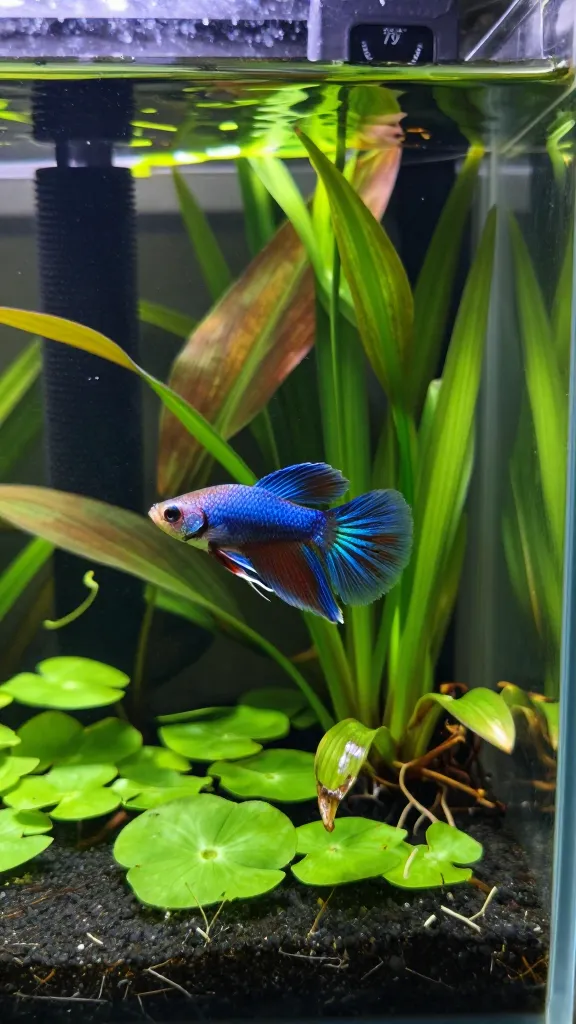
If you can stretch a little, 7.5 gallons forgives beginner wobble and lets plants do more filtration. Use a fine black sand, a small sponge filter, and a 75W heater at 79°F, then plant heavily: Cryptocoryne wendtii, Hygrophila polysperma, and floating Salvinia minima to calm the surface. Mine took 5 weeks to cycle with bottled bacteria and a fishless ammonia source and has held 0 ppm ammonia/0 ppm nitrite since. Crypts can melt the first 2–3 weeks; leave the roots in place and they rebound by week 4–6.
4. The Shelf-Friendly 5.5-Gallon: Quiet and Cheap to Run
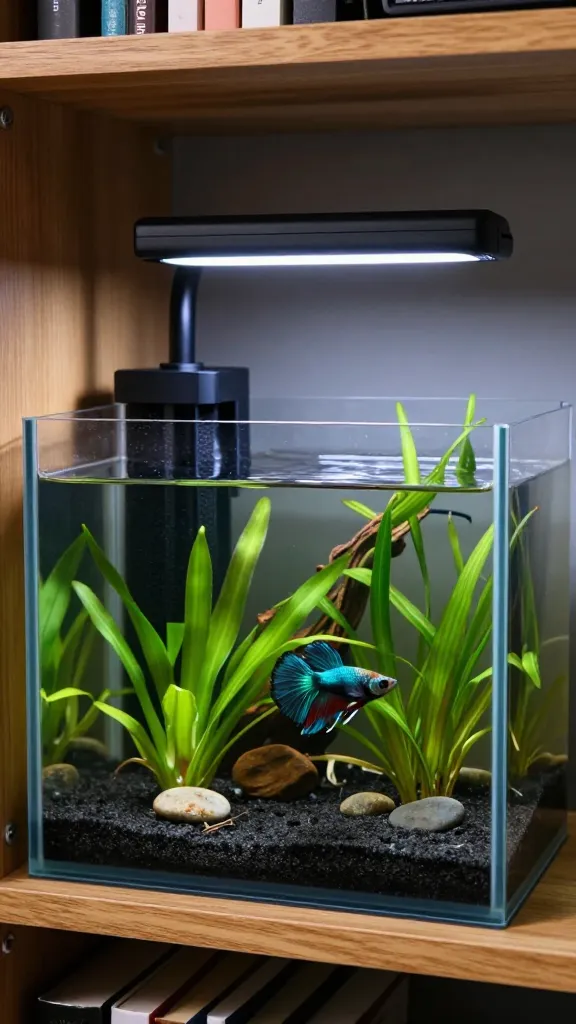
A standard 5.5-gallon rectangle sits on most bookshelves that can handle 55–60 lb safely, with a footprint that fits behind a monitor. Go with a corner sponge filter to save space and a matte background to cut reflections that stress skittish fish. I set this up for $80–$110 and it costs me about $1–$2/month in electricity at 10–12 hours of light. Tall decor near the back keeps your betta from mirror-flaring all day; too much glass-on-glass reflection leads to ragged fins from pacing.
5. The Blackwater 6-Gallon: Tannins and Calm for Fin Healers

For a fish with minor fin nips, a gentle blackwater setup with Indian almond leaves and alder cones can be a reset. Use inert sand, a sponge filter with extra bio rings tucked behind it, a 50W heater at 80°F, and dim the light with floating Amazon frogbit (Limnobium laevigatum). I spent $110–$150 including a bundle of leaves that lasted 3 months before replacing. Blackwater tints make plant growth slower; stick to Anubias and java fern on wood instead of hungry stems that will sulk.
6. The No-CO2 Carpet Try: 6 Gallons, in Plants, 4 Months of Patience

If you want a small foreground carpet without pressurized CO2, pick Helanthium tenellum ‘green’ or Staurogyne repens, not Monte Carlo. Use a richer substrate layer (1 inch of soil-capped sand), a slightly brighter clip-on light at 8 hours/day, and keep the betta out until roots grab. I spent $30 on tissue-culture cups and got a patchy but honest carpet in 16 weeks. This is not for dim rooms — if your plant melts after week 2, trim the rot, shorten the photoperiod to 7 hours, and add floating plants to reduce algae pressure.
7. The Heater-First Rescue: to Stabilize Before Aesthetics
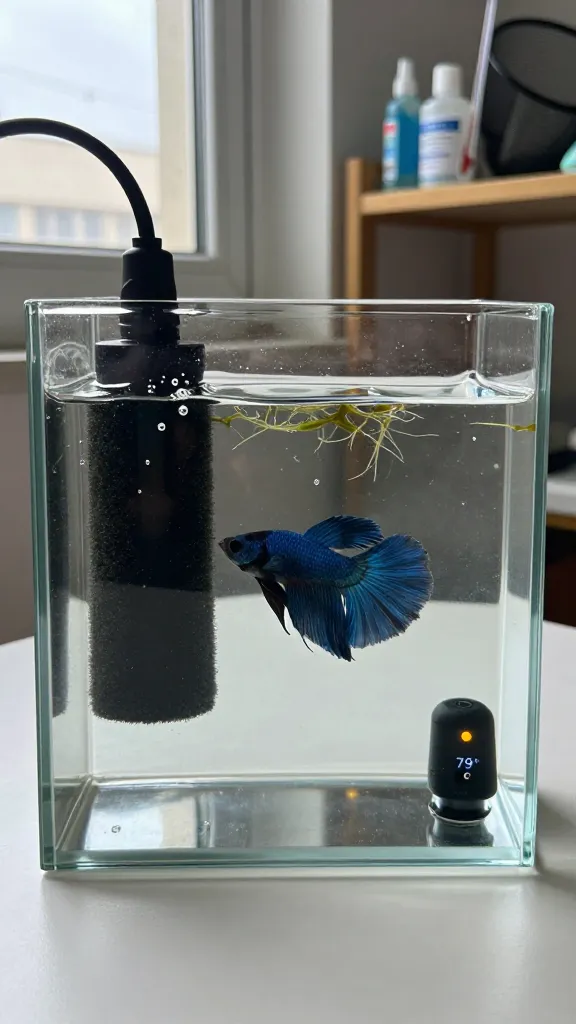
Sometimes the fish comes first — a gift or a cup from a friend — and you need stable water, fast. A bare 5-gallon with a seasoned sponge filter from a friend’s tank, an adjustable heater at 79°F, and floating Salvinia gets you safe parameters in under 24 hours. I’ve done this for about $55–$75 with borrowed media, then added substrate and wood a week later. This only works if that sponge is cycled; if not, it’s safer to run bottled bacteria and wait 3–5 weeks before adding the betta — cycling with the fish in is stressful and risky.
8. The Gentle Flow 8-Gallon: Baffle the Output, Double the Bio
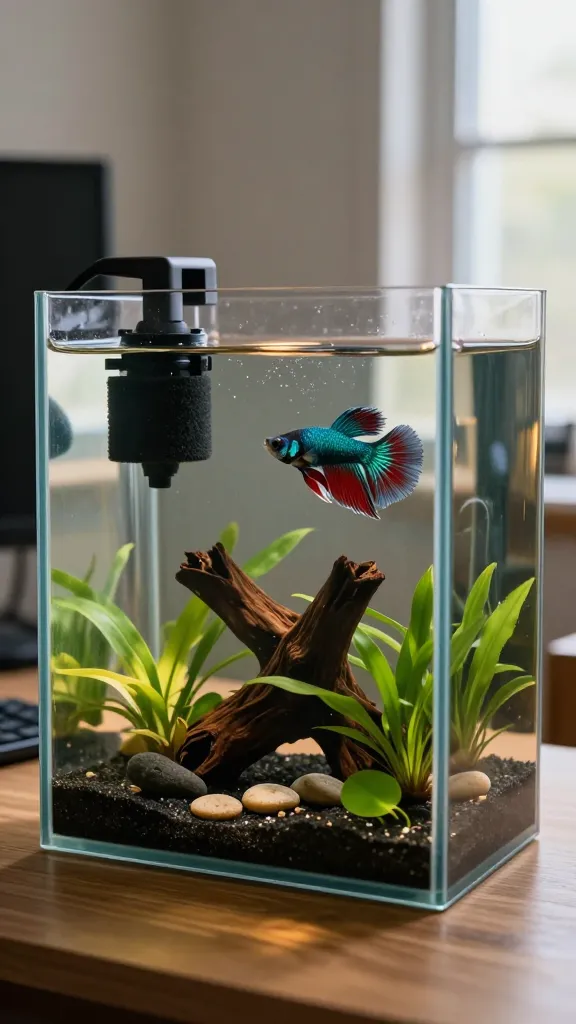
In slightly larger small tanks, a tiny internal filter gives more mechanical polish than a sponge alone. Aim the output at a wall or through a prefilter sponge so the surface stays calm for those big labyrinth breaths. My 8-gallon runs an internal unit plus a small sponge for redundancy and cost $140–$190, with 12 hours of silence except for a faint hum measured at 38–40 dB at the desk. If your fish shows stress stripes or gets pushed by flow, add an extra baffle or switch to sponge-only — bettas aren’t river fish.
9. The Hardscape-First 5-Gallon: One Root, Two Rocks, Zero Clutter
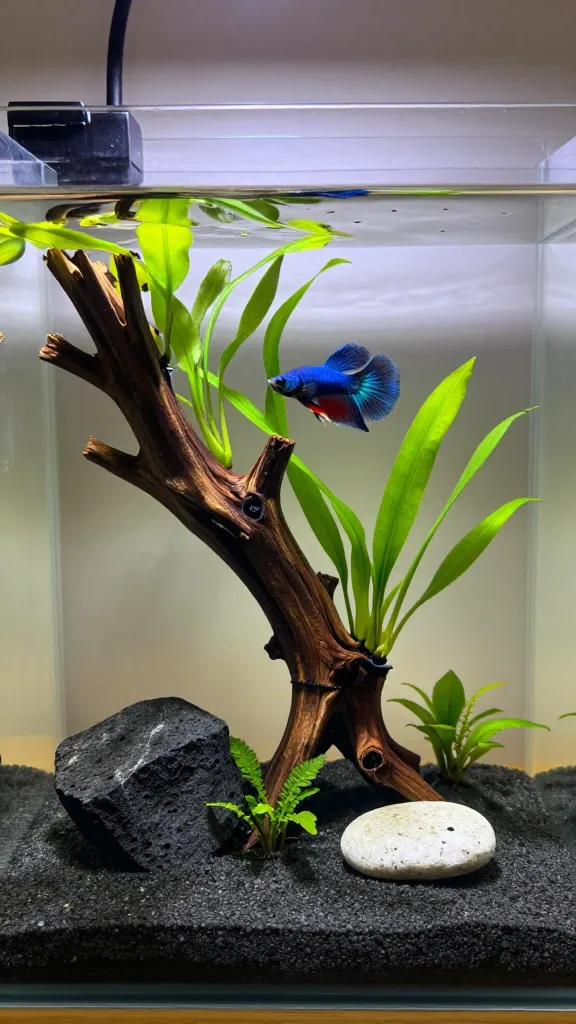
A single branchy root and two contrasting stones create sight breaks so your betta can choose line-of-sight or hide. Glue Anubias and narrow-leaf java fern to the wood, tuck Cryptocoryne parva at the base, and keep substrate open for easy cleaning. I spent $60 on hardscape at a local shop and ran this layout for 9 months before rescape itch hit. Big hardscape eats water volume; confirm the true capacity after filling — if it’s under 4.5 gallons, be extra strict about weekly changes and feeding amounts.
10. The Winter-Safe 5-Gallon: Insulated, Stable, and Quiet for Extra

If your room swings from 68–75°F, stabilize the tank with a foam under-mat, a lid, and a thin insulating wrap on the back and sides. Pair with a reliable thermostat heater set to 78°F and a thermometer you check daily. Adding a lid and mat added $15–$25 to my build and kept temperatures within ±0.5°F over a week in January. Without a lid, bettas can jump; mine cleared 1 inch once during a water change, which is why I consider a fitted cover non-negotiable now.
Frequently Asked Questions
What is the minimum small betta fish tank size that’s still humane?
The realistic minimum is a heated, filtered, cycled 5-gallon tank for a single male or female Betta splendens. That volume keeps temperature stable, lets you run a gentle filter without blasting fins, and gives room for plants and a rest leaf near the surface.
How much does a small betta fish tank cost to set up?
Expect $80–$160 for a 5–8 gallon setup with a sponge or small internal filter, adjustable heater, clip-on light, substrate, and three to five easy plants. Ongoing costs are modest: $1–$3/month in power and $5–$10 for dechlorinator and food every couple of months.
Do bettas need a heater in a small tank?
Yes — Bettas are tropical and do best at 78–80°F, which most rooms don’t hold year-round. A 50–75W adjustable heater and a lid keep temperature steady and reduce stress that leads to fin issues and infections.
Can I cycle a small betta fish tank quickly?
You can shorten the cycle to about 2–3 weeks by using a pre-seeded sponge filter or bottled bacteria with a measured ammonia source. Without that, plan for 3–5 weeks and test until ammonia and nitrite read 0 ppm for a full week before adding your betta.
What plants do well in a small betta tank without CO2?
Stick to low-light species: Anubias, java fern, Cryptocoryne wendtii, and floating Salvinia or frogbit. With a modest light at 7–9 hours/day and weekly 30% changes, they root in 2–4 weeks and help keep water stable.
Start With Warm, Gentle, and Cycled
The one thing that matters is stability: filtered water at 78–80°F, gentle flow, and a cycle that reads 0/0 before the fish goes in. If you want a head start this week, pick up a 5-gallon, a sponge filter, a 50W heater, and two plants — fill it, dechlorinate, and let those plants settle while the bacteria colonize.
Questions about your own setup? Drop them in the comments — I answer every one. — Maya