8 Blue Betta Fish Varieties — The Blues That Hold Their Color

I keep one heated, filtered 5-gallon on my desk, and my first real win with color was learning which blue betta fish varieties don’t fade under ordinary lights. Blue betta fish varieties are hyped hard on social, but the honest part is this: some lines wash out under weak LEDs or pale when stressed, and the fix is not expensive — it’s matching the fish to the light and water you’ll actually run. By the end of this list, you’ll know eight reliably blue options, what each needs to stay vivid, and about what you’ll spend to keep them that way. Expect a realistic all-in range of $90–$180 for a proper 5-gallon with a clip-on light, sponge filter, adjustable heater, lid, and hardscape. I learned the hard way that blue holds when husbandry is steady, not when the bulb is fancy.
1. Royal Blue Veiltail in a 5-Gallon: 0–0 All-In

This is the classic long-finned betta with medium-to-deep royal blue on the body and fins, easy to find and usually hardy. A basic 5-gallon with a small sponge filter, a 77–80°F heater, and a simple clip-on light is enough for the color to read true. Mine sat on a shelf for 11 months before I moved it, and the blue stayed rich under a 7–9 watt LED. Don’t try this in a bowl or vase — bettas need a heated, filtered, cycled tank of at least 5 gallons or the stress will mute the color in weeks.
2. Steel Blue Plakat Under Neutral Light: 6–12 Months Consistent Color

Short-finned plakats show a sleek steel blue that holds well under neutral (5000–6500K) lighting and moderate tannins. I ran one with a few Indian almond leaves and noticed the body stayed a cool gray-blue rather than turning muddy over 9 months. Expect $100–$150 to set up, same hardware as above, plus $5–$10 in botanicals every 2–3 months. If your room runs cool and you skip the heater, you’ll see dulling under 76°F and slower recovery after stress — temperature is not optional.
3. Blue Butterfly Betta, Fin Edge Contrast That Survives Dim Rooms
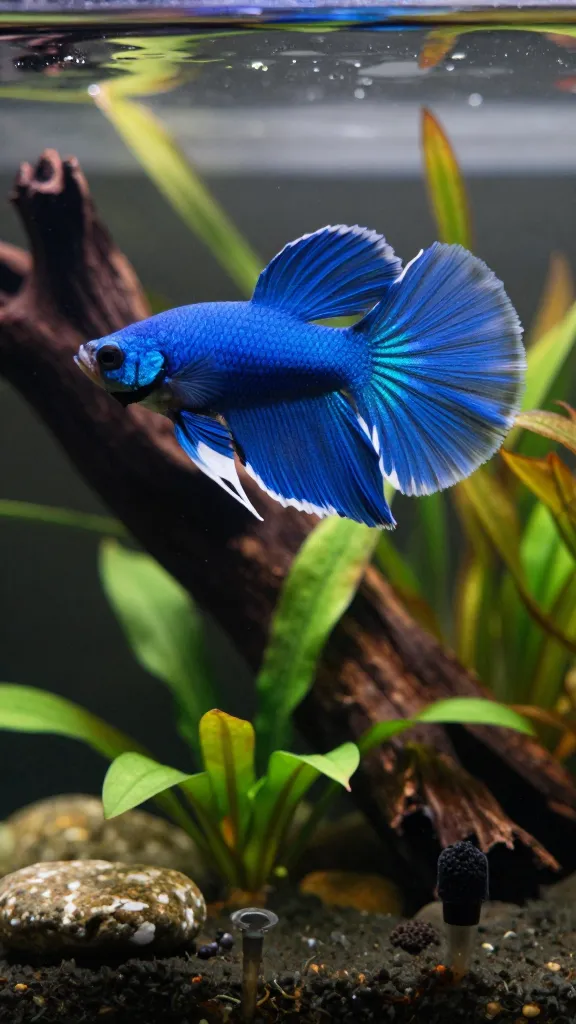
Butterfly patterning gives a blue base with pale fin margins; the contrast makes the blue read bold even if your light is modest. I kept one under a 6-watt clip-on in a plant-heavy 5-gallon for 8 months, and the banded look stayed crisp. Budget $120–$170 including plants like Cryptocoryne wendtii and Anubias nana, which tolerate low to medium light. The caveat is current: long fins plus sharp filter intakes equal shredded edges — use a sponge and keep surface flow gentle.
4. Copper-Blue Metallic (Iridescent) That Pops With Dark Hardscape

Metallic lines throw blue that flips under angle — teal to navy — and they look best against dark rock or wood. With black sand and dragon stone, my fish’s color stayed punchy for 10 months, even when the room light did most of the work some evenings. Setup runs $130–$180 if you add hardscape and a matte background. Metallics show stress as quick fin clamp; skipping the cycle or swinging pH by more than 0.3 in a day is how you lose that sheen fast, so change water in smaller, regular portions.
5. Blue Mustard Gas: Two-Color Contrast That Doesn’t Bleach at 78°F
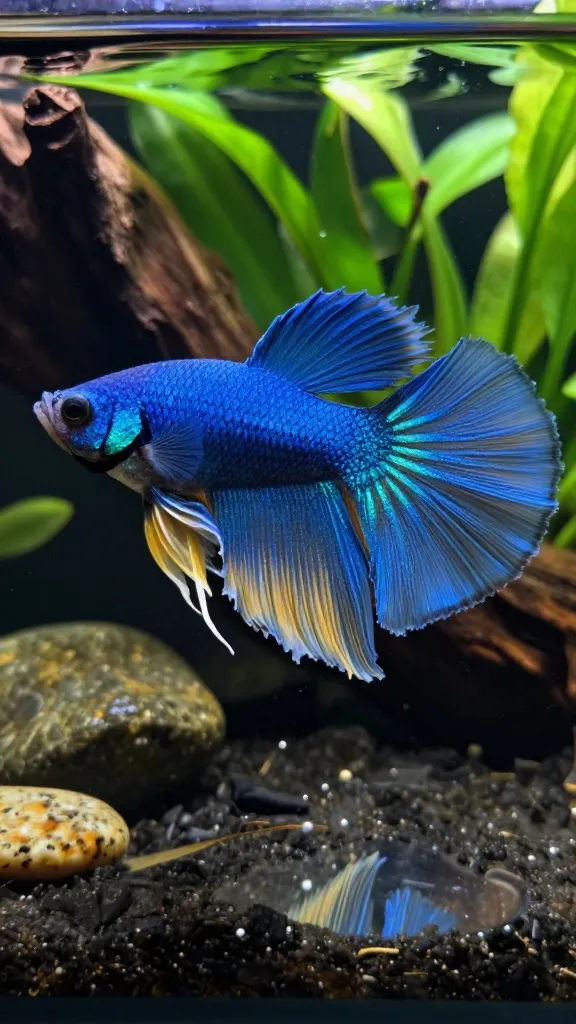
These show a deep blue body with yellow or cream fins; the blue component holds well as long as temperature and feeding are steady. Mine ate 6–8 micro pellets daily and flared for 30 seconds during mirror checks twice a week, staying vivid over 7 months. Expect $8–$15 per month in food and water conditioner on top of the $100–$150 setup. If you overfeed, oily surface films build up in under 2 weeks and colors look flat — better to feed less and do a regular 25–30% weekly water change.
6. Blue Galaxy Plakat: Freckled Iridescence That Survives Phone LEDs
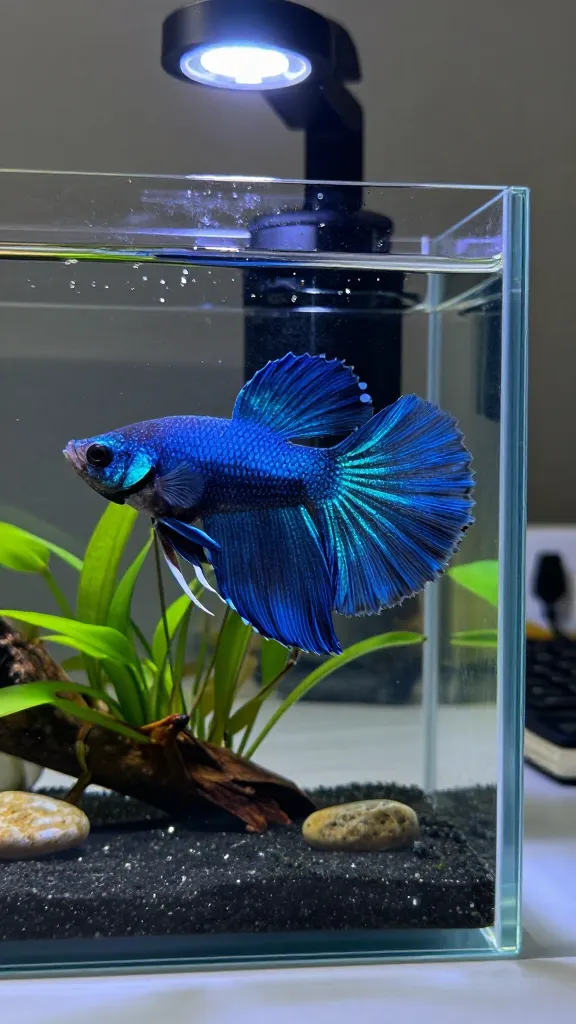
Galaxy plakats have spangled blue-white spotting that reads as blue even under cooler or inconsistent room lighting, which helps small apartments and desk setups. I kept one on my work desk for 9 months; the fish stayed colored under a 7-watt light running 7 hours/day on a timer. Setup is similar cost, $110–$160, with the timer an extra $8–$15 that’s worth it. The risk is chasing brightness with long photoperiods: more than 9 hours bloomed algae on glass in 3 weeks and made viewing murky.
7. Blue Dragon Scale: Keep It at 2–3 Pellets to Avoid Bloat and Fade
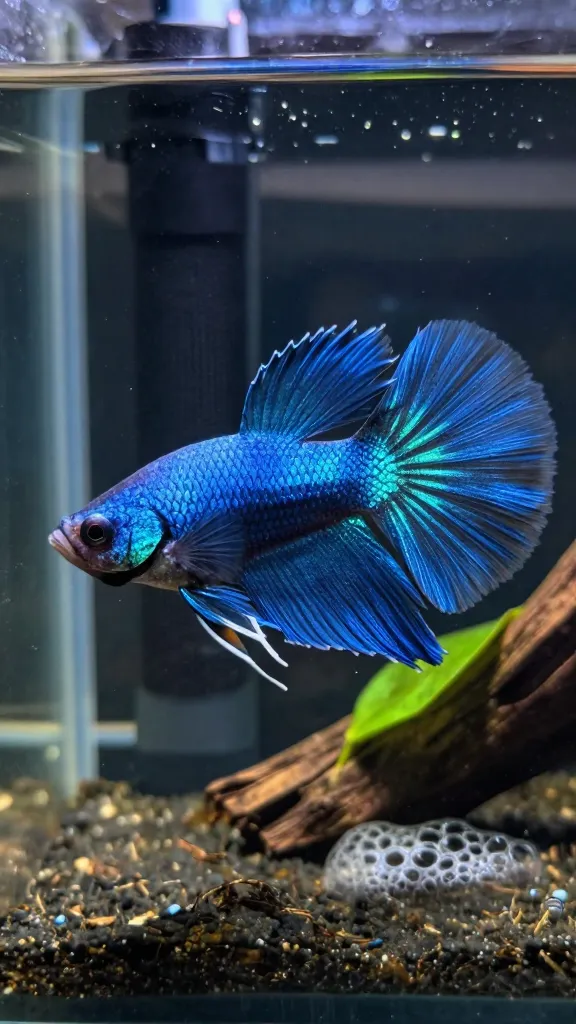
Dragon scales can show a thick, plated blue that looks incredible under side light, but they’re prone to bulking up and losing vigor if overfed. I kept one at 78°F and limited feeding to 2–3 pellets twice a day; color and activity held for 6 months before I rehomed him to a larger tank. Expect the same $100–$160 hardware bracket and spend $6–$12 on a small floating log or leaf to encourage bubble nests, which I saw monthly. If you notice a one-eye bulge or labored breathing, pause on high-protein treats; some lines are sensitive and need gentler feeding, and that’s not a character flaw.
8. True Blue Halfmoon: Flow Management Matters More Than the Light

Halfmoons throw the big, photogenic 180° tail that shows swaths of blue — stunning at rest, but miserable in hard currents. I ran a baffle over the filter output and the fins stayed intact for 8+ months; without it, tearing happened in under 2 weeks. All-in costs land $120–$170 if you add extra plants to break line-of-sight and diffuse flow. My single opinion, learned expensively: a short-finned plakat is the better first betta for small spaces; you spend the same, but you fight the filter a lot less.
Frequently Asked Questions
What size tank does a blue betta fish actually need?
A single betta needs at least 5 gallons, heated and filtered, to stay healthy and keep color. Small volumes swing temperature and parameters fast, which mutes blue within weeks. Expect $90–$140 to set up a proper 5-gallon with lid, heater, sponge filter, and light.
How do I keep my betta’s blue color from fading?
Hold temperature at 77–80°F, feed a small daily portion, and keep a steady weekly water change of 25–30%. Consistency prevents stress hormones that dull color. Neutral to slightly warm light (5000–6500K) for 7–9 hours/day is plenty; more hours won’t make the fish bluer.
Are blue betta fish varieties harder to care for than other colors?
No — care is the same: heat, filter, lid, and stable water. Some metallic and dragon-scale lines show stress faster, but the routine doesn’t change. Plan for 10–15 minutes of daily observation and 20–30 minutes once a week for maintenance.
Do I need special lighting to make a blue betta fish look vivid?
No, you need a reliable light in the 5000–6500K range and dark hardscape or plants for contrast. A simple 6–9 watt clip-on works in a 5-gallon; I’ve run one for 11 months and the blue stayed true. Avoid blasting more than 9 hours/day or algae will steal the show.
Can I cycle the tank quickly so the blue betta can go in this weekend?
No — cycling takes 3–6 weeks for a new filter to establish nitrifying bacteria. Rushing adds ammonia stress that dulls color and harms gills. If you’re new to cycling, a beginner-friendly primer is worth reading once; it will save you money and the fish’s health.
Start with the Heater and the Lid
The blue you see in photos lives in steady conditions — warmth, gentle flow, and clean water before anything fancy. This week, buy the adjustable heater and a tight lid for your 5-gallon, set them up at 78°F, and let the filter run while you pick your fish next weekend.
Questions about your own setup? Leave them in the comments — I answer all of them. — Maya