9 Centerpiece Fish Ideas — One Fish the Tank Is Built Around
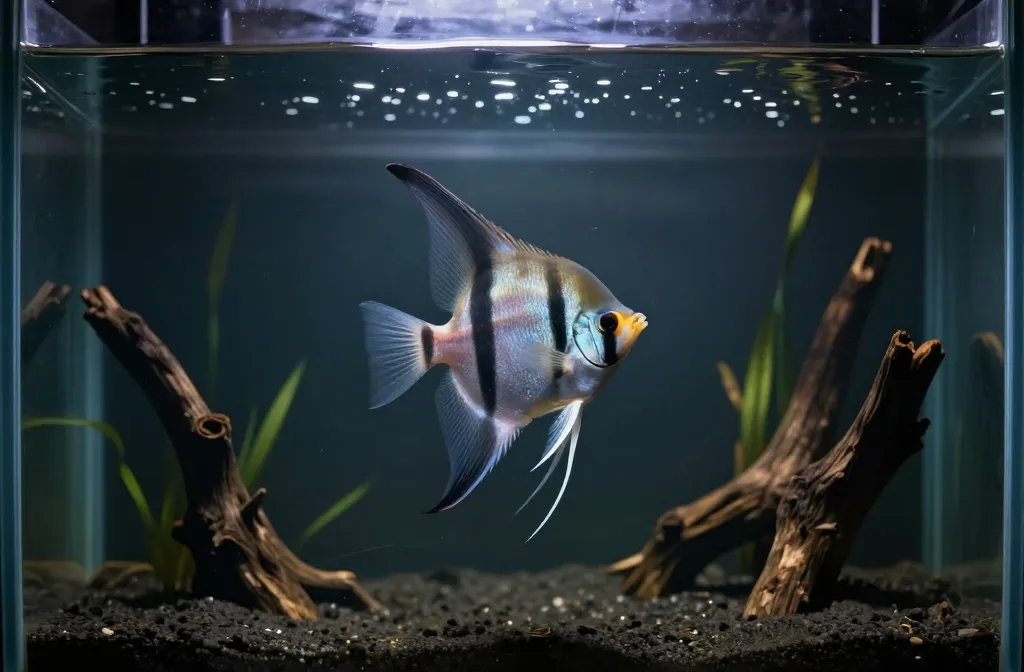
Centerpiece fish ideas only work when the rest of the system is built to match the biology of that single animal. Centerpiece fish ideas also imply constraints: adult size, temperament, and water chemistry come first, then aquascape and tankmates. By the end, you will be able to specify tank volume, flow, temperature, and hardness for nine distinct “one-fish” builds, and judge unlisted options by the same numbers. Everything here assumes a fully cycled tank and stable parameters, because ammonia above 0.1 ppm or nitrite above 0.1 ppm will stress any show fish and dull the very behavior you want to feature.
1. Angelfish (Pterophyllum scalare): Vertical Space and Calm Flow
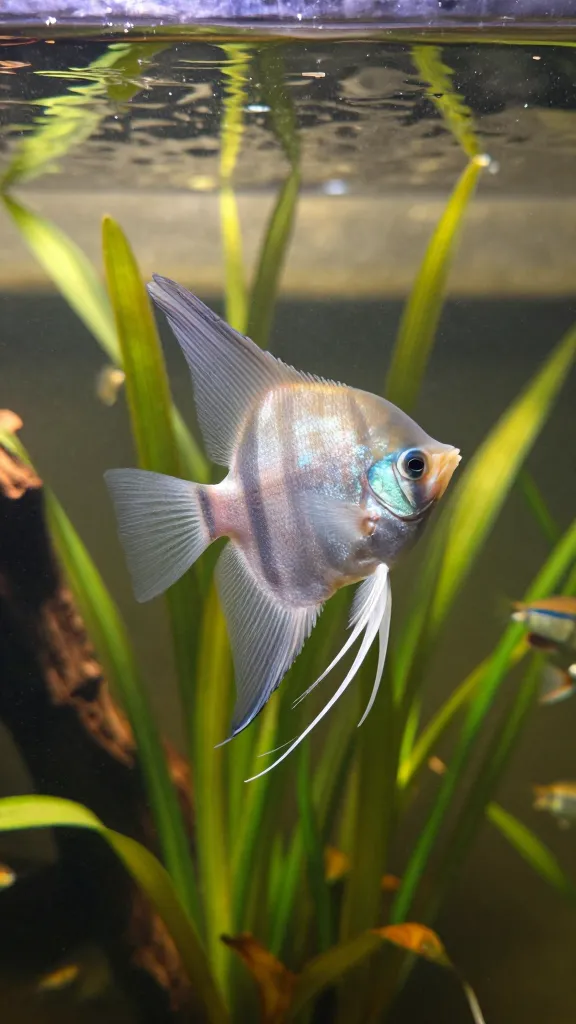
Angelfish use their tall fins as control surfaces, so they waste energy in fast lateral currents and thrive where the water column is tall and the flow breaks at the surface. Their gill area is ample for slow, warm water, which holds less dissolved oxygen, so surface agitation matters more than raw turnover. Give a single adult a 29 to 40 gallon tank with at least 18 inches of water depth and a filter moving 4–6x tank volume per hour but diffused to a gentle sheet at the surface. Keep at 78–82°F, pH 6.5–7.2, and 3–8 dGH. The limit: fin nippers and tight tanks — a 20-gallon high is the minimum I’d consider, but turning space is better at 36 inches of length.
2. Dwarf Gourami (Trichogaster lalius): Air-Breathing Labyrinth, Leaf-Litter Calm
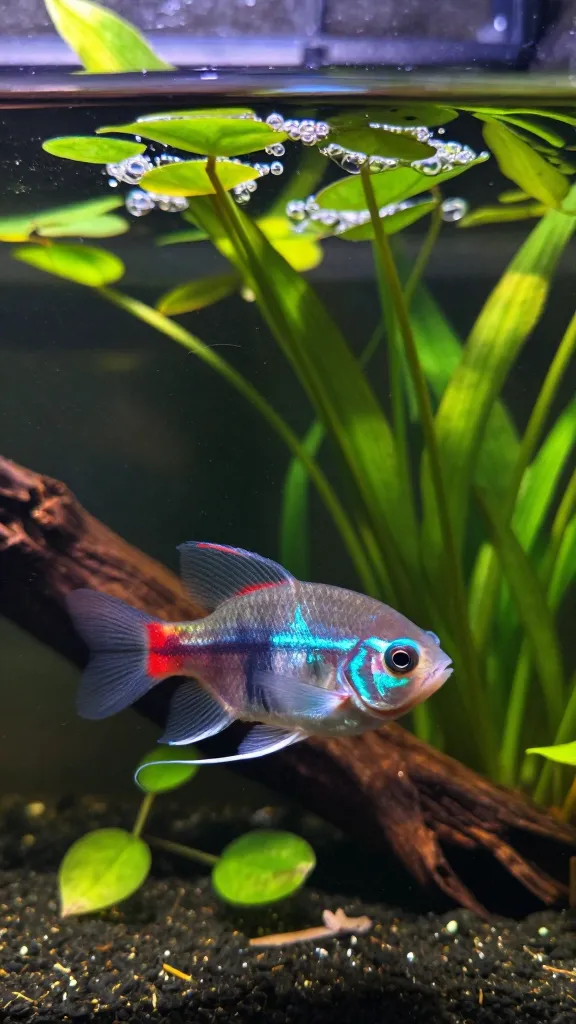
Dwarf gourami supplement gill breathing with a labyrinth organ, so they prefer calm surfaces where they can sip air without fighting chop; they also build bubble nests that collapse in turbulent flow. Warm, slightly acidic water speeds their metabolism and brightens color, but high current just pushes them into hiding. A single male works in a densely planted 15–20 gallon with floating cover, surface flow under 2 inches/second (think a hang-on-back rated near tank volume but baffled), and temperature 77–80°F, pH 6.2–7.0, 3–10 dGH. The failure mode is pairing two males in small tanks; they will spar until one is pinned to a corner.
3. Betta splendens (Plakat/Short-Fin): Low Flow, High Surface Area
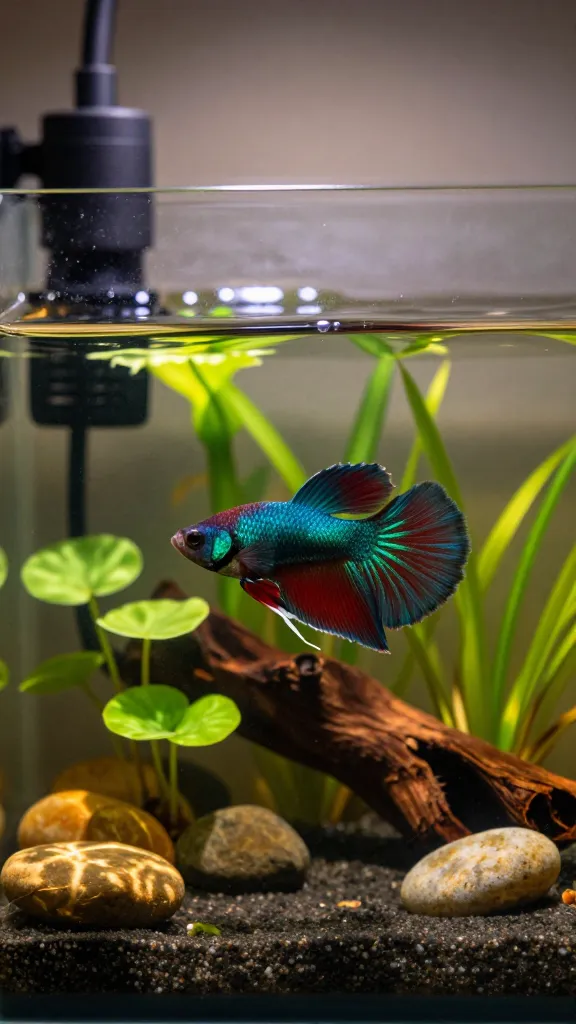
Bettas evolved in warm, hypoxic shallows; they gulp air and hate persistent lateral current that beats their fins and wastes calories. Oxygen still matters at the surface film, so broad gentle agitation is better than a jet. A single betta is best in a 5–10 gallon with a sponge or baffled filter turning 3–4x per hour and a heater at 78–80°F; keep pH 6.5–7.5 and 2–12 dGH. Short-fin (plakat) types handle current better if you must run more filtration. The hard limit is tankmates that nip or outcompete at feeding time; shrimp and small rasboras can work in a 10 if there are dense plants, but plan for the betta’s territory first.
4. German Blue Ram (Mikrogeophagus ramirezi): Warm, Soft, Oxygenated
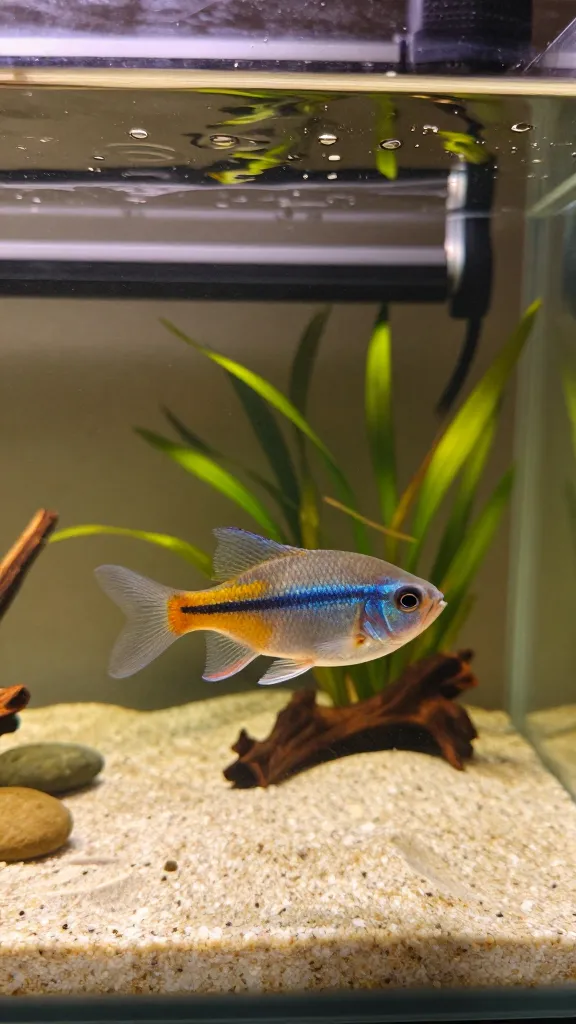
Rams are high-metabolism cichlids from warm, soft waters; at 82–84°F their oxygen demand rises while water holds less O2, so stable surface exchange and clean substrate become non-negotiable. They sift sand, so mulm trapped in coarse gravel can spike ammonia locally and burn gills. Build a single centerpiece in a 20-gallon long with fine sand, temp 82–84°F, pH 6.0–6.8, 1–5 dGH, and a filter pushing 6–8x volume per hour with a spray bar to avoid harsh jets. Keep nitrate under 20 ppm. The constraint is stability: these fish punish inconsistent heaters and missed water changes more than most.
5. Bolivian Ram (Mikrogeophagus altispinosus): Cooler Tolerance, Bigger Stage
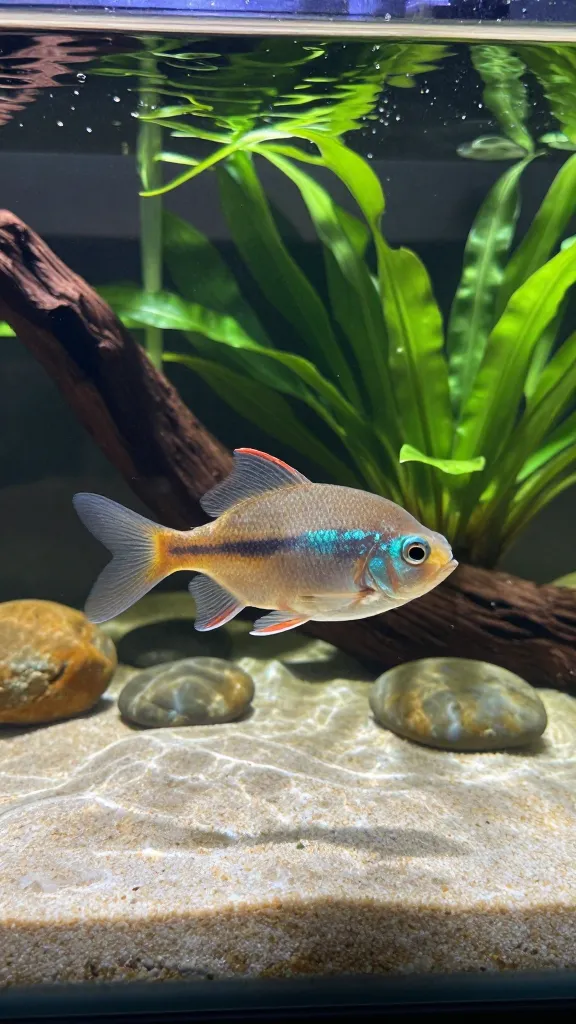
Bolivians share the sand-sifting behavior but come from cooler, slightly harder water, so they tolerate a wider band without the oxygen pinch of very warm setups. Their calmer metabolism lets you run moderate flow and keep plants easier. Place one in a 29 gallon with fine sand, 74–78°F, pH 6.5–7.5, and 3–10 dGH; target 5–6x turnover with good surface ripple. The limit is size and pace: at 3.5 inches adult length they want 36 inches of swim length to look like a centerpiece, not a corner fish.
6. Pearl Gourami (Trichopodus leerii): Room to Cruise, Dim Top
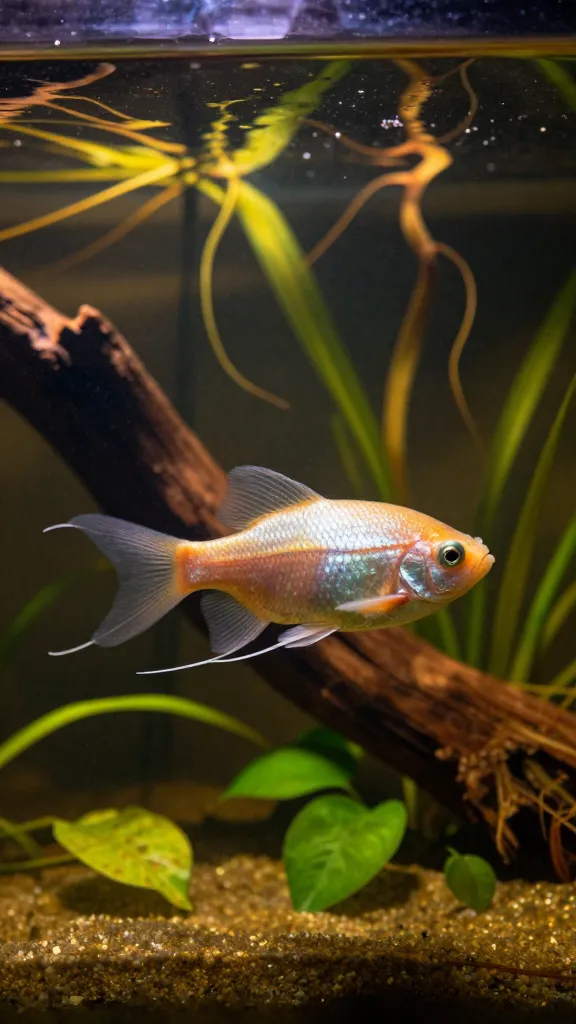
Pearl gourami are midwater cruisers that read the world with long pelvic filaments; strong current bends those filaments and turns their glide into a swim. Tannins and dimmer light calm them, and floating plants break line of sight so their reflective flanks pop. A single adult belongs in a 40 breeder or similar footprint with 78–80°F, pH 6.2–7.2, 3–8 dGH, and a broad outlet giving 4–6x turnover without surface chop. They top out near 4–5 inches, so tanks under 36 inches make them look cramped. The weak spot is tight lids: leave a humid air gap to protect the labyrinth organ.
7. Electric Blue Acara (Andinoacara pulcher): Oxygen and Bio-Load Headroom
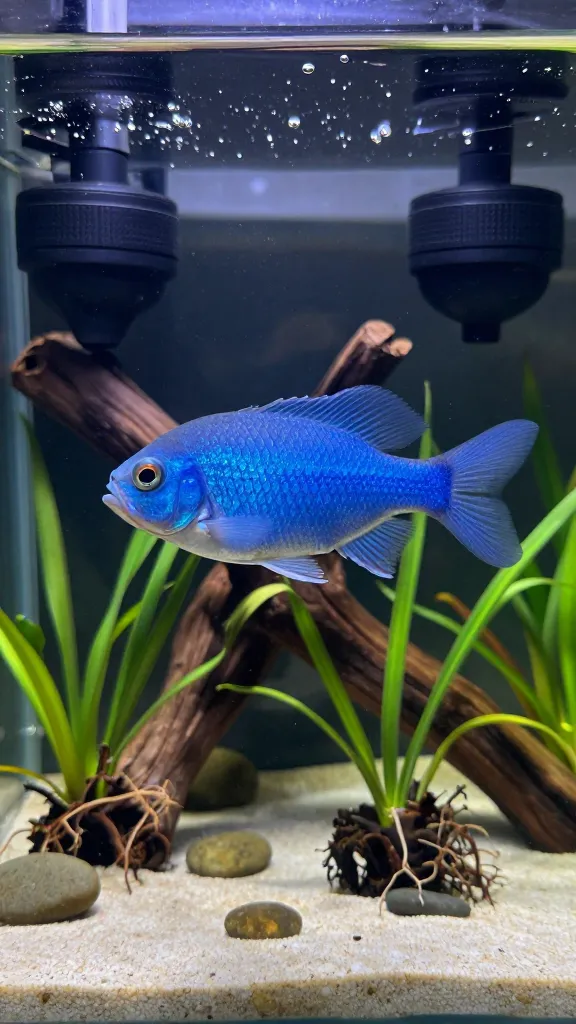
Acaras run hotter metabolisms and heavier feeding than tetras, which means more ammonia excretion and higher oxygen draw; they shine when the filtration and gas exchange have headroom. Their body plan handles current well, but they dig, so unsecured stems will lift. A single centerpiece fits in a 55 gallon with 76–78°F, pH 6.8–7.6, 5–12 dGH, and filtration at 8–10x turnover split across two intakes/returns for even flow. Keep nitrate under 20 ppm. The limit is decor: expect to replant or anchor wood and rocks; they reach 6–7 inches, so give open lanes and strong biological media volume.
8. Apistogramma cacatuoides (Cockatoo Dwarf Cichlid): Territories, Not Turbulence
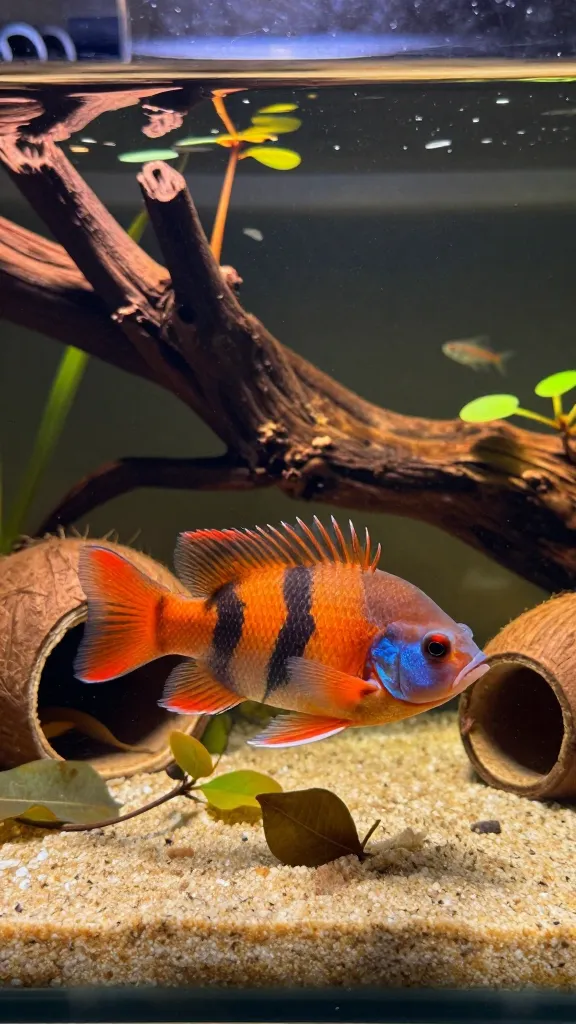
Apistos are cave and leaf-litter cichlids that claim small floor territories and ambush within them; big directional flows erase those scent and silt cues and stress them. Soft, slightly acidic water preserves fin edges and encourages natural color. One male as a centerpiece works in a 20 long with leaf litter, a couple of caves, 76–79°F, pH 6.2–7.0, 1–6 dGH, and a spray bar at 5–6x turnover angled to skim the surface. The trap is crowding with another bottom-claiming fish; pair with midwater dither fish only if you have dense cover and keep ammonia at 0 ppm at all times.
9. Paradise Fish (Macropodus opercularis): Cool, Airy, and Assertive
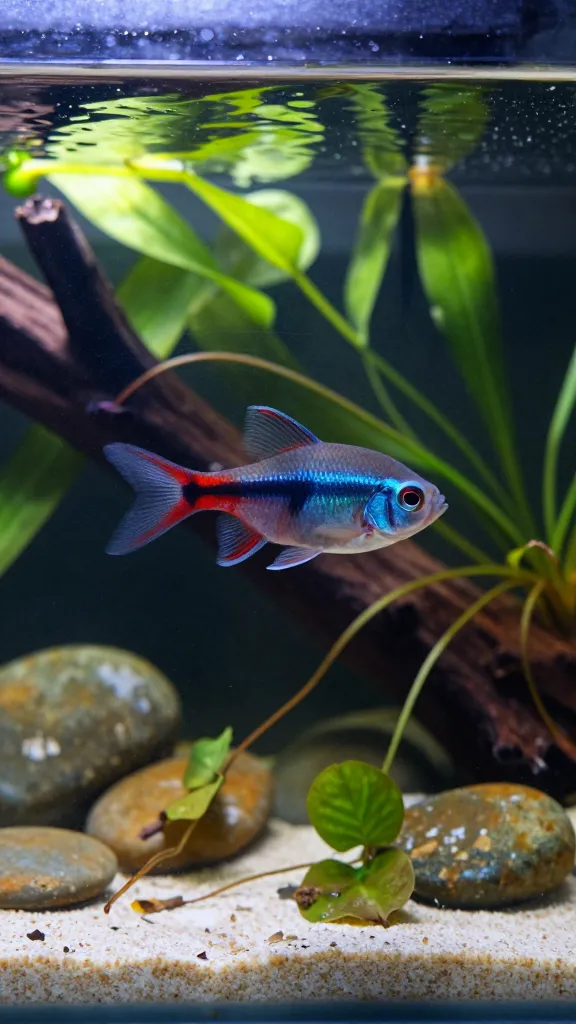
Paradise fish are labyrinth breathers built for cooler, moving streams; at sub-tropical temps their oxygen need and aggression both stay manageable, and they appreciate broad surface access more than depth. Cooler water also holds more O2, so you can run modest agitation without heat loss battles. A single adult belongs in a 20–29 gallon at 70–75°F, pH 6.5–7.5, 4–12 dGH, with turnover around 4–6x and floating plants to break sightlines. The hard limit is temperament: males will harass similar-bodied fish; pick tankmates that occupy other strata or keep it truly solo.
Frequently Asked Questions
How big should a tank be for a centerpiece fish?
Start from adult length and swimming style: aim for a tank length at least 6–8x the fish’s body length and volume that supports its bio-load. For a 5-inch cruising fish like a pearl gourami, that’s a 36-inch tank such as a 40 breeder; for a 3-inch dwarf gourami, a 20-long works. Flow and height then refine it — angelfish want 18 inches of water depth more than sheer gallons.
Can I keep two centerpiece fish in one aquarium?
Usually no, unless the species are complementary in level and temperament and the tank is large. Two territorial fish will overlap ranges and escalate; a 55 gallon can hold an acara plus peaceful midwater schooling fish but not an acara plus another cichlid male. If you try it, double-check hardscape to create 2–3 clear territories and keep ammonia and nitrite at 0 ppm so stress doesn’t tip them into fighting.
What filtration is best for a betta centerpiece fish?
Use a low-velocity biofilter that spreads return flow, like a sponge filter or a baffled hang-on-back at 3–4x turnover. Bettas burn energy fighting jets and their long fins tear in current; oxygen exchange still happens at the surface, so a gentle ripple is enough. Keep temperature at 78–80°F and nitrate under 20 ppm to maintain color and fin health.
Do I need soft water for an angelfish centerpiece?
Moderately soft to neutral works best: target 3–8 dGH and pH 6.5–7.2. Angels can adapt to mid-hardness if acclimated slowly, but very hard water (> 12 dGH) often yields clamped fins and poor breeding condition. Precondition with RO blend if your tap is hard, and keep temperature at 78–82°F.
What makes a good tankmate group for a German blue ram centerpiece fish?
Choose small, calm midwater fish that tolerate heat, like rasboras that handle 82–84°F, and avoid fin nippers. Rams need sand and clean bottoms, so skip heavy diggers; keep turnover at 6–8x with a spray bar and nitrate under 20 ppm. The school should be tight enough to act as dither without stealing food from the ram’s feeding zone.
The One-Fish Build Is All About Matching Biology to Numbers
Pick the fish, then set the tank to its numbers: temperature, hardness, depth, and flow. Tonight, verify your heater and thermometer agree within 1°F, and time your filter’s actual output with a 1-liter container to estimate turnover — if you are beyond the fish’s comfort band, fix that before buying any tankmates.
Questions about your own setup? Leave them in the comments and I will work through them. — Nate