10 Nano Fish for Tiny Tanks — Species Under Two Inches, Stocked Honestly
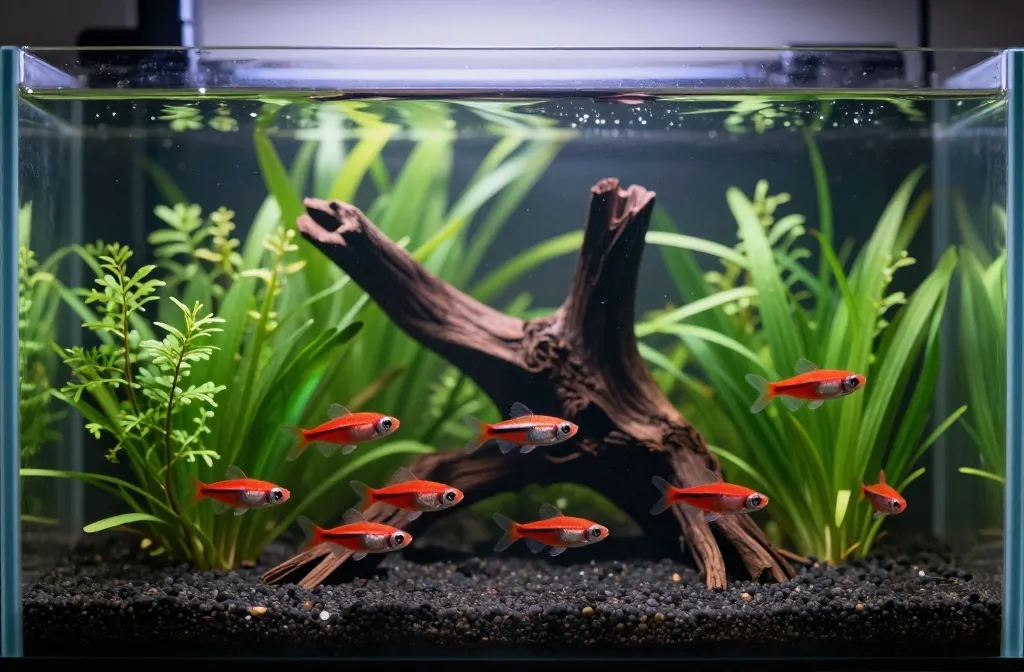
Choosing nano fish for tiny tanks is less about what fits visually and more about what a species’ metabolism, behavior, and waste load do to 5–10 gallons of water. The right nano fish will stay under 2 inches as an adult, tolerate short-run parameter drift, and not outrun a small filter’s biology. By the end, you will know which species genuinely suit 5, 7.5, and 10 gallons, how many, and at what parameters. I’ve run groups and solos side by side to see who actually settles and who paces the glass. Stocking here assumes a fully cycled tank with 0 ppm ammonia and nitrite and measurable nitrates.
1. Chili (Mosquito) Rasbora — Schooling That Doesn’t Overwhelm 5 Gallons
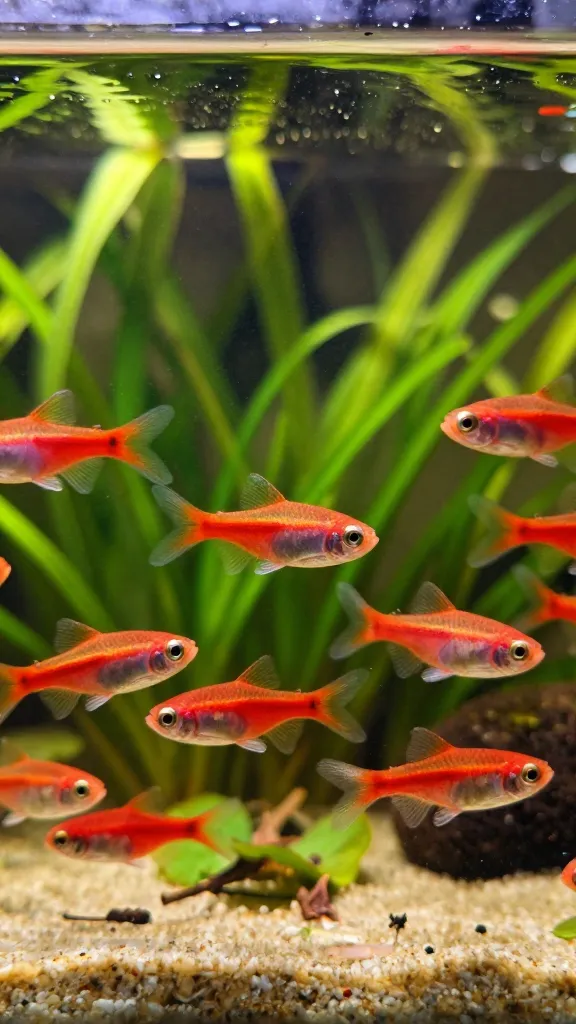
Chilis (Boraras brigittae) produce tiny amounts of waste per fish because of their small gut volume and slow feeding, so a mature biofilter can oxidize their ammonia quickly even in a short water column. Their schooling reduces stress by dispersing attention; individuals breathe and feed more calmly in a group, lowering burst activity and oxygen spikes. Keep 8–12 in 5 gallons, or 12–18 in 10 gallons, at 76–80°F, pH 5.5–7.0, and KH 0–3. Gentle flow matters: target 4–6 tank turnovers per hour with a sponge or baffled outlet. The limit is visual—aquascapes with strong current or bright white light push them into corners; if you run high flow for plants, they will bunch and vanish from midwater.
2. Ember Tetra — Low-Bioload School That Eats Prepared Food
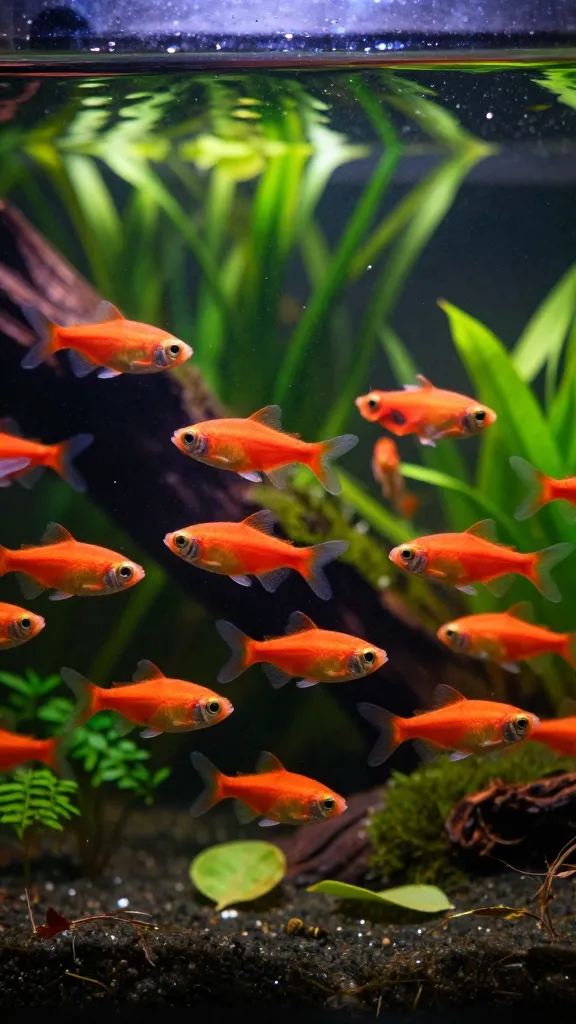
Embers (Hyphessobrycon amandae) metabolize steadily and accept crushed flakes and micro-pellets, keeping uneaten food minimal, which directly limits heterotrophic blooms in small volumes. Their oxygen demand rises during spooks, so surface exchange must handle peaks without churning them. Keep 10–14 in 7.5 gallons or 12–18 in 10 gallons, at 74–80°F, pH 6.0–7.2. Provide 6–8 turnovers per hour but diffuse the outlet to avoid pinning them to a pane. The honest limit: they are still tetras—below six, they jitter and fin-nip within the group; understocking is more stressful than a larger proper school.
3. Asian Stone Mini-Catfish — Night Crew That Doesn’t Bother Plants
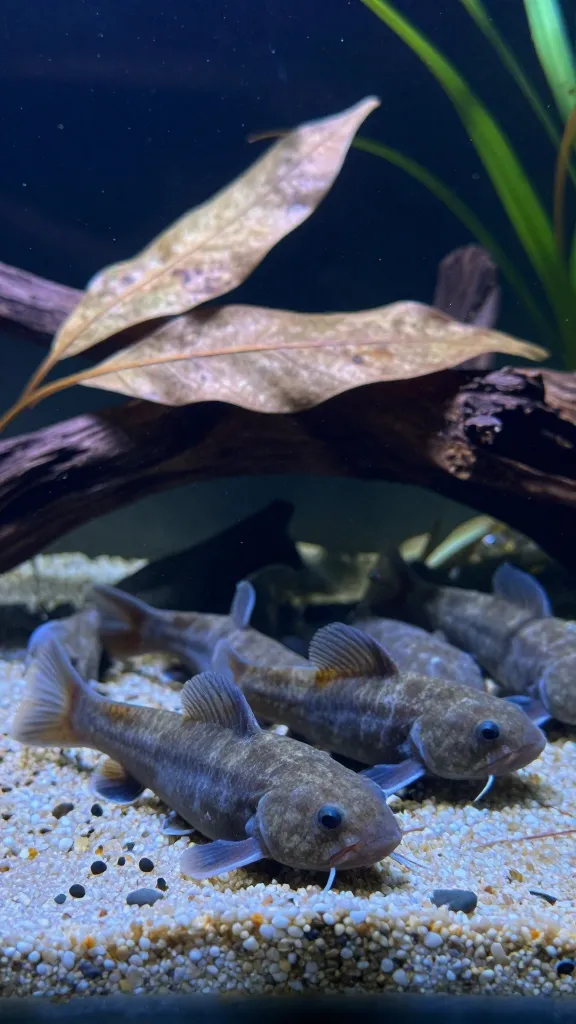
Hara jerdoni (often sold as “anchor catfish”) are micro benthic predators that sit-and-wait under leaves, producing low daytime CO2 load while contributing to nighttime oxygen demand. Their tiny mouths limit overfeeding accidents because they cannot wolf down large pellets, so leftover organics are mostly your dosing error, not their appetite. Keep 4–6 in 5–7.5 gallons at 72–78°F, pH 6.2–7.4, with sand or fine gravel and moderate cover. They prefer mellow current; 4–6 turnovers per hour is enough if you keep leaf litter clean. The limit: they are very shy—without dither fish above, they vanish; pair them with a small school, not a single centerpiece.
4. Pygmy Cory — Oxygen-Dependent School That Needs Soft Substrate
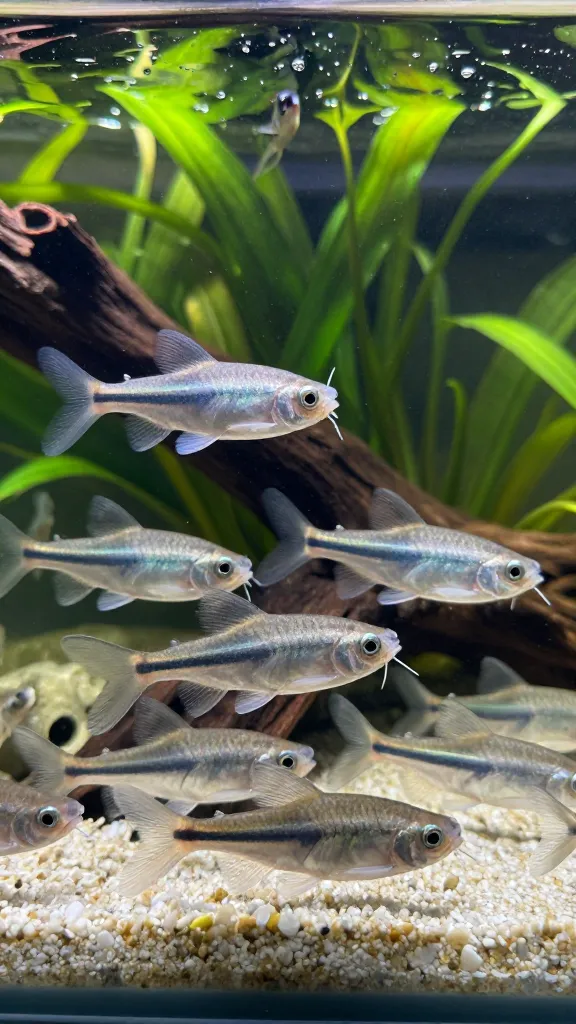
Pygmy corydoras (Corydoras pygmaeus) breathe primarily with gills but supplement with surface gulps when dissolved oxygen dips; that behavior spikes if biofilm decays or flow stagnates. Their constant foraging stirs mulm into filter intake, which increases nitrifying contact time if your intake isn’t coarse-strained. Keep 8–12 in 10 gallons at 72–78°F, pH 6.2–7.4, on sand or rounded 1–2 mm gravel to prevent barbel wear. Provide 7–10 turnovers per hour with strong surface agitation; they tolerate it because they occupy the lower third. The limit is footprint: they use horizontal space; under 20 inches of tank length, their social shoaling compresses unnaturally.
5. Green Neon Tetra — Cooler Running LEDs, Cooler Fish
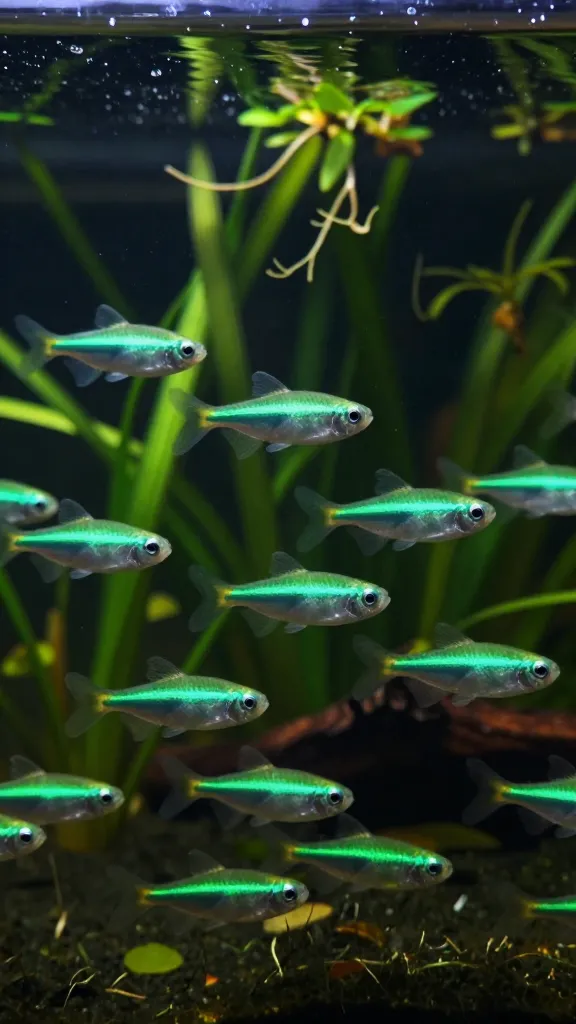
Paracheirodon simulans prefers warm, soft, low-mineral water where hemoglobin offloads oxygen efficiently; at higher TDS, their stress compounds under bright light. Cooler-running LEDs reduce thermal stacking at the surface, keeping a 76–80°F setpoint stable with a 3–5 watts per gallon adjustable heater instead of riding heat spikes. Keep 8–12 in 10 gallons, pH 5.5–6.8, KH 0–2, with shaded zones. Turnover at 5–7x, but break the line-of-sight with stems or floating plants to avoid persistent flight response. The limit: they are delicate on import; quarantine 4 weeks, or a single missed meal in week one cascades into thin, skittish fish that never settle.
6. Phoenix Rasbora — Color at True Nano Size
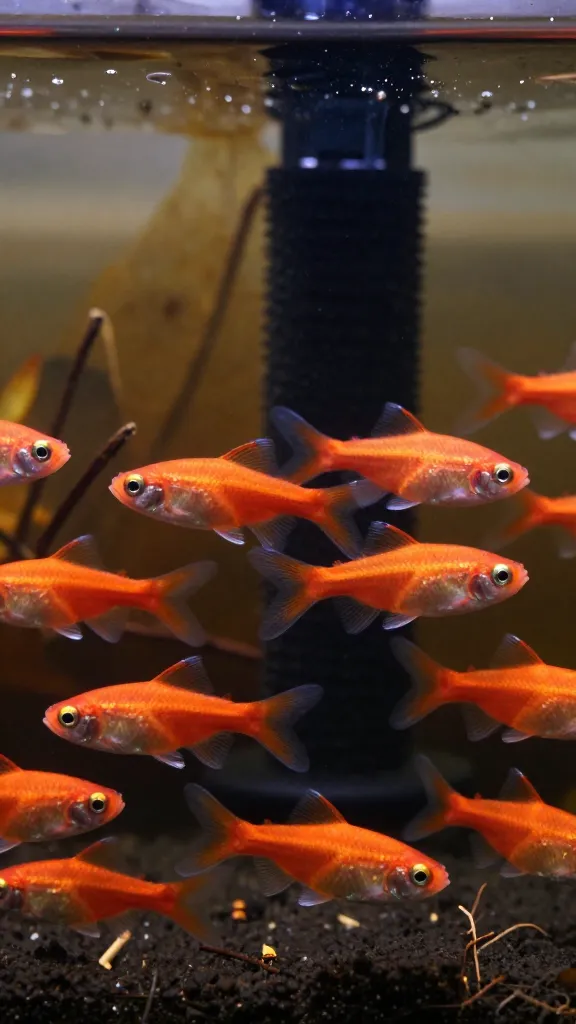
Boraras merah stay shorter than many “nano” fish, so their absolute nitrogen output per fish is lower, and their cruising speed is modest, which helps in 5–7.5 gallons with mild flow. Because they pick at suspended microfoods, fine mechanical media can starve them visually; a coarser sponge lets infusoria persist for juveniles without clouding. Keep 8–12 in 5 gallons, 76–80°F, pH 5.5–7.0, KH 0–3, with tannins or dim LEDs. Flow at 4–6x turnover is ideal. The limit is compatibility: fast midwater fish outcompete them at feeding; they belong with similar Boraras or shrimp, not danios.
7. Celestial Pearl Danio — Grazers That Need Visual Structure
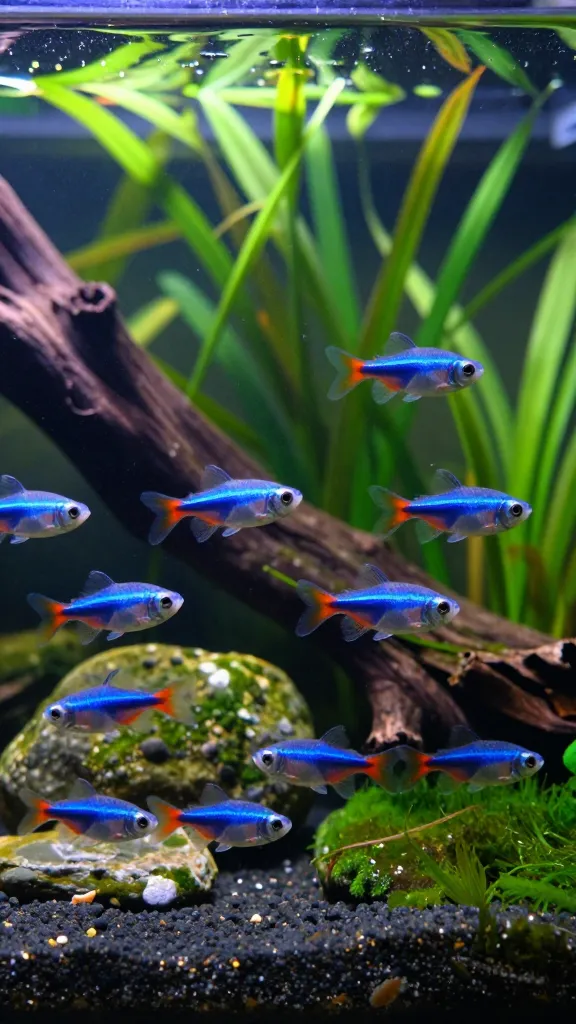
Danio margaritatus are micro-grazers; between meals they crop biofilm, turning surface area into nutrition and distributing their impact across the scape. Visual barriers lower male sparring frequency, which otherwise concentrates stress and raises cortisol, reducing immunity in tight quarters. Keep 8–10 in 10 gallons, at 72–76°F, pH 6.6–7.6, GH 4–10, with dense plants or rocks every 6–8 inches. Provide 6–8x turnover diffused; they dislike a jet. The limit: they are short-bodied but not “tiny”—adults hit 0.8–1.0 inches and need horizontal run; cramming 12 into 5 gallons produces fence-post pacing.
8. Least Killifish — Livebearers Without the Bloat
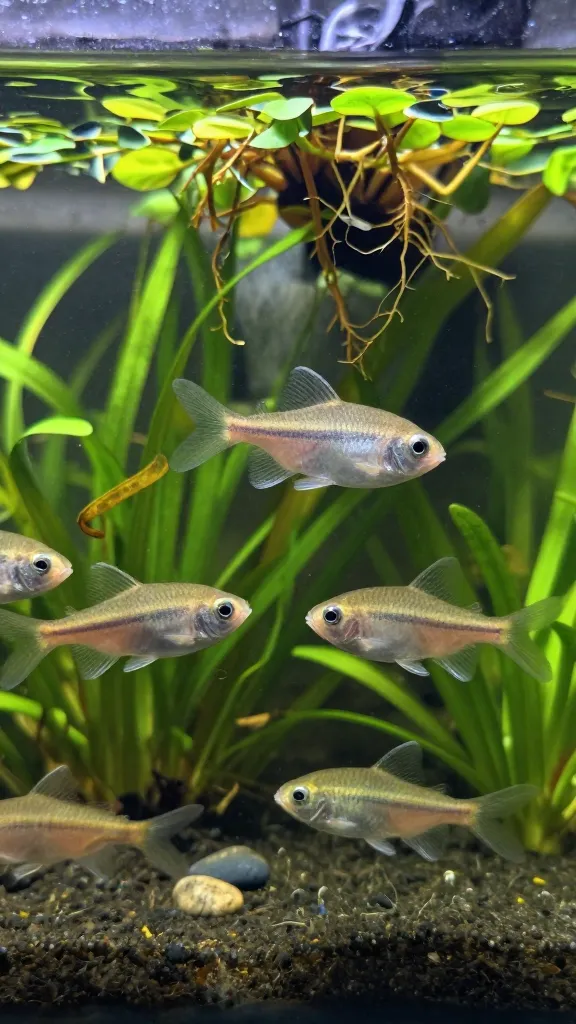
Heterandria formosa are micropredatory livebearers that trickle out fry instead of explosive broods, so population increases slower and nitrogen rises predictably. They tolerate moderate hardness and neutral pH, which lets you skip chases for very soft water and still keep plants happy. Keep 1 male with 3–4 females in 5 gallons or 6–10 total in 10 gallons, at 70–78°F, pH 6.8–7.8, GH 6–12. Maintain 5–7x turnover and floaters for fry refuge. The limit is feeding: they beg constantly and will overeat; portion to what vanishes in 60 seconds, or you will fuel planaria and hydra blooms.
9. Scarlet Badis — A True Centerpiece Under Two Inches
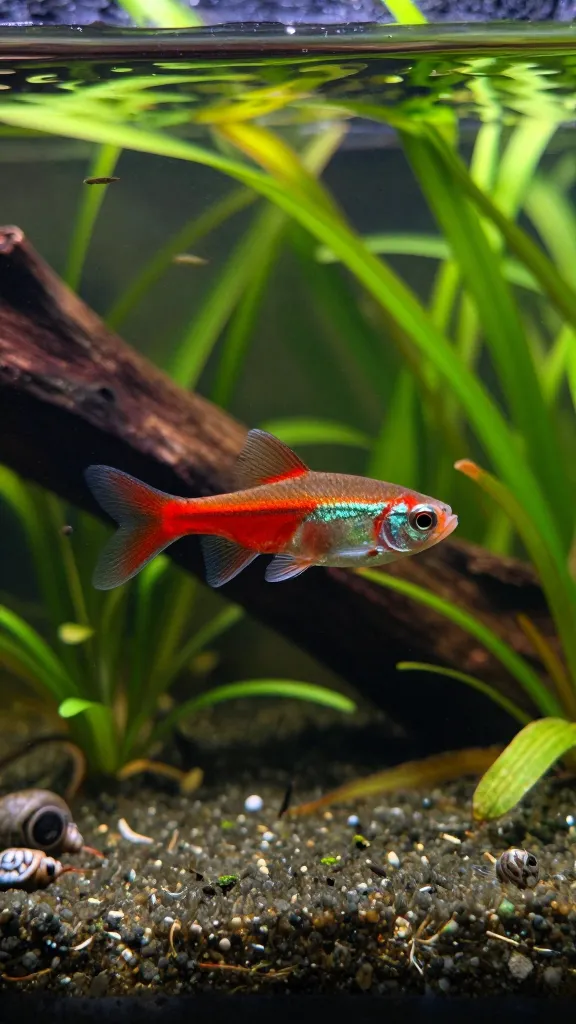
Dario dario are microcarnivores with short digestive tracts; protein rots fast in small tanks, so their feeding schedule directly sets your water changes. Targeted, tiny meals keep the biofilter within its design oxygen draw instead of spiking with leftovers. Keep 1 male in 5 gallons or 1 male + 1–2 females in 10 gallons, at 72–78°F, pH 6.5–7.5. Provide 5–7x turnover, dense cover, and live or frozen microfoods. The limit: many refuse dry foods; assume 3–4 feedings per week of live baby brine or worms. My opinion: for a single “pet fish” in a nano, this species makes better use of 5 gallons than a betta because it won’t press the glass or demand heavy surface access.
10. Male Endler’s Livebearer — Motion Without Mass
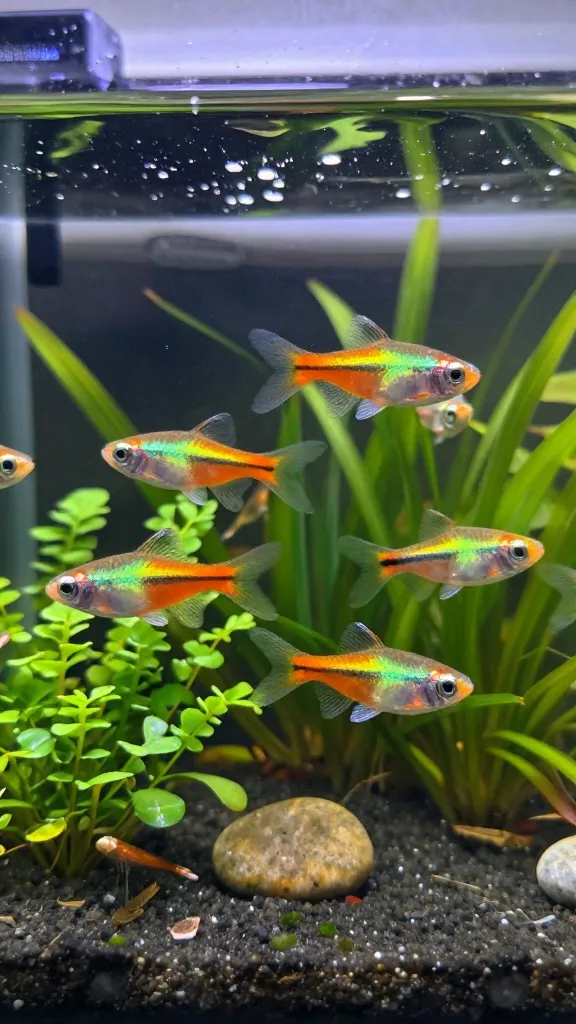
Poecilia wingei males are slim, constant swimmers whose aerobic metabolism is moderate; they produce less waste per inch than larger livebearers and rarely harass plants. Because males don’t drop fry, you control bioload precisely and avoid exponential increases that swamp small filters. Keep 3–6 males in 5–7.5 gallons or 6–10 in 10 gallons, at 72–80°F, pH 7.0–8.0, GH 8–15. Provide 6–10x turnover with good surface ripple; they enjoy a bit of current. The limit is jumping: cover gaps under 1/4 inch, especially at feeding, or you will find one dried behind the light in a month.
Frequently Asked Questions
How many nano fish can I keep in a 5-gallon tank?
In 5 gallons, aim for a single species school of 8–12 tiny rasboras or tetras under 1 inch, or a single centerpiece like one scarlet badis. The constraint is oxygen and biofilter surface area: keep turnover near 6x per hour and confirm 0 ppm ammonia/nitrite between feedings. More species means more feeding types, more leftovers, and more instability.
What water parameters do nano fish need in tiny tanks?
Most listed species do well at 74–78°F, pH 6.0–7.4, and low to moderate hardness, with exceptions like Endler’s preferring pH 7.0–8.0 and GH 8–15. Stability is the mechanism that matters: a 1–2°F swing and a consistent KH prevent pH crashes that small volumes are prone to. Match species to your tap rather than chasing extremes with additives.
Do I need a filter for nano fish, or will plants be enough?
Use a filter. Nitrifying bacteria need high-oxygen, high-surface biofilm to keep ammonia at 0 ppm, and a gentle sponge or small canister moving 5–8x tank volume per hour provides that in tiny tanks. Plants help by taking up nitrate and carbon, but they do not oxidize ammonia fast enough during feeding spikes.
Which nano fish are best for a 10-gallon planted aquarium?
Groups of 12–18 chilis or embers, 8–10 celestial pearl danios, or 8–12 pygmy cory with a small midwater school are reliable in 10 gallons. The planted mechanism is cover and biofilm: stems and floaters break sightlines to cut stress, and surfaces host nitrifiers that keep ammonia at 0 ppm. Keep turnover near 7–10x but diffuse it so fish don’t pin to the glass.
Can I mix different nano fish species in a tiny tank?
Yes, but keep it to two species in 10 gallons and one in 5 gallons, and choose by feeding niche and activity level. Mixing surface-huggers with bottom shoalers spreads bioload and reduces competition; for example, 12 embers with 8 pygmy cory in 10 gallons at 76°F and pH 6.6–7.2 works if your filter does 7–10x turnover. Avoid pairing timid Boraras with fast feeders that will starve them.
Start Small, Measure the Quiet Things
The governing number in tiny tanks is turnover: keep water moving at 5–10x per hour without blasting fish, then stock within the oxygen and biofilter you actually have, not the box rating. Tonight, measure your tank’s true flow with a measuring cup and a stopwatch at the filter outlet, and test for 0 ppm ammonia and nitrite after the heaviest feeding of the week.
Questions about your own setup? Leave them in the comments and I will work through them. — Nate