12 Beginner Fish That Actually Survive a First Tank
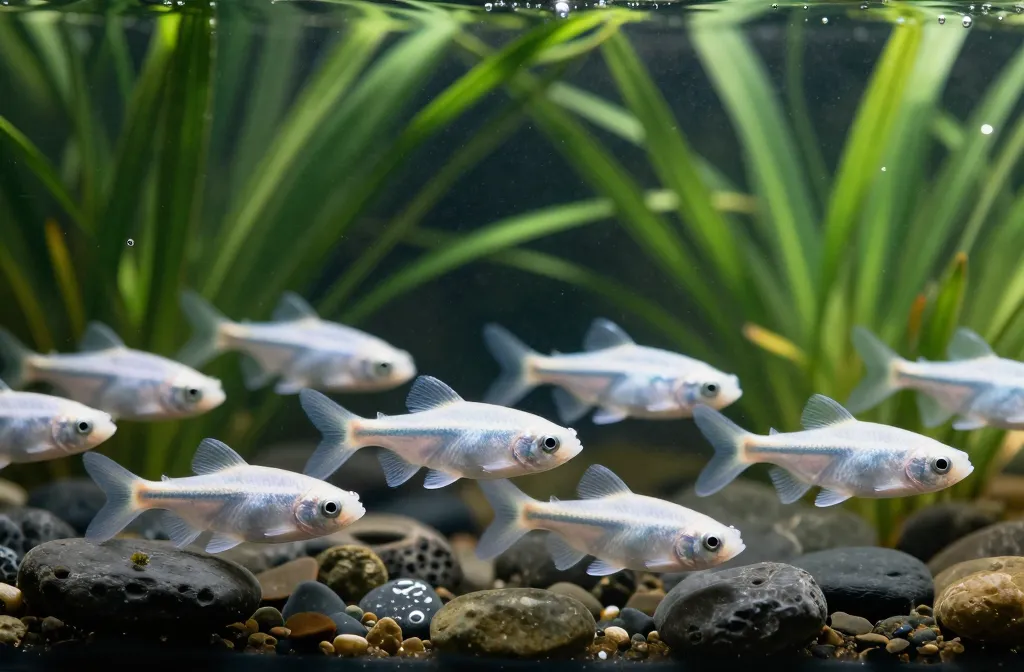
The hardest part about beginner fish isn’t color — it’s biology: which species tolerate the swings most first tanks have while the bacteria mature. This list of beginner fish spells out the water chemistry and oxygen needs behind each choice, so you can match species to your tank volume, temperature, hardness, and filter without guessing. By the end, you’ll be able to specify a stocking plan by numbers: gallons, temperature in °F, KH/GH ranges, group sizes, and adult lengths. I’ve run first tanks side by side to watch which species shrug off a brief nitrite blip and which crater when flow is low, and the patterns are repeatable. Pick from these twelve with those constraints in mind, and you’ll keep fish alive, not just pretty.
1. White Cloud Mountain Minnow — Cool, Thin Air, Low Demand
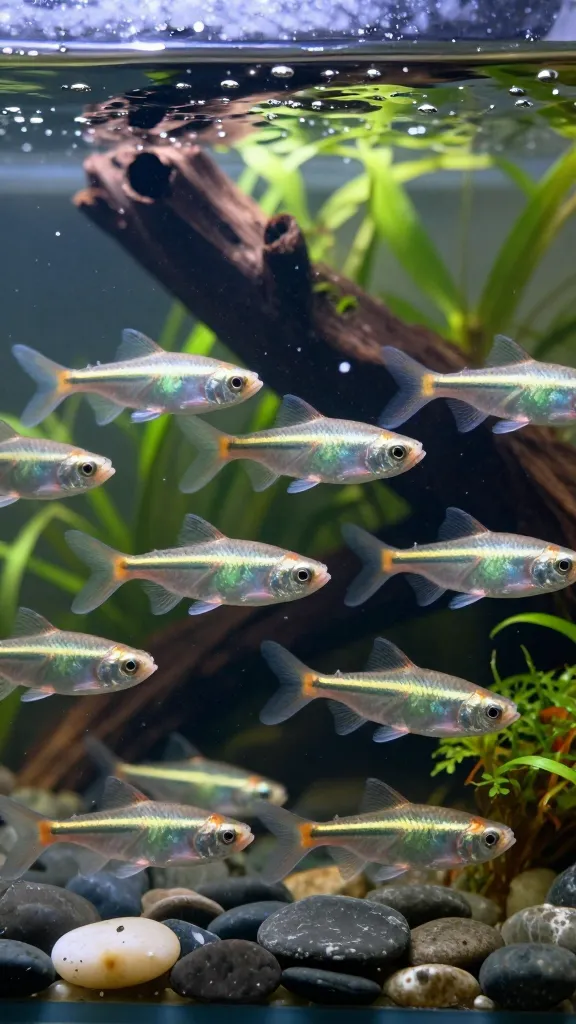
Cold water holds more oxygen than warm, and white clouds (Tanichthys albonubes) evolved in fast, cool streams where gas exchange is constant. That means they tolerate the modest bio-load and occasional micro-spikes seen in new tanks better than many tropicals, as long as the water stays cool and moving. Keep them at 64–72°F, in groups of 6+, with a hang-on-back or sponge providing flow around 6–8x tank volume per hour in small tanks (e.g., 80 GPH on a 10-gallon). They top out at 1.5 inches and suit a 10-gallon+. Push them above 74°F and their oxygen demand rises while water holds less O2; that mismatch is the failure mode.
2. Zebra Danio — Motion as Insurance Against Spikes
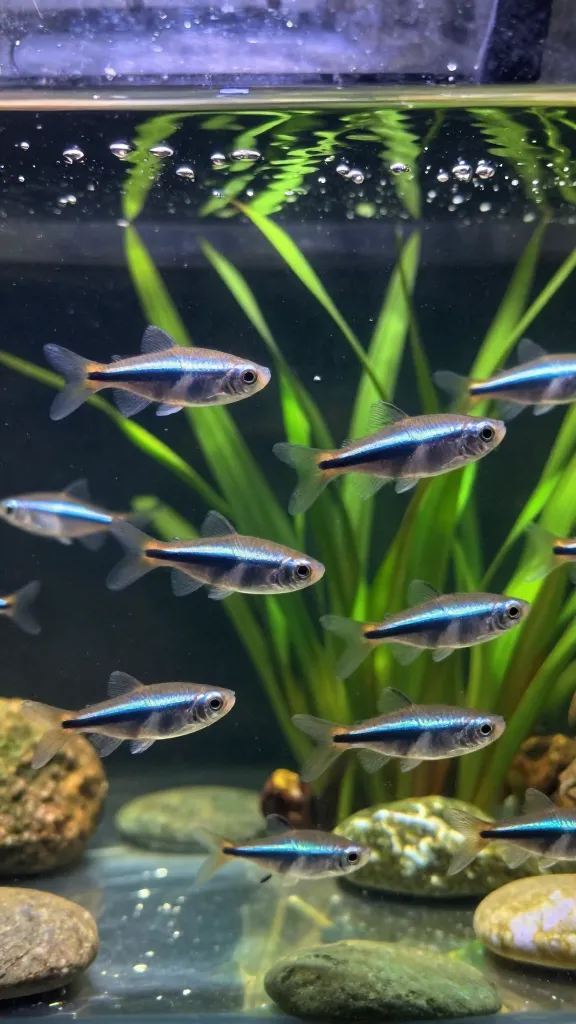
Zebra danios (Danio rerio) are stream fish that keep moving, which pushes water across their gills and supplements oxygen uptake when surface agitation is mediocre. In a first tank where films form and agitation isn’t perfect yet, that physiology buys you margin. House them at 70–78°F, 6+ fish, in a 20-gallon long or larger because of their speed, and aim for 8–10x turnover with visible surface ripple. Adults reach 2 inches. They nip when crowded or underflowed; the limit is a cramped 10-gallon where sprint lanes don’t exist and stress triggers chasing.
3. Platy (Xiphophorus maculatus) — Hard, Alkaline, Forgiving
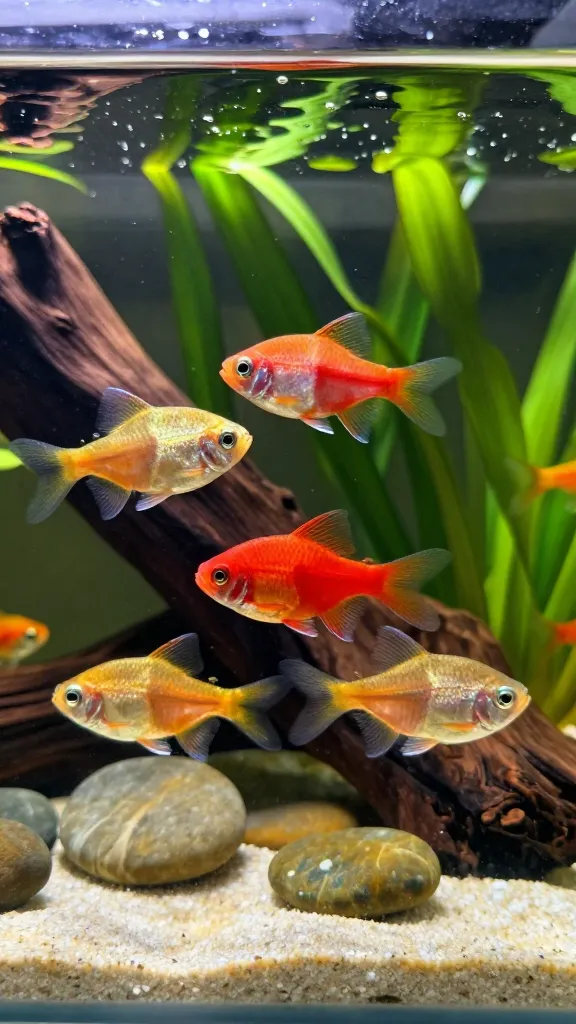
Livebearers regulate internal salts better in hard, alkaline water, so transient nitrogen stress is less physiologically costly than it is for soft-water tetras. In beginner tap that often sits at pH 7.2–8.2 with GH 8–20 dGH, platies thrive. Keep at 72–78°F, 1 male to 2–3 females to spread attention, with 10 gallons for the first trio and +5 gallons per added trio. Adults hit 2.5–3 inches. They breed; plan for fry control or a predator won’t save you in a small tank. In soft water (GH < 6 dGH) they lose condition — that’s the boundary.
4. Corydoras Panda? No — Corydoras Paleatus or Aeneus Tolerate Swings
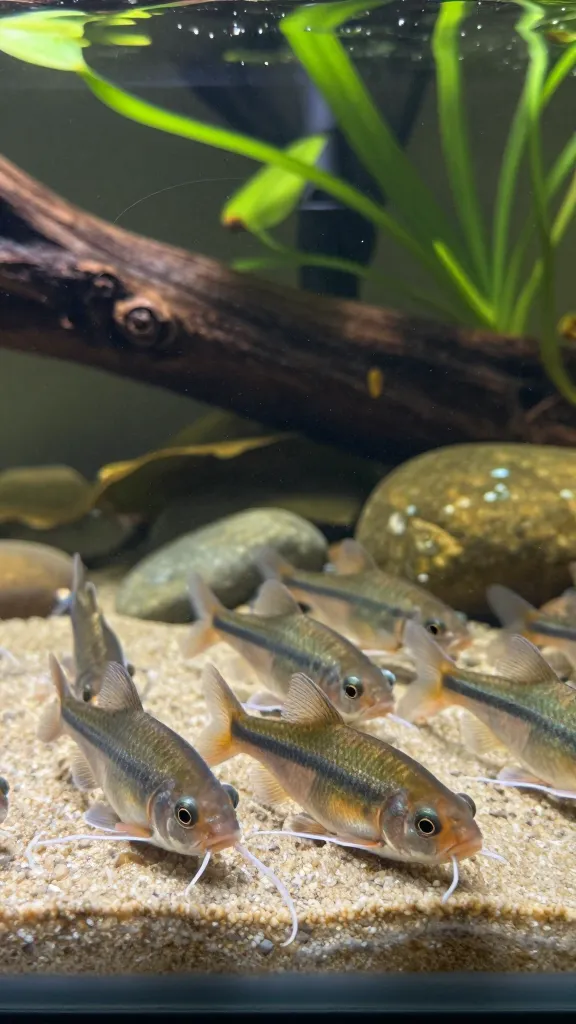
Bottom dwellers face waste first, so species with broader dissolved oxygen and temperature tolerance fare better early. Corydoras paleatus (peppered) and Corydoras aeneus (bronze) gulp air via their gut lining as backup respiration, a buffer if your surface agitation is shy during week 1–3. Keep at 70–77°F (paleatus) or 72–80°F (aeneus), in groups of 6+, on sand, with 15 gallons+. Adults reach 2.5–3 inches. Avoid panda corys early; they’re less tolerant of parameter wobble. The limit is sharp gravel or ammonia above 0.25 ppm — barbels erode fast there.
5. Cherry Barb — Lower Aggression, Real Schooling
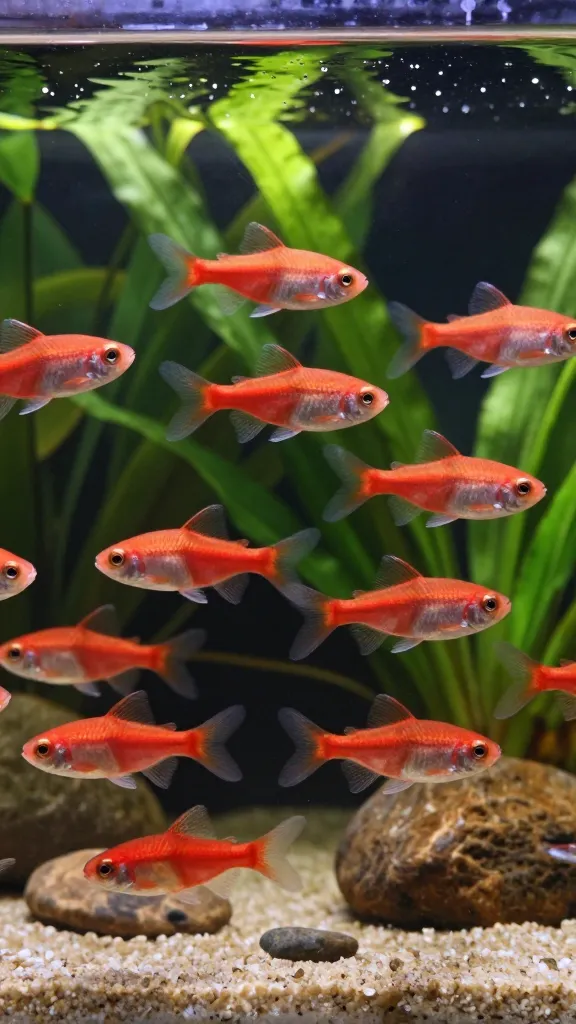
Schooling spreads stress hormones across the group; in small numbers cortisol runs high and immunity dips. Cherry barbs (Puntius titteya) are among the calmer cyprinids, which means fewer fin nips while the aquascape and territories are immature. Keep at 74–78°F, pH 6.5–7.8, GH 4–15 dGH, in groups of 8–10, with a 20-gallon minimum. Adults reach 2 inches. Understocking is the failure: 3–4 fish act nippy and hide, which beginners misread as incompatibility rather than a group-size issue.
6. Kuhli Loach — Night Shift Cleaners That Need Real Floor Area
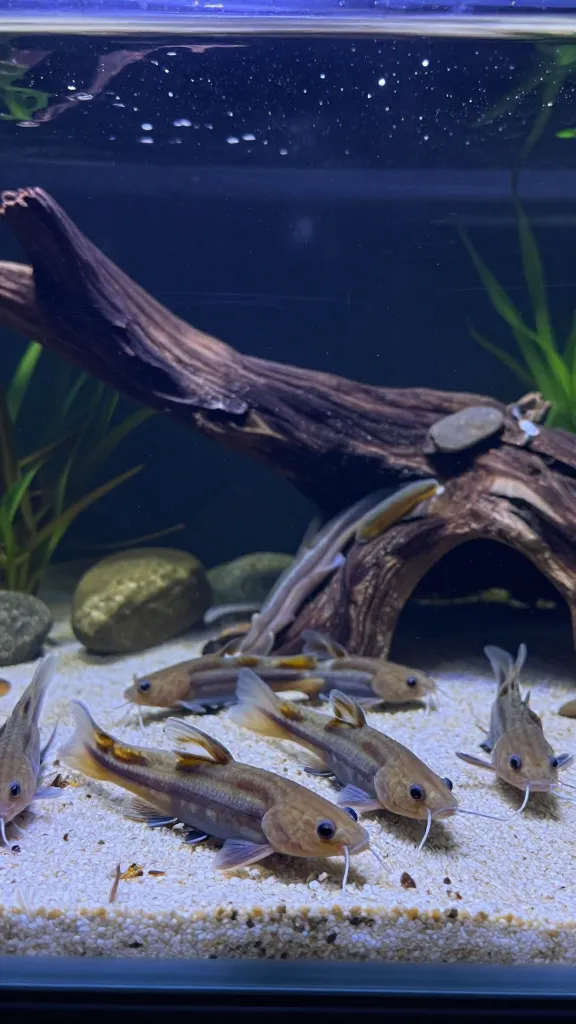
Kuhlis (Pangio semicincta/oblonga) constantly sift detritus, redistributing organics into the water column where your filter can process them; this reduces anaerobic pockets in young substrates. They are tolerant if temperature and oxygen are right. Keep at 76–80°F, pH 6.0–7.5, GH 3–10 dGH, in groups of 6–8+, on fine sand, with lid gaps sealed, and a footprint like a 29-gallon (30 inches long). Adults reach 3.5–4 inches but are slender. The boundary is cool or low-flow setups; below 75°F and with poor surface agitation, they go quiet and stop feeding.
7. Bristlenose Pleco — Algae Control Without the 18-Inch Surprise
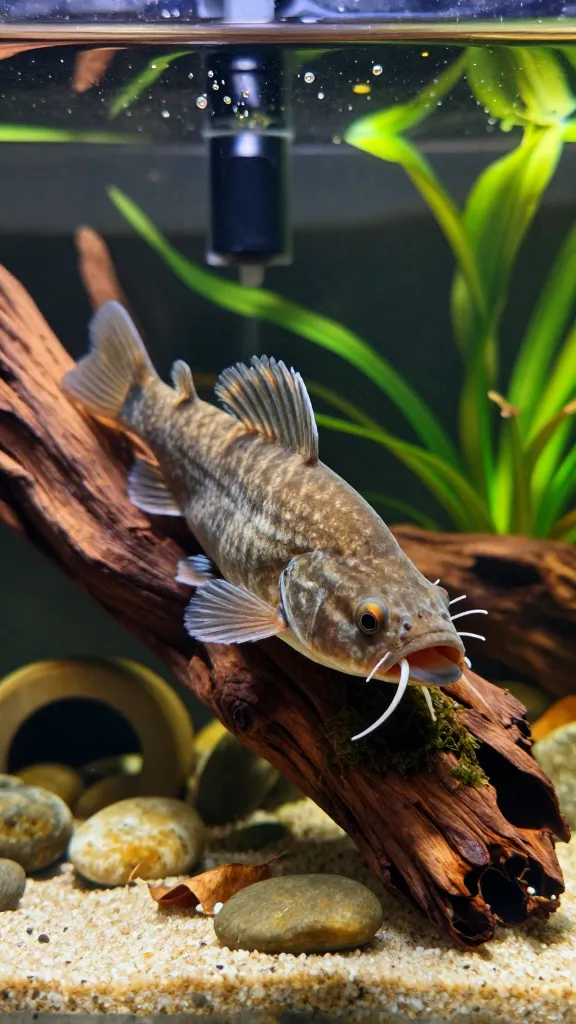
Plecos are often bought to solve algae, but most species become oxygen-hungry giants that outpace a new tank’s biofilter. Ancistrus sp. stay small and rasp biofilm without bulldozing plants. They produce significant waste, so the benefit hinges on you exporting it through flow and water changes. Keep at 74–80°F, pH 6.5–7.8, in a 30-gallon+ with wood and caves. Adults reach 4–5 inches. Provide 6–8x turnover and weekly 30–40% changes. The failure mode is buying a common pleco that grows beyond 12 inches; do not do this in a beginner tank.
8. Endler’s Livebearer — Micro-Biofilm Converters
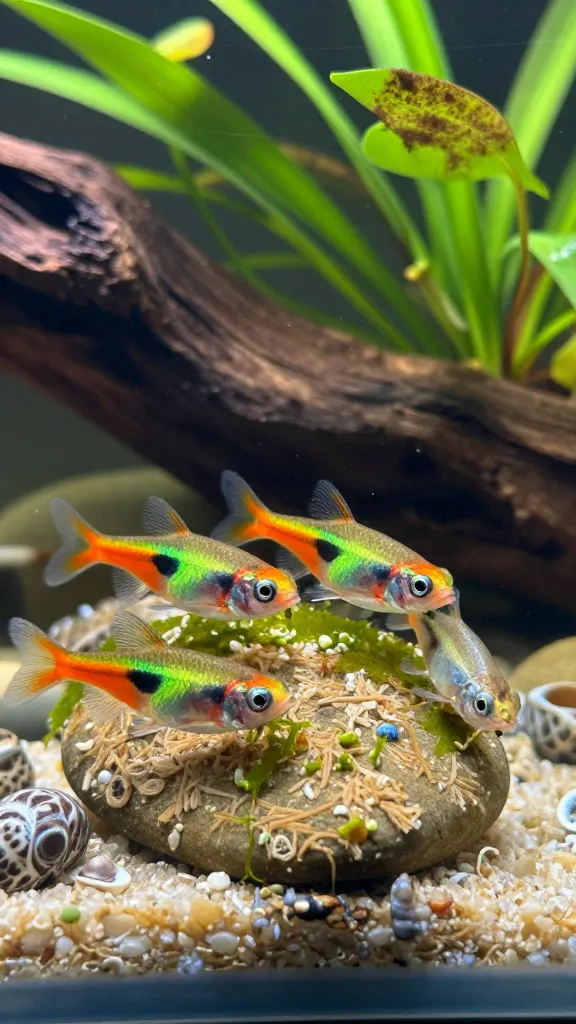
Early tanks grow diatoms and microalgae as silicates and light settle. Endler’s livebearers (Poecilia wingei-type) graze continuously, converting that into fish mass and smaller particulates your filter can catch. They thrive in hard tap similar to platies. Keep at 72–80°F, pH 7.0–8.2, GH 8–20 dGH, starting with 10 gallons for a trio and adding 5 gallons per additional trio. Adults are 1–1.4 inches. They breed explosively; the control is sub-adult sales or a same-sex group. In soft water they lose color and vigor — that’s the line.
9. Honey Gourami — Labyrinth Safety Net, Not a Free Pass
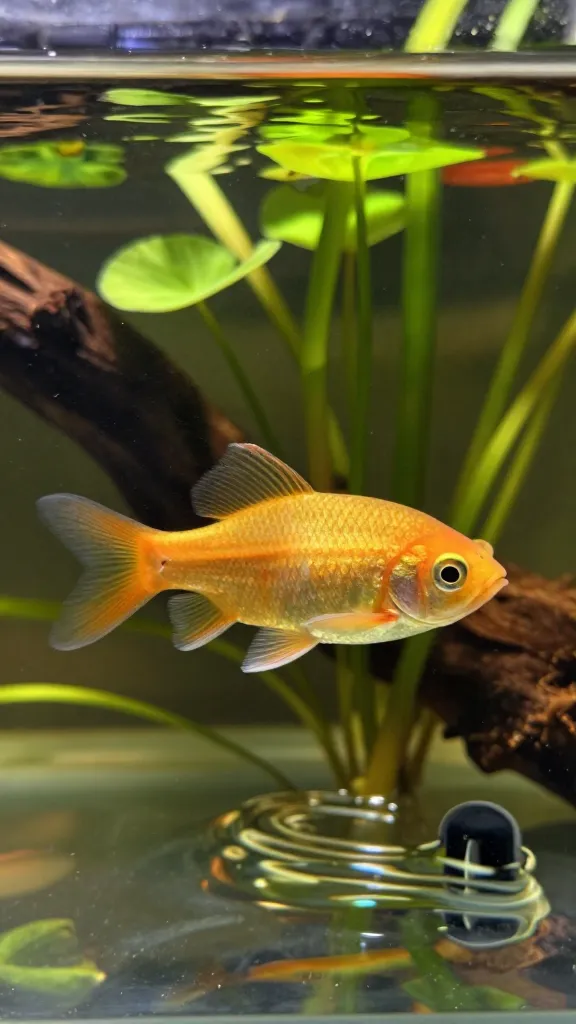
Honey gourami (Trichogaster chuna) can breathe air via a labyrinth organ, which lets them tolerate brief dips in dissolved oxygen that happen when a new tank’s surface is too still or a film forms. That’s a buffer, not a substitute for agitation. Keep a single or pair at 76–80°F, pH 6.5–7.8, GH 4–12 dGH, in a 20-gallon with floating cover and gentle but real surface movement. Adults reach 2 inches. Do not confuse them with dwarf gourami; those have viral and aggression baggage. The failure mode is stuffing them with fast barbs — they’ll be outcompeted at feeding.
10. Otocinclus (After Month 2) — Low Bioload, High Oxygen Need
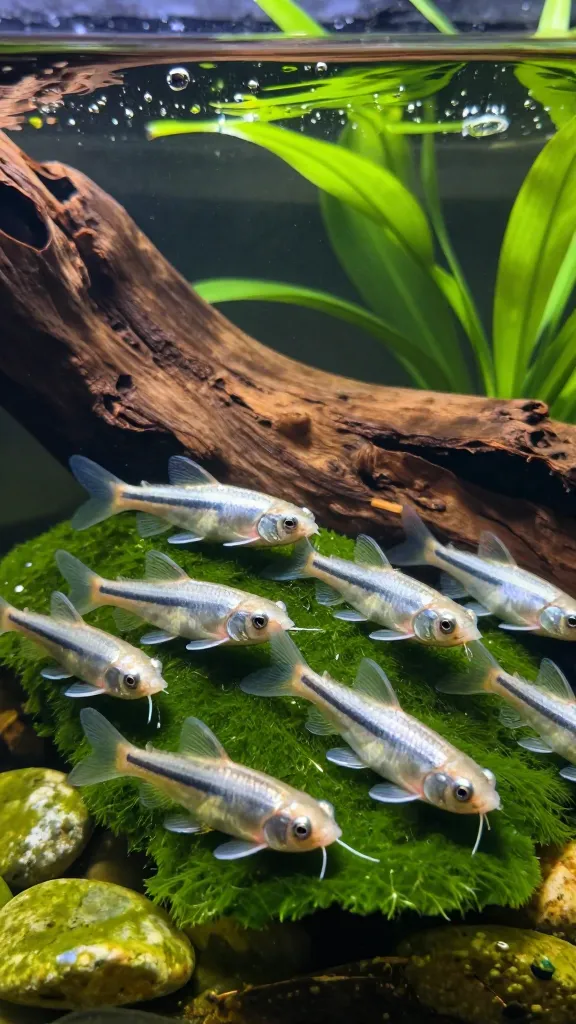
Otocinclus digest soft algae and biofilm as primary food, but their gut flora and tiny stomachs mean they starve in truly new tanks. Once a stable film exists, their small size and low waste make them beginner-friendly. Add only to mature first tanks with proven algae. Keep at 74–79°F, pH 6.5–7.5, in groups of 6+, with 20 gallons+ and active surface ripple. Adults are 1.5–2 inches. The boundary is timing: add before month 2 and you’ll watch them thin despite “enough” wafers. They need oxygenated, clean water; ammonia above 0.25 ppm is not survivable.
11. Bolivian Ram — The Cichlid That Forgives a Missed Tweak
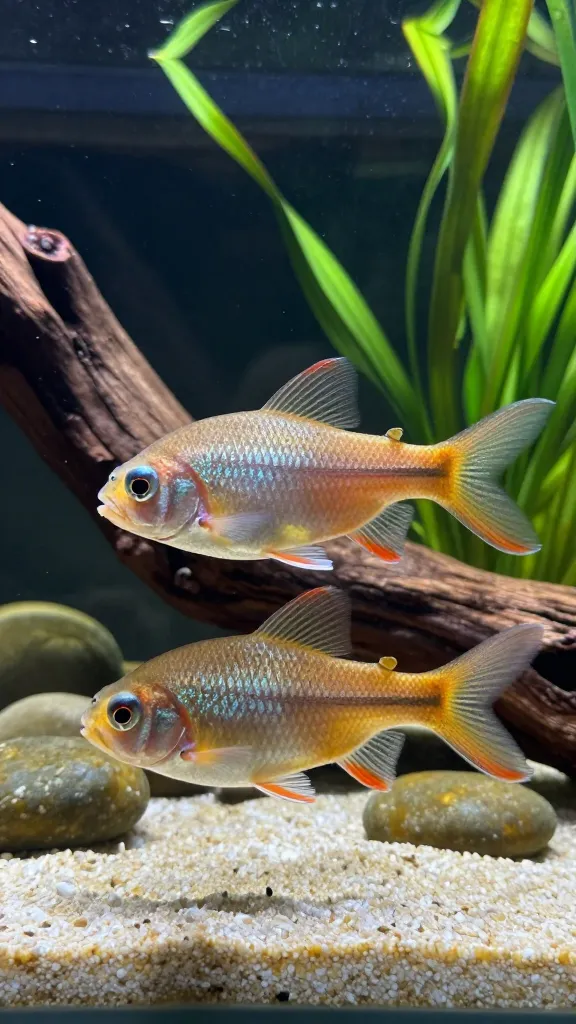
Many dwarf cichlids demand soft, acidic water and pristine organics; Bolivian rams (Mikrogeophagus altispinosus) tolerate a wider band while still rewarding you with cichlid behavior. Their gill structure and metabolism handle pH 6.5–7.8 and GH 4–12 dGH without the skittishness of blue rams at 80–82°F. Keep a pair in a 29-gallon+ at 74–78°F with sight breaks and 6–8x turnover. Adults reach 3.5 inches. The limit is cramped quarters; in a 20-high, territory compression leads to chasing and fin wear.
12. Harlequin Rasbora — Midwater Meter for Your Cycle
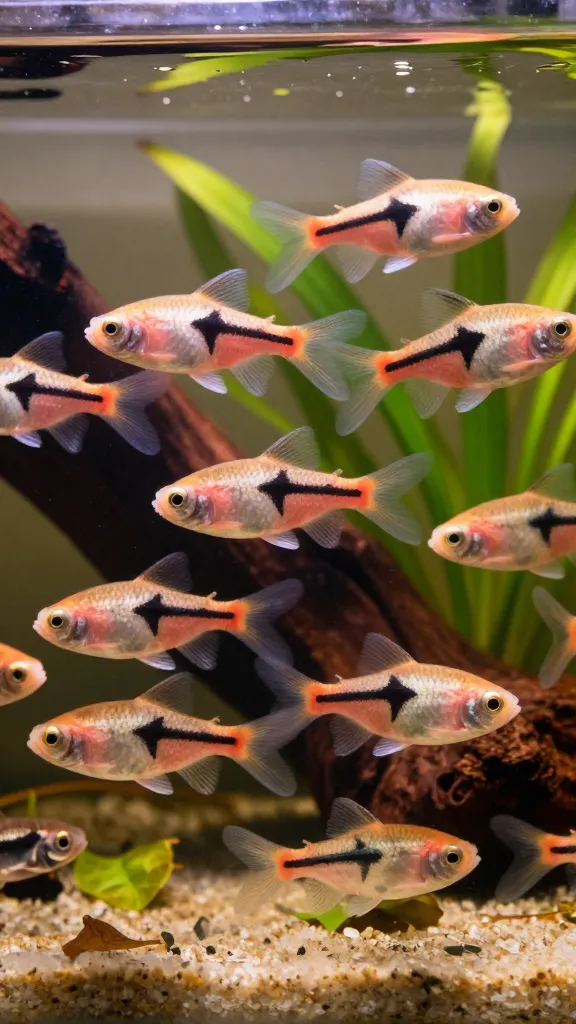
Harlequins (Trigonostigma heteromorpha) school tightly and show stress early by clamping fins and losing pink sheen, which makes them living meters of midwater quality while still being hardy. They handle minor nitrate rise better than ammonia or nitrite, like all fish, but their tolerance band is generous for a first tank past initial cycling. Keep at 76–80°F, pH 6.0–7.5, GH 3–10 dGH, in groups of 8–12 in a 20-gallon. Adults reach 2 inches. The failure mode is overstocking early; anything that pushes ammonia above 0.25 ppm or nitrite above 0.25 ppm will show on them and must trigger a water change.
Frequently Asked Questions
What are the best beginner fish for a 10 gallon aquarium?
White clouds, a trio of platies, or a group of 8 ember/harlequin-sized rasboras are appropriate for a 10-gallon if you keep ammonia and nitrite at 0 ppm and nitrates under 30 ppm. Match temperature to species: white clouds at 64–72°F, platies at 72–78°F, rasboras at 76–80°F. Keep turnover at 6–8x per hour and stock gradually over 2–3 weeks.
How many beginner fish can I keep in a 20 gallon aquarium?
A common, safe plan is one midwater school of 8–12 small fish (harlequins or zebra danios) plus a bottom group like 6 small corydoras. That bioload stays manageable with 8–10x turnover and weekly 30–40% water changes keeping nitrates under 30 ppm. Always cycle first and add groups a week apart while testing.
Do beginner fish need a heater and filter?
Yes; stable temperature and oxygenated, filtered water are what keep “beginner” species alive. Use an adjustable heater sized at 3–5 watts per gallon to hold within ±1°F of the target, and a filter moving 6–10x tank volume per hour with visible surface ripple. Even cool-water fish benefit from filtration because bacteria converting ammonia to nitrate live in the media.
Which beginner fish actually clean algae in a first aquarium?
Bristlenose plecos and, after month 2, otocinclus will graze soft algae and biofilm, but they don’t fix underlying light and nutrient imbalance. Keep light to 6–8 hours, maintain 6–8x turnover, and change 30–40% weekly to export nitrate and phosphate. Avoid large pleco species that exceed 12 inches in small tanks.
Can I mix livebearers like platies with corydoras in a beginner tank?
Yes, if your water is hard enough for the livebearers and the substrate is sand for the corys. Aim for GH 8–20 dGH, pH 7.2–8.2, temperature 74–78°F, and at least a 20-gallon footprint so both have space. Keep cory groups at 6+ and manage livebearer fry before the tank overpopulates.
Stock the Tank You Actually Have
Fish survive when their oxygen, hardness, and temperature needs match your water, and your filter moves 6–10x the volume per hour with real surface ripple. Tonight, measure temperature swing over 6 hours and test GH, KH, and nitrate; those four numbers will tell you which two species from this list will thrive for you.
Questions about your own setup? Leave them in the comments and I will work through them. — Nate