7 White Betta Fish Varieties — Platinum, Opaque and Everything Between
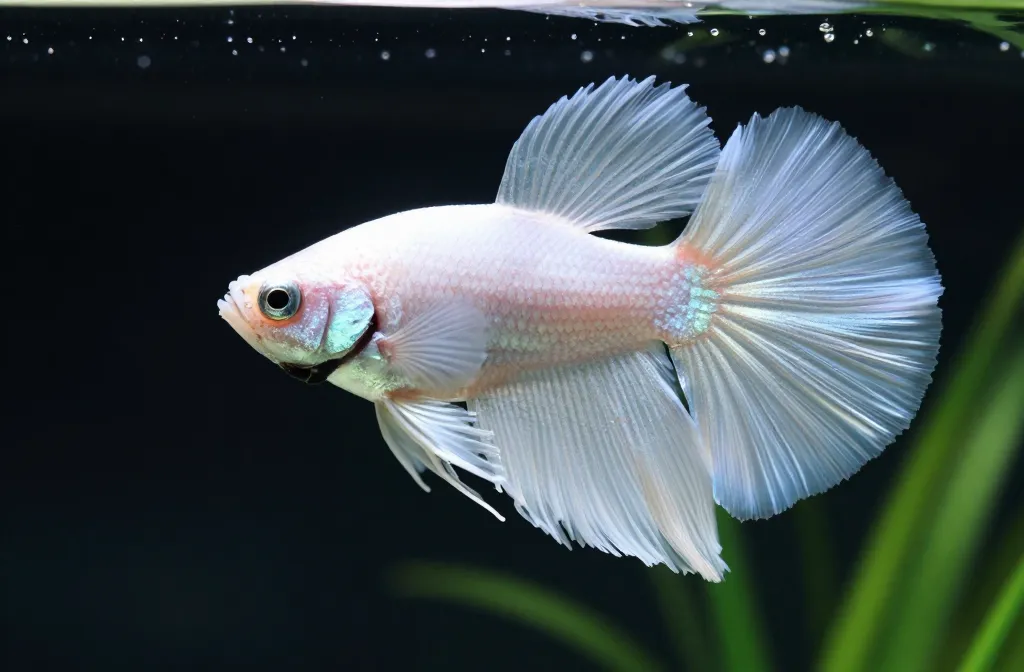
My nano bookshelf tank sits under a clip-on light that cost $22, and that’s where the prettiest fish I’ve ever kept taught me patience. White betta fish varieties can look wildly different under the same light — platinum, opaque, cellophane, metallic, even pearly “dragon” — and the photos online don’t tell you which is which. Here’s the part that feels doable: you can identify these seven types in 2 minutes at a store and know what they’ll look like in your 5-gallon at home. If you’re starting from scratch, a heated, filtered, cycled 5-gallon runs about $90–$160 all-in; the fish itself ranges $10–$45 depending on variety and finnage.
1. Platinum White (The Glossy Porcelain Look That Stays Bright)
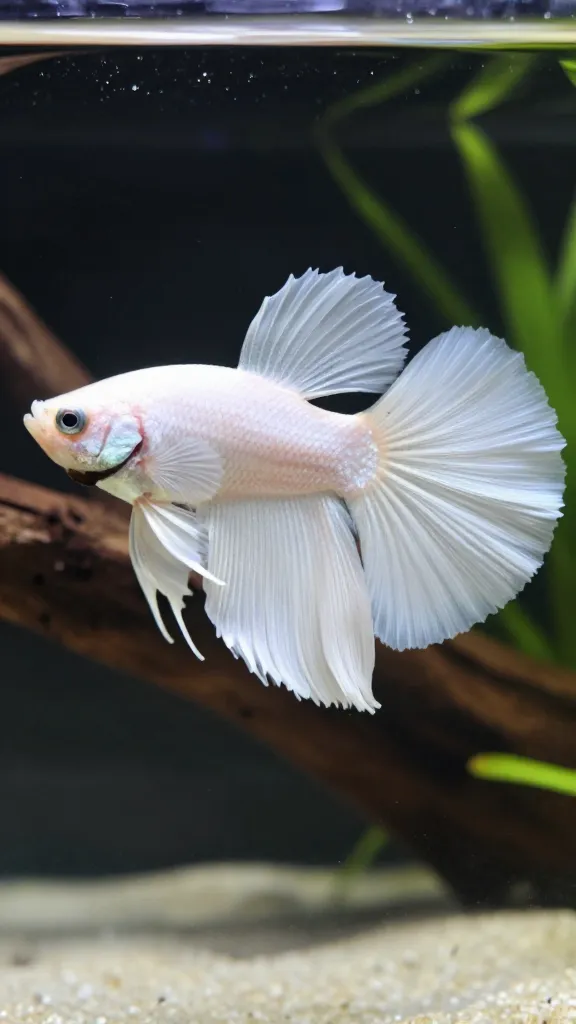
This is a solid, snow-white fish with a smooth, glossy sheen — no see-through fins, no scattered iridescence, just clean porcelain from face to tail. Under a neutral clip-on light at 6500K, my platinum male stayed equally bright on black substrate and on sand for 11 months. Expect to pay $20–$40 depending on finnage and pattern, and plan 78°F with a gentle sponge filter in a 5-gallon minimum. If your water yellows from driftwood tannins, the white can read cream; a small weekly 25% water change kept mine crisp without chasing numbers.
2. Opaque White (Milk-Paint Body, Powdered Fins, Slightly Matte)
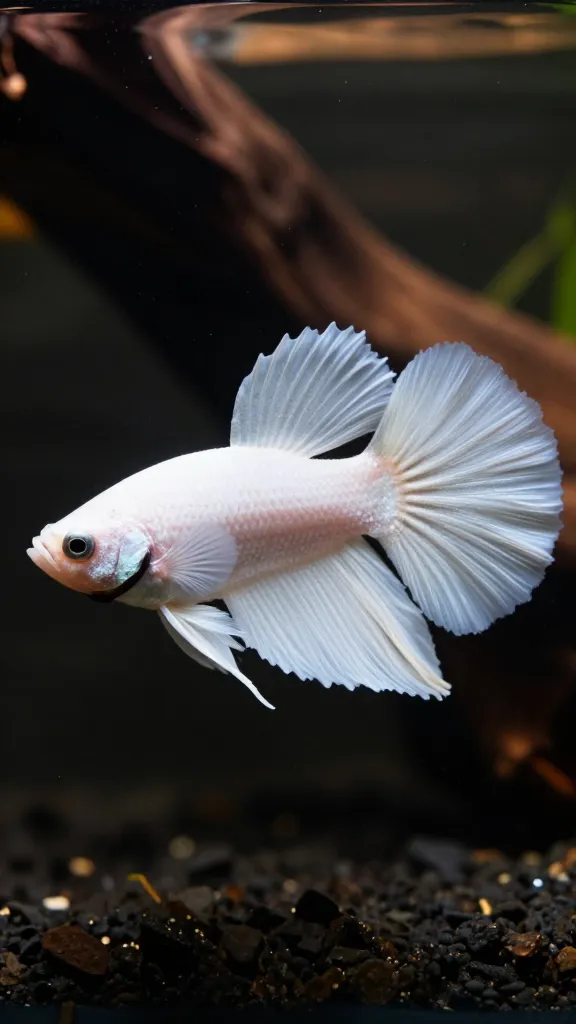
Think of opaque as white with a micro “powder” over the scales — a thicker, matte layer that softens edges, especially in the fins. In person it looks like milk paint, and in photos it holds white even with warm room bulbs. I’ve seen these locally for $15–$30, often mislabeled as “platinum,” and one I kept held its tone for 9 months on low light and dark gravel. The tradeoff is that matte texture shows fin nicks more clearly, so avoid sharp decor and keep flow mild; ragged fins on opaque read messy faster than on metallic types.
3. Cellophane/Glass White (Clear Fins, Pale Body, Changes With Background)
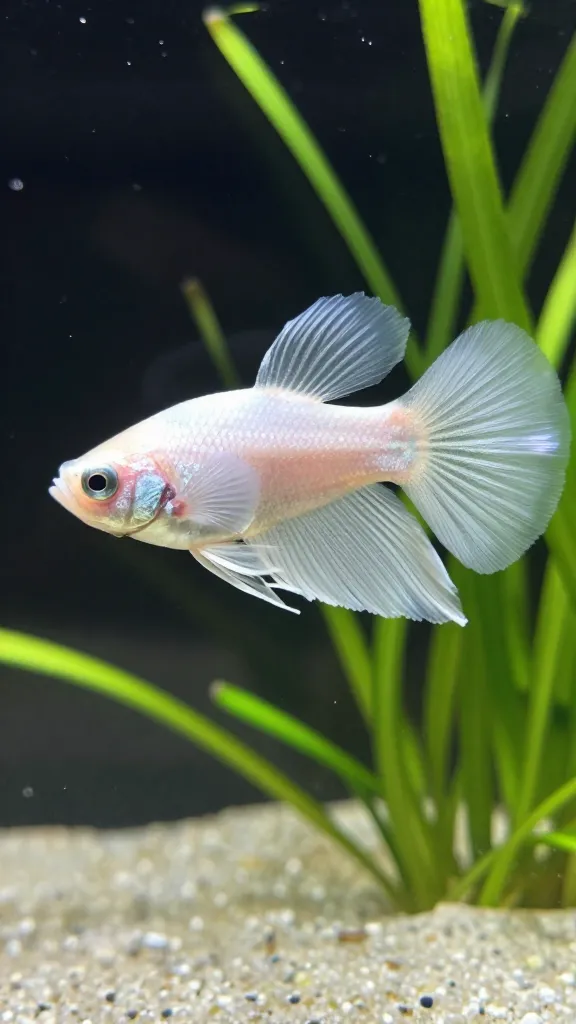
Cellophane is the chameleon of white bettas: pale cream or pinkish body, mostly transparent fins, and a thin look that can glow against plants. Under a bright light, my cellophane female looked almost pearl at 78°F, but on a black background she read faintly blush — it shifted with every angle. These are usually $10–$20 and common at local stores. They are honest about water quality; any ammonia spike during cycling will show as stress stripes you can see, so cycle for 4–6 weeks before adding her and test weekly at first.
4. Metallic White (“Platinum Steel” Flash From Strong Iridescence)
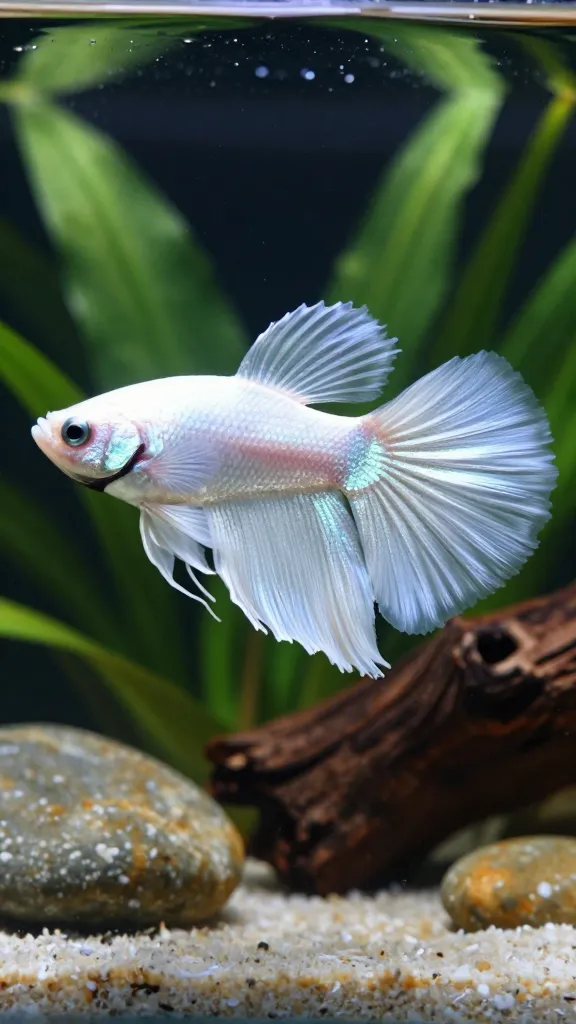
Metallic whites have a silver cast that flares as they turn, thanks to heavy iridophores layered over pale scales — a different creature under LEDs than under warm lamps. Mine cost $28 and looked almost chrome on a 6500K light, then softer under a plant-heavy dimmer; either way it stayed white, not yellow. If you like that flash, pick a smooth scape: broad-leaf Anubias and rounded stones, nothing jagged, and gentle current. Overdo blue-spectrum LEDs and they can look bluish; if that bugs you, add a thin diffuser film (under $10) to soften the beam.
5. White “Dragon” Scale (Pearled Armor, Heavy Contrast, Needs Careful Checks)
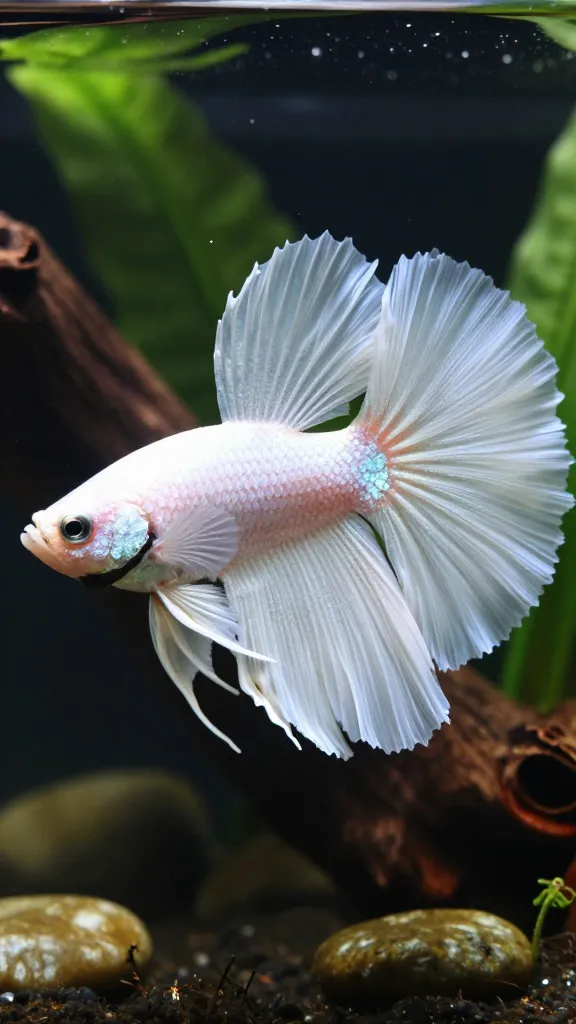
Dragon whites have thick, pearly plates over darker undercolor, so the body reads bold armor while fins stay paler — dramatic even in a modest tank. The one I passed on was $35 because I could see heavy plating near the gill line; I’ve kept dragon morphs before and do a weekly flashlight gill check after feeding to make sure plates aren’t impeding opening. They can be perfectly healthy, but the armor hides subtle weight loss, so I use measured meals: 5–6 micro pellets once a day, skip one day per week. If you want carefree viewing, this morph asks for extra observation you have to be willing to give.
6. White With Ear/Flaring Highlights (Dumbo/Elephant Ear, Frills That Show Dirt Fast)
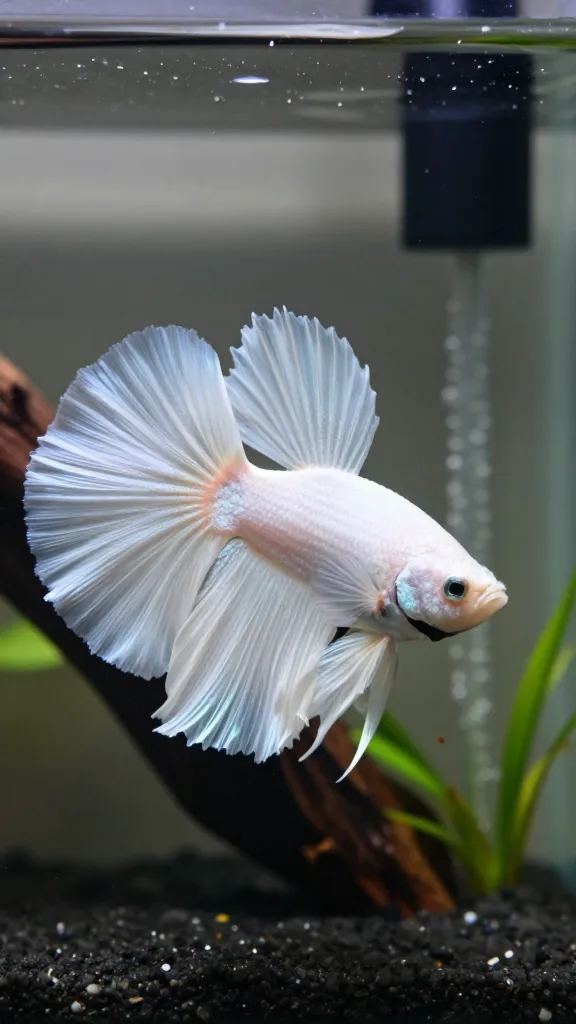
This is a clean white body with oversized pectoral fins that look like little fans, fantastic in a still photo and joyful in a calm tank. I kept one for 14 months; the big fins caught every stray crumb, so I learned to target-feed with tweezers and vacuum lightly every 3–4 days instead of weekly. Price is usually $20–$35, and the payoff is real movement at eye level on a desk. The caveat is current: too much flow exhausts those big fins, so baffle the return or pick a small sponge filter rated for 10 gallons and run it low.
7. White With Spot, Edge, or Butterfly Trim (The Budget-Showpiece for –)
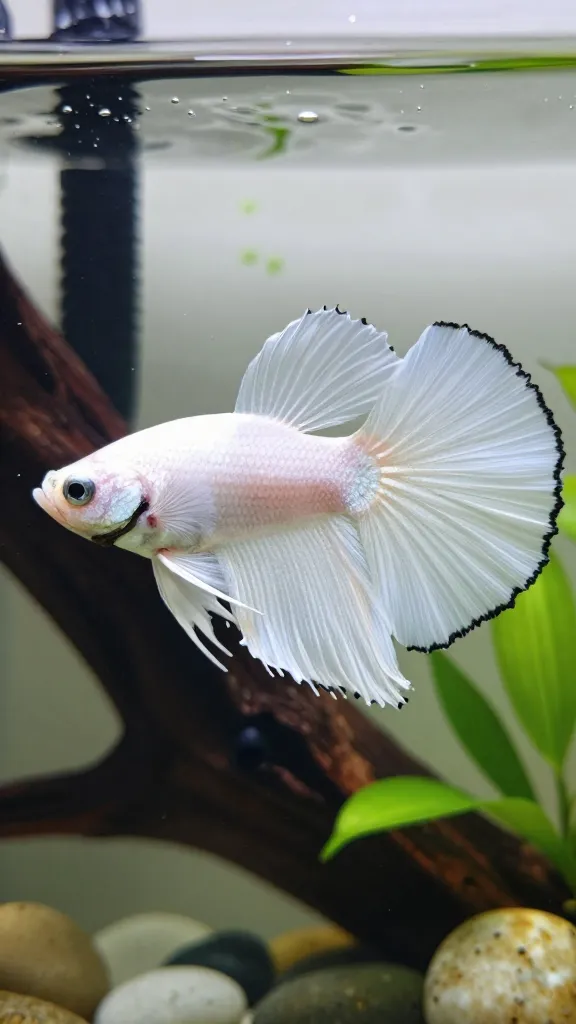
These are white bodies with a crisp band of color at the fin edges — pale gold, black pinstripe, or a butterfly split that’s half white, half accent. In my 5-gallon, a white-and-black pinstripe male at $18 looked “designer” under plain light, and the contrast survived the inevitable bit of algae on week six. Expect the accent band to widen slightly over 6–12 months as the fins lengthen. If the edge is black, keep nitrates under 20 ppm; on whites, green-film algae blends, but against black it prints every speck and makes people clean too aggressively.
Frequently Asked Questions
What size tank does a white betta fish actually need?
A single betta needs a heated, filtered, cycled tank of at least 5 gallons — bowl photos are marketing, not care. The extra water volume keeps 78–80°F stable and spreads out waste, which matters for white fish because poor water shows quickly in fins. A basic 5-gallon with a small sponge filter, adjustable heater, and clip-on light typically runs $90–$160 depending on your area.
How do I keep a white betta white instead of yellow or cream?
Stable water and light do most of the work: do 25–30% weekly water changes and avoid heavy tannins that can tint the fish. Use a neutral 6000–7000K light, rinse the sponge filter in tank water monthly, and keep nitrates under 20 ppm. If you love driftwood color, run a small bag of carbon for 2–3 weeks after rescapes to clear the amber tint, then remove it.
Are platinum and opaque betta fish the same thing?
No — platinum looks glossy and reflective, while opaque looks like a soft matte paint with a thicker white layer. Under the same light, platinum reads like porcelain and opaque like powdered milk. Prices overlap ($15–$40), so inspect under store lighting; tilt the cup and watch for shine vs. soft glow.
Do white bettas need special food to prevent yellowing?
No special food is required; color is genetic and influenced more by lighting and background than diet. Feed a quality betta pellet and supplement with frozen bloodworms or brine shrimp 1–2 times per week for conditioning. Overfeeding causes waste that clouds fins — stick to 5–6 small pellets once daily and one fast day weekly.
Can I keep a white betta fish with shrimp or snails?
Maybe snails, rarely shrimp. Most bettas ignore nerite or mystery snails after the first 48 hours, but many will hunt small shrimp; I’ve lost 3 of 5 neocaridina in a week to a curious male. If you try shrimp, do it in a heavily planted 10-gallon and be ready to rehome if the betta insists on patrolling.
A Small Tank, A Bright Fish, A Calm Routine
The fish will look its best when the basics are steady — 5 gallons, heat, a gentle filter, and a weekly water change you can actually keep. If you want to start this week, pick the tank first, set the heater to 78°F, and let it cycle 4–6 weeks with a pothos clipping and some easy plants; the white you choose will reward that patience the first time it flares.
Questions about your own setup? Leave them in the comments — I answer all of them. — Maya