12 Betta Fish Types — How to Tell the Tails Apart

I keep one 5-gallon on my desk, and betta fish types became real for me the first week I tried to ID a veil tail from a halfmoon by eye and got it wrong. If you’re staring at photos trying to sort betta fish types by tail shape, these are the cues I actually use and what they cost to get right at the store. By the end, you’ll be able to tell a delta from a halfmoon, a crowntail from a combtail, and a plakats’ short tail from long-fin cousins. A basic, heated, filtered betta setup runs $70–$130 depending on glass size and light, and the right ID helps you buy the fish you meant to bring home.
1. Veil Tail: The Everyday Long Fin Under

This is the classic long, downward-draped tail with a soft taper and a rounded end; the dorsal and anal fins also sweep long but not rigid. Most chain-store males labeled simply “betta” are veil tails, and I’ve seen them listed in the $6–$15 band for years. The soft tell: when flaring, the tail keeps a teardrop silhouette, never a sharp “V” or a flat edge. If you want big flare symmetry, this isn’t the one — the tail can twist or fold in high flow, so keep current gentle and always plan a 5-gallon, heated, filtered, cycled tank at 78–80°F.
2. Halfmoon: A True 180° Fan

Halfmoons spread the caudal fin to a perfect semicircle — a flat, straight edge across the outer rim when fully flared and ~180° of spread. Expect $18–$35 depending on color and finnage, and know that the broad tail shows tiny rips fast in rough decor. I once brought home a halfmoon and learned quickly that plastic plants cost me two pinholes in 3 days; switching to smooth hardscape and soft plants fixed it. If your fish never flares to the full fan even in a mirror session, you may have a delta masquerading as one.
3. Delta and Super Delta: The Almost-Halfmoon Wedge
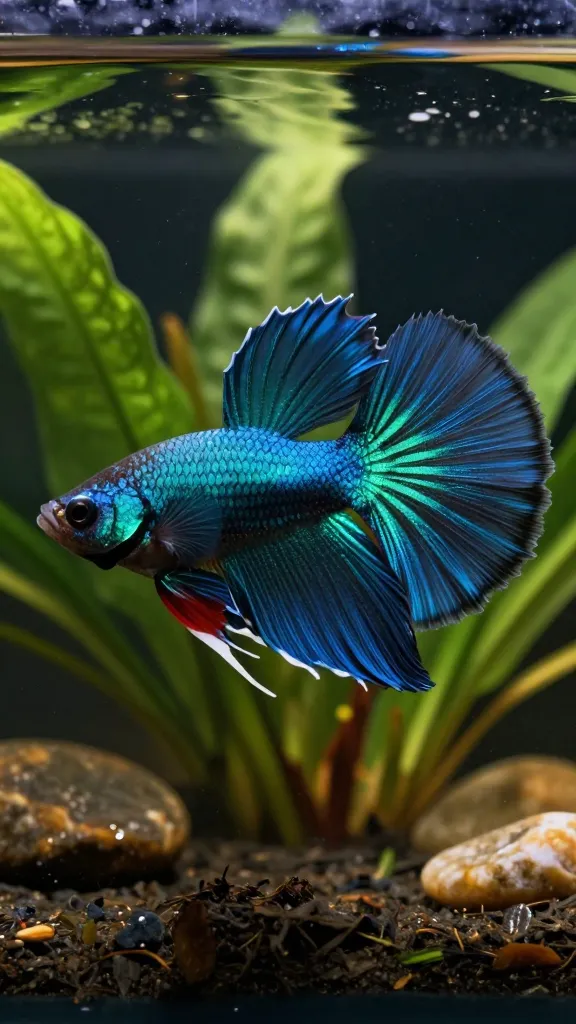
Delta tails open wider than a veil tail but stop short of the halfmoon line: ~120–160° for deltas, ~160–175° for super deltas. Prices tend to sit between $12–$25, and you’ll see a clean, triangular wedge when the fish flares, with a slightly curved outer edge rather than a straight chord. These are great if you want drama without the constant tearing risk of full halfmoons. If the spread looks perfect only from one side, check for mild fin curling from hard water — add 0–2 dKH cut with RO if your tap runs very hard, or just accept the curl as cosmetic.
4. Crowntail: The Spiky Rim With 33–50% Reduction

Crowntails have “rays” that extend beyond the tail webbing, giving a spiky look; true crowntails usually show 33–50% webbing reduction on the caudal, anal, and dorsal. They often price $15–$30 and look wild when flaring, like a sunburst. Mine handled a 120 gph hang-on-back poorly; in a 5-gallon, I swapped to a small sponge filter and the fish started exploring instead of fighting current within 48 hours. The spikes can catch on rough decor, so keep everything smooth and avoid coarse mesh.
5. Combtail: A Softer Fringe, Not a True Crown

Combtailed bettas are a cross look: slight webbing reduction gives a fringe but not the dramatic spikes of a crowntail, usually <33%. They commonly list in the $12–$22 range and are easy to mix up in-store. If you hold a mirror for 10–15 seconds and the fringe appears mostly at the tail edge with the anal/dorsal still smooth, you likely have a combtail. If you’re after that full sunburst, keep walking — it won’t develop into a crowntail later.
6. Plakat (Short Fin): Sporty Fins, Quick Moves

Plakats have short, tidy fins with a rounded or slightly pointed tail, built more like the wild type; the silhouette is compact and balanced. Prices vary $15–$40, especially for marble or koi patterns, and they handle gentle 1–2x tank turnover currents better than long-fins. I prefer plakats in small spaces because I can run a slightly stronger sponge filter without dragging fins; mine started bubble nesting after 2 weeks in a 5-gallon with floating Salvinia. If you wanted the flowing look for photos, this isn’t that — but you do get easier fin care.
7. Double Tail: Two Lobes, Taller Dorsal

Double tails split cleanly into upper and lower lobes on the caudal, and the dorsal fin is noticeably taller than in single-tail forms. I’ve seen them at $18–$35; they look special when flaring because both lobes fan evenly. The flip side is frequent fin folding and occasional spinal curvature in poor lines, so choose a fish that swims straight for 60 seconds without tail drag. Heavy driftwood branches can snag the split — keep plant leaves broad and smooth.
8. Rosetail/Feathertail: Over-Branching and Ruffles
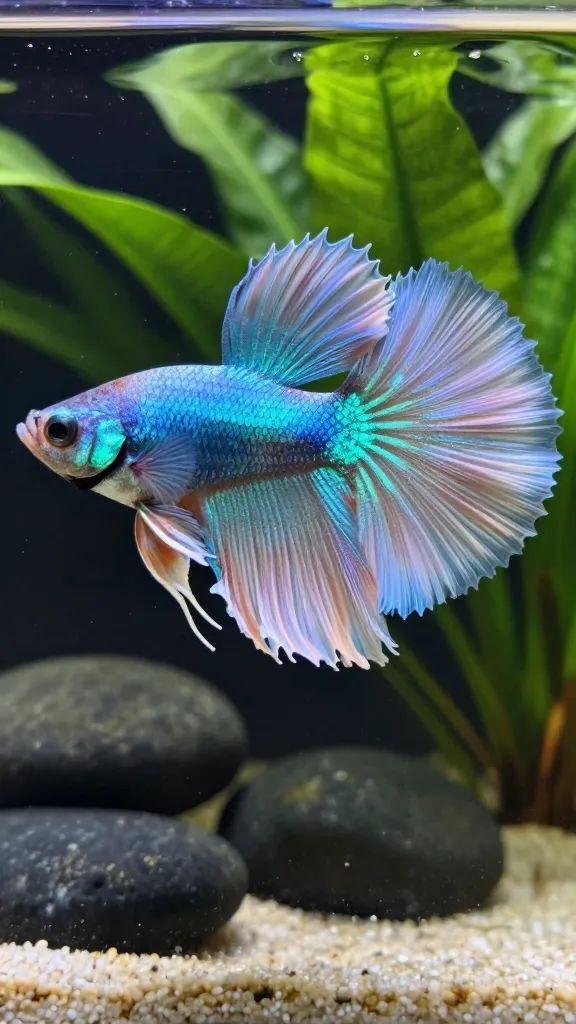
Rosetails push the halfmoon further with heavy branching and ruffled edges that exceed 180° at times when overflared; feathertails are an extreme version of the same idea. These can run $25–$60 depending on pattern. They’re breathtaking, but the extra fin mass can invite fin bite or tear in ordinary flow, and healing took my friend’s fish 3 weeks at 80°F with pristine water changes. If you don’t enjoy monitoring edges and trimming hardscape, you’ll be happier with super delta or halfmoon.
9. Spade Tail: The Heart-Tip Point
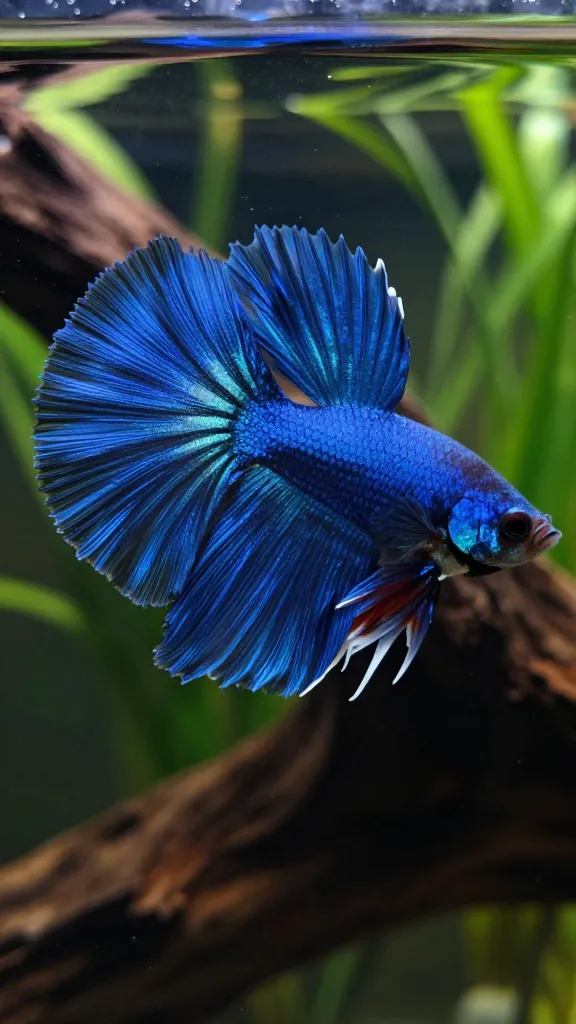
Spade tails end in a gentle point, like the suit on a playing card, rather than a rounded veil or straight halfmoon edge. They appear periodically in mixed groups around $10–$20, and the cue is the central tip: when the fish flares, the outer edge curves inward toward a single soft point. This shape is subtle and easy to miss under poor lighting; I use my phone flashlight at the store for 10 seconds to check the rim. If you see a straight edge instead, you likely have a halfmoon variant, not a spade.
10. Round Tail: Full Circle Without the Flat Edge
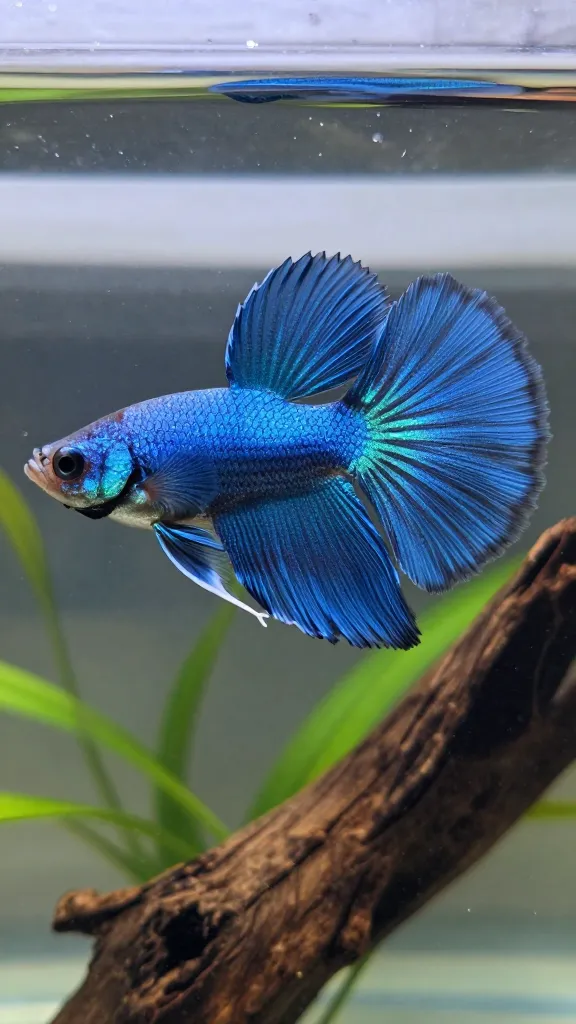
Round tails look like halfmoons that never sharpen; flared, the outer rim is a smooth curve with no straight chord, typically ~160–180° but visually circular. They often price $12–$25 and make for elegant motion without sharp corners catching on plants. In my 5-gallon, a round tail handled 1 water change/week at 30–40% and never showed edge fray over 5 months with silk plants and wood. If you crave exact symmetry on photos, know that slight left-right bias is common and not a health issue.
11. Dumbo (Elephant Ear): Pectoral Fins Do the Talking
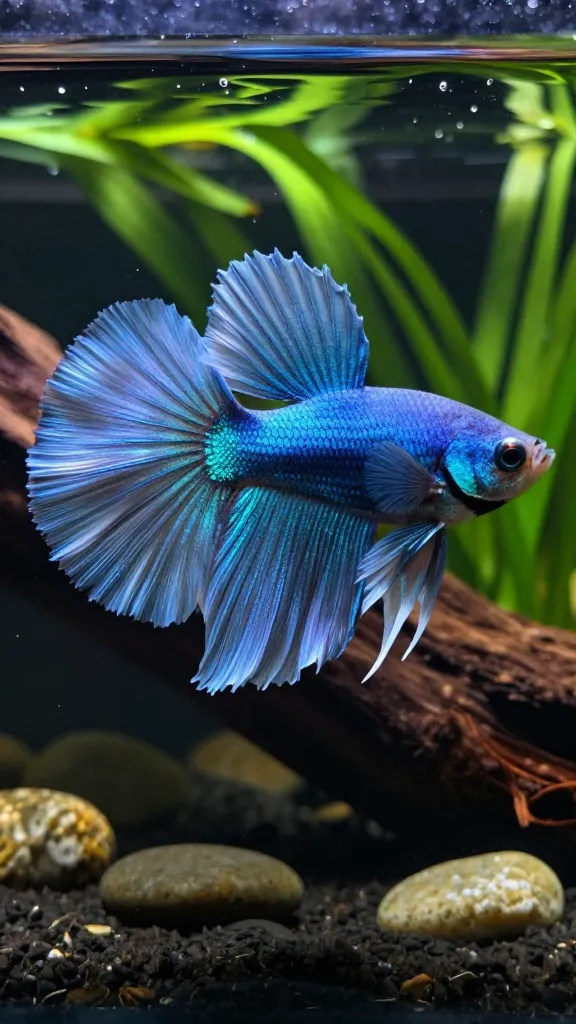
Dumbo bettas aren’t a tail type but get lumped in because the giant pectoral fins change the whole silhouette; tails can be halfmoon, delta, or plakat. Prices cluster $20–$45. The big pectorals are gorgeous in still water, but they behave like parachutes in current; I cap air on my sponge to a barely visible ripple at the surface for these. If you see constant “helicoptering,” turn flow down — stamina improves in 24–72 hours when water is calm.
12. Koi/Marble Pattern on Any Tail: Expect Color to Drift
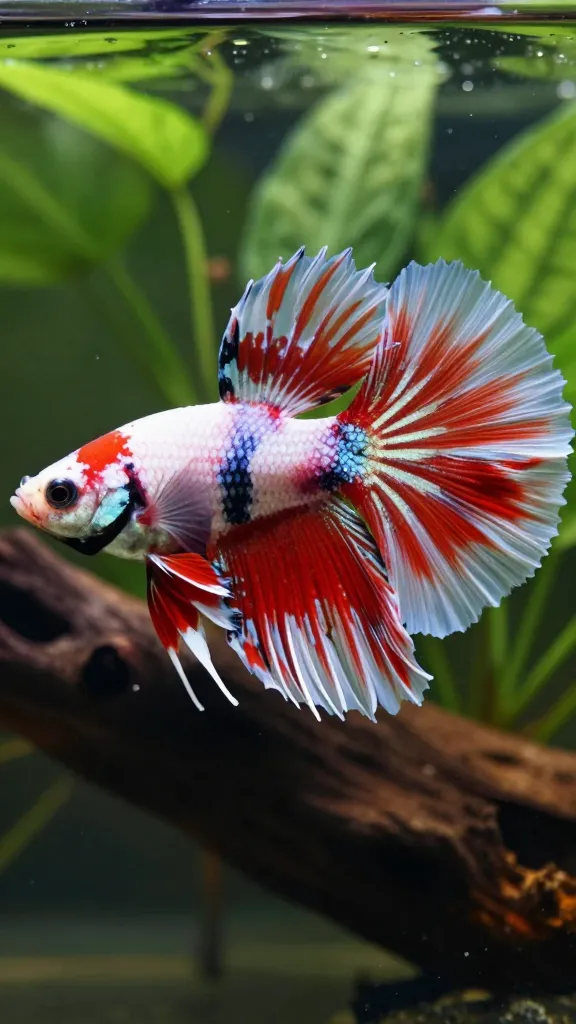
Marble genetics mean koi/marble patterns shift over time, whatever the tail type; I’ve watched red patches grow by 20–30% in 3 months on a super delta. These fish span $18–$50 depending on coverage and contrast. If you buy for exact color placement, budget for the pattern to wander — it’s normal, and many fish finish shifting around 6–12 months. The tail ID rules still apply underneath the paint, so flare-check your spread before paying.
Frequently Asked Questions
How do I tell a halfmoon betta from a super delta at the store?
Look for a flat outer edge when fully flared and a full 180° spread — that’s a halfmoon. A super delta will get close, around 160–175°, but the rim stays slightly curved. Use a mirror for 10–15 seconds to encourage a flare, and check both sides for symmetry.
What tank size and gear does a betta fish actually need?
Plan for at least 5 gallons, a small sponge or gentle filter, and an adjustable heater set to 78–80°F. All tanks must be cycled before adding the fish, which typically takes 3–6 weeks with a source of ammonia. Expect $70–$130 for the full setup, depending on glass and light.
Are crowntail bettas harder to keep than other betta fish types?
Not harder, but they’re pickier about flow and decor because of the webbing reduction. Keep current low (about 1–2x tank turnover) and avoid rough plastic plants or coarse mesh that can snag rays. Good water and gentle surfaces keep the spikes intact.
Why did my koi betta’s colors change after a few months?
Marble genetics cause pigment to shift, so patches can expand, fade, or move over 6–12 months. It’s normal and not a disease if the fish is eating and active. Stable, warm water at 78–80°F and regular weekly 30–40% changes support healthy color, whatever it becomes.
Can a plakat live in a smaller tank than a long-fin betta?
No — short fins don’t change space needs; aim for the same 5-gallon, heated, filtered, cycled setup. The benefit is easier swimming in gentle flow and fewer fin tears, not a smaller volume. You’ll also find maintenance simpler because fins stay cleaner in typical 1/week service.
Pick the Tail, Still Keep the Water
The tail you love is fun, but the constant is warm, clean, calm water and a real 5-gallon home that’s cycled before your fish arrives. If you want a quick win this week, grab a small sponge filter and an adjustable heater — together they’re $30–$50 — and set them running in the tank you already have so the bacteria clock starts now.
Questions about your own fish’s tail type? Leave them in the comments — I answer all of them. — Maya