10 5-Gallon Betta Tank Setups — Every One Under a Real Budget

My first 5-gallon betta tank setups lived on one IKEA shelf, next to a jar of trimmings that refused to die. A betta tank can feel like a big spend, but a 5-gallon betta tank done right is still small enough to heat, plant, and light on a normal paycheck. By the end of this, you’ll be able to pick a setup, a shopping list, and a budget band — most of mine land between $65 and $160 all-in before the fish. I’ve crashed plants by blasting light, and I’ve also run one 5 for 18 months on weekly cups of water. You can do this without a fish-room or a degree; I keep everything on one desk.
1. Bare-Bones Betta with Live Floating Plants — Under

This is glass, a small sponge filter, a basic adjustable heater, and a mat of floating plants like Amazon frogbit (Limnobium laevigatum) or red root floaters (Phyllanthus fluitans). The floaters shade the betta, eat excess nutrients, and give you that soft, dappled look. Expect $20–$35 for the 5-gallon tank, $12–$20 for a sponge filter and air pump, $15–$25 for a heater, and $10–$20 for plants. Mine took 4 weeks to cycle with seeded media before the fish. The caveat: floaters multiply; thin them weekly so surface access stays clear and the filter outflow isn’t blocked.
2. Low-Light Planted Betta: Anubias and Java Fern for 0–0

Inert sand or fine gravel, two small Anubias barteri var. nana and one Java fern (Microsorum pteropus) tied to wood, a sponge filter, a heater, and a modest clip-on light set to 6 hours. I spent $24 on a branchy piece of wood and $18 for the three plants; the rest fit in at $60–$80 depending on glass. This ran 9 months before I even opened a fertilizer bottle. Don’t bury rhizomes — that’s the quiet killer — and don’t expect a “carpet” at this light level.
3. The Betta and Cherry Shrimp Co-op — 0 and Patience

A planted 5 with dense moss (Taxiphyllum barbieri), a stack of lava rock for shrimp hideouts, and plenty of floaters to break sightlines can let you try a small neocaridina group alongside a single betta. I built mine for about $120 including hardscape and plants, then waited 8 weeks before adding 12 shrimp, and another 2 weeks before the betta. It worked: I still count 10+ shrimplets at 6 months. This is not for a known shrimp-hunter; have a rehoming plan and understand you may lose some. Stocking adult sizes matter: betta 2.5–3 inches, shrimp under 1.25 inches — hiding space is the difference between colony and snack.
4. Soil-Capped “Set-and-Trim” Betta: 0 Once, Then Just Scissors
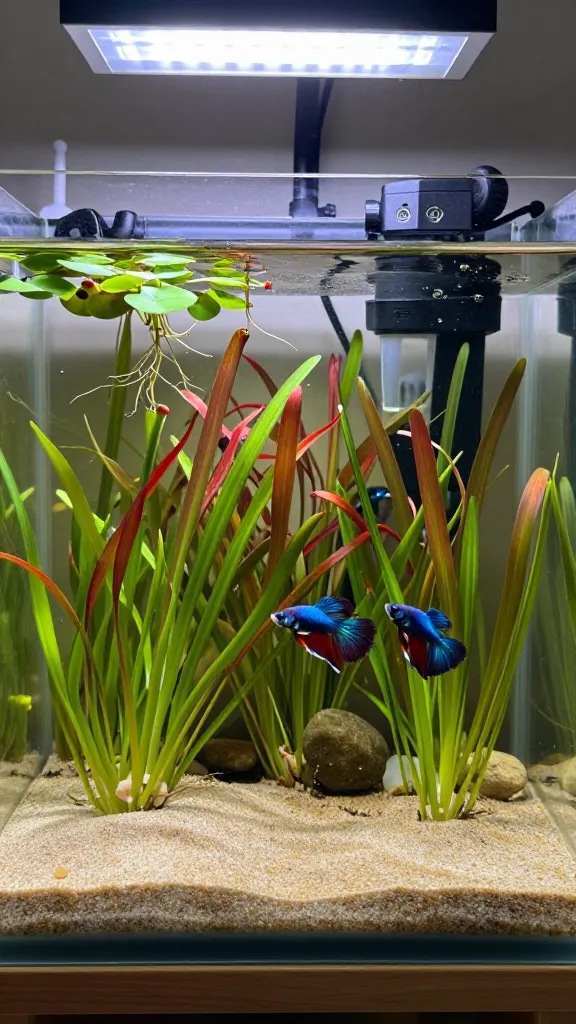
A thin layer of organic soil capped with sand, fast stems like Hygrophila polysperma and Ludwigia repens, plus floaters, with a gentle HOB or baffle’d sponge and a heater gives you plant horsepower that eats ammonia. My build was $140 all-in, and I ran 8 hours of light with 1 pump of all-in-one fertilizer weekly. I trimmed every 10–14 days and sold $10 plant bundles twice, which felt like a tiny rebate. Soil can spike; cycle a full 6–8 weeks before the betta, and keep initial water changes at 30–40% twice weekly until nitrates settle.
5. No-Substrate “Zen” Betta with River Stones — –
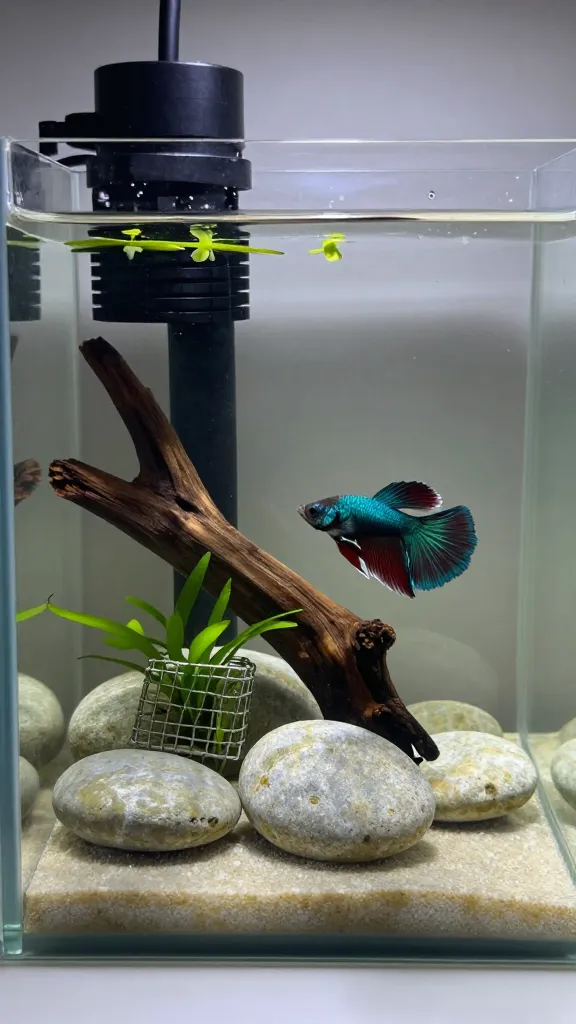
Skip substrate entirely: bare-bottom tank, smooth fist-sized river stones, a piece of wood, a heater, a sponge filter, and a small clump of Subwassertang (Lomariopsis sp.) tied to mesh. I pulled this together for roughly $85 and it has been the easiest to vacuum — debris lifts in 3 minutes. The tradeoff is look and plant options; most rooted plants are out, and you’ll rely on epiphytes and floaters for greenery and nutrient uptake. Keep the heater guarded so the betta can’t wedge underneath.
6. The Blackwater 5 with Leaves and Alder Cones — –0
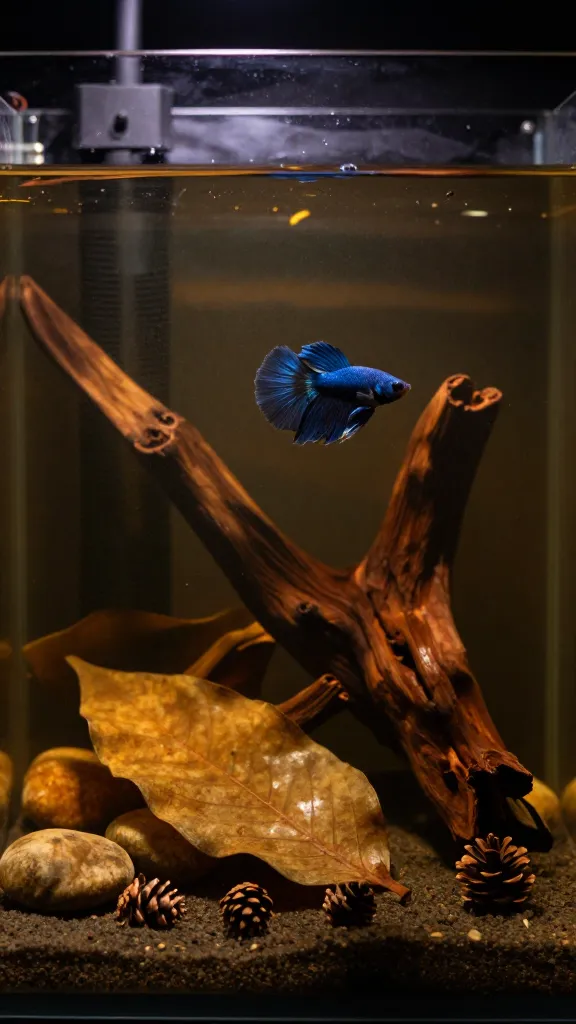
Conditioned tap, a handful of Indian almond leaves (Terminalia catappa), a few alder cones, dim light, plenty of line-of-sight breaks, and the usual sponge filter and heater. My tannins came up within 48 hours, and the betta’s finnage stayed smooth over 10 months; I topped up leaves every 3–4 weeks. Budget comes in at about $90–$120 depending on glass and wood. This aesthetic will tint your water tea-brown; if that bothers you, this is not your setup. Keep parameters steady: 76–80°F, gentle flow, and stable pH (tannins can nudge pH down).
7. The Desk-Lamp Dutch: Stems on a Timer for 0–0

A neat scape with Rotala rotundifolia, Limnophila sessiliflora, and a small crypt like Cryptocoryne wendtii ‘green’, driven by a clip-on light with a cheap outlet timer set to 7 hours. My outlay was $135 and I dosed 2 ml all-in-one fertilizer twice weekly; growth was steady without CO2 over 5 months. It shines if you like trimming day — stems need a shaping pass every 2 weeks. The opinion I hold: a timer is the single cheapest piece that saves beginners from algae and plant melt, and mine cost $8.
8. Hardscape-Forward Betta: Wood, Rock, and One Plant — 0
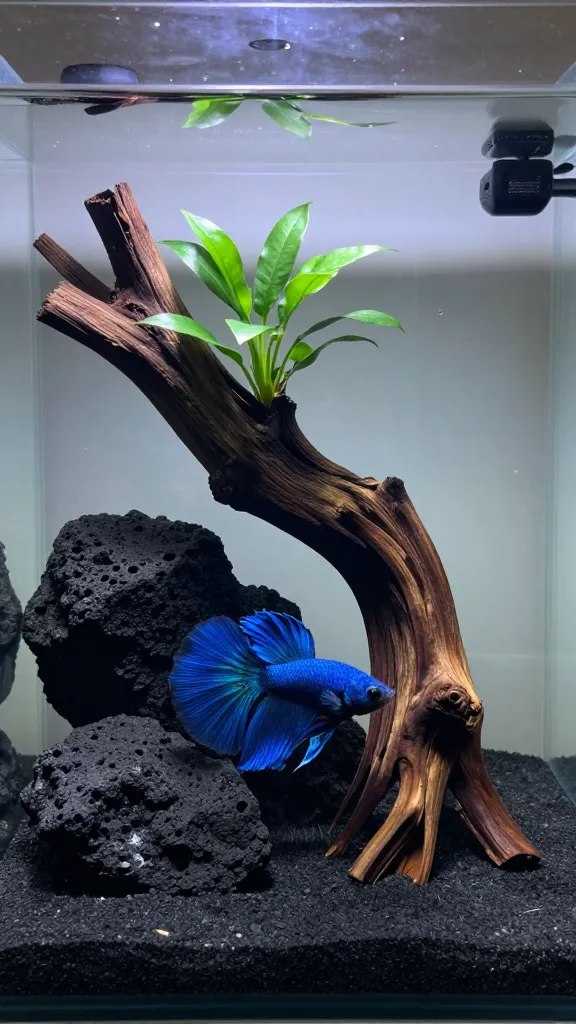
Think negative space: spider wood arch, dark lava rock, one hero plant like Bucephalandra ‘Green Wavy’ epoxied to a branch, a heater, a sponge filter, and modest light. This one cost me $100 exactly because I already owned the filter and heater; add $30–$45 if you need those. It’s been stable for 7 months with 15–20% weekly water changes and light feeding. Buce is slow; if you want fast, pick an Anubias instead. Avoid sharp rocks that can tear fins; run a cotton test on edges before committing.
9. The Quiet HOB with Intake Guard: and Fewer Cords

A small, baffled hang-on-back filter with a pre-filter sponge, heater, fine gravel, and a hardy plant set (Anubias, Java fern, and floating Salvinia minima) keeps the tank clear without an air pump. My total was about $95 and I cleaned the HOB every 4 weeks to keep flow gentle. I noticed better surface film control within the first 3 days. HOBs can suck fins if unguarded — always use a tight-fitting intake sponge and aim the outflow at the back glass.
10. The “ If You Shop Used” Starter — Glass, Heat, Sponge, One Plant
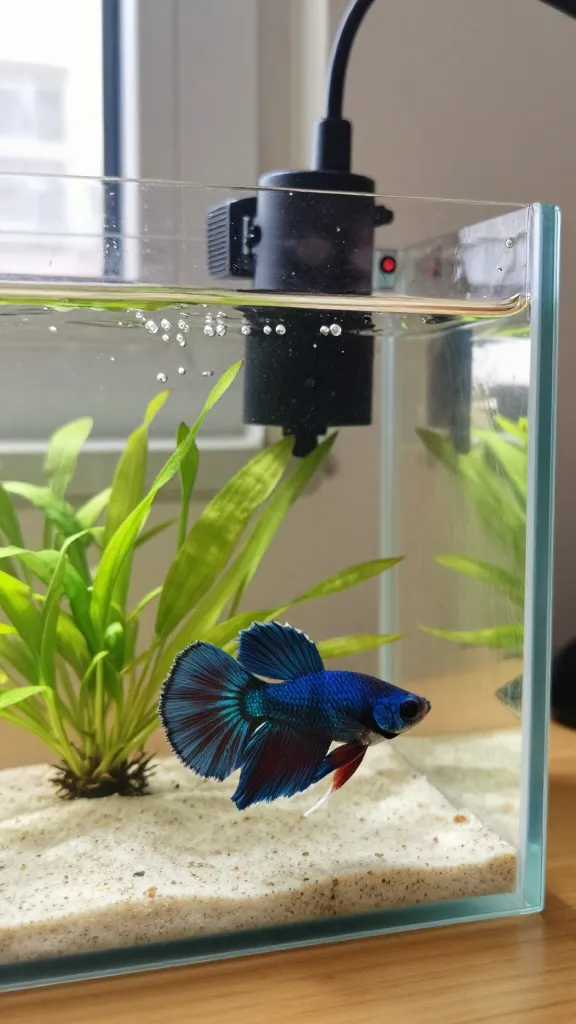
I found a used 5-gallon for $15, added a basic heater for $18, a small sponge filter and air pump for $20, and one generous clump of water sprite (Ceratopteris thalictroides) for $12. That’s $65 before the fish and dechlorinator, and it cycled in 5 weeks with a piece of seeded sponge borrowed from another tank. It’s not glamorous, but the betta didn’t care — he patrolled, built a bubble nest at 78°F, and I spent more time watching than tinkering. Used gear needs a rinse and a smell check; if silicone looks chalky or you smell mildew in the plug, pass.
Frequently Asked Questions
What do I actually need to start a 5-gallon betta tank?
You need a 5-gallon glass or acrylic tank, a small sponge filter or gentle HOB, an adjustable heater, a dechlorinator, and either live plants or hardscape for cover. Budget $65–$160 depending on new vs used gear and plant load. Add a basic clip-on light if you want live plants; run it on a 6–8 hour timer to start.
How long should I cycle a 5-gallon betta tank before adding the fish?
Plan on 4–8 weeks, longer if you used nutrient-rich soil. You’re waiting for ammonia and nitrite to read 0 ppm and nitrate to be present on a liquid test. Seeding the filter with media from an established tank can cut this to around 3–4 weeks, but still test before you add the betta.
What temperature should a betta tank be, and do I really need a heater?
Keep it between 76–80°F, and yes, a heater is necessary for stable warmth in a 5. Room temps swing; tanks don’t like that, and bettas show stress within 24–48 hours of cold snaps. An adjustable 25–50W heater usually covers a 5-gallon.
Can I keep shrimp in a 5-gallon betta tank?
Sometimes, if you provide dense plants, moss, and lots of hides and add the shrimp first, then the betta. Start with 10–12 neocaridina and give the tank 6–8 weeks of plant growth before fish. Be prepared to rehome if the betta hunts — some individuals won’t tolerate shrimp at all.
How much does it cost per month to maintain a 5-gallon betta setup?
Electricity, dechlorinator, and occasional food or fertilizer typically land around $3–$8 per month in the U.S. A small bottle of dechlorinator lasts 6–12 months, and a jar of pellets can go 8–12 months if you feed sparingly. Replace filter sponges every 6–12 months for a few dollars.
Start Small, Start This Week
The only non-negotiables are heat, gentle filtration, and time to cycle; the rest is style and patience. If you want a first step this week, pick up a used 5, a sponge filter, and a heater, then throw in a handful of floaters and start the clock at 4 weeks — the betta comes last.
Questions about your own tank? Drop them in the comments — I answer all of them. — Maya