10 Nano Shrimp Tank Setups — Colonies Under 5 Gallons
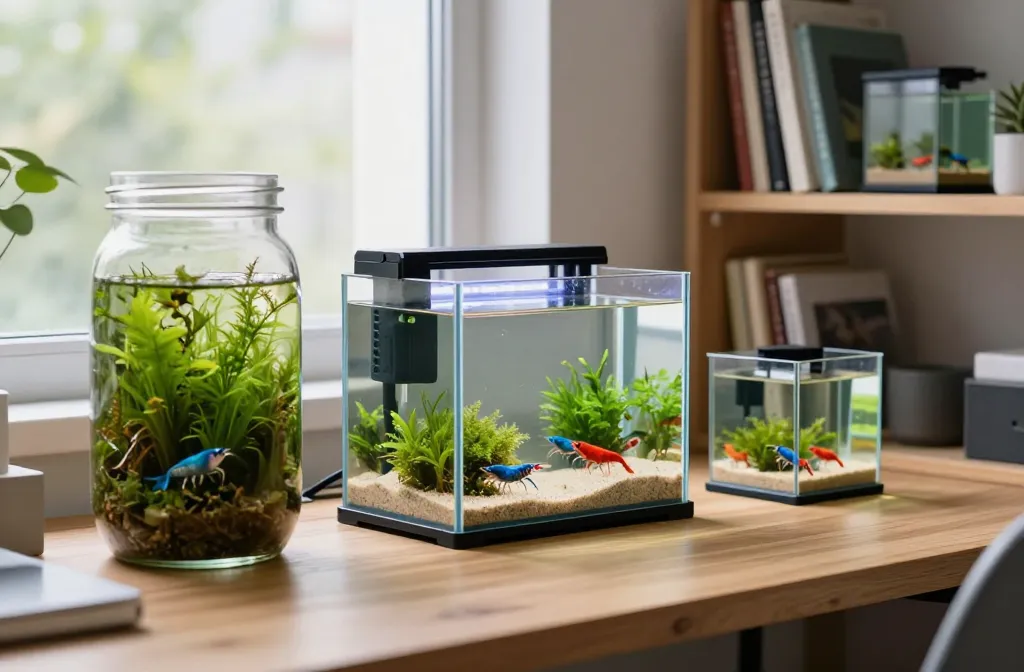
I run all my nano shrimp tank setups on one desk and a bookshelf, and the first molt I ever found scared me into thinking I’d lost one. Nano shrimp tank setups look fancy online, but they can be as simple as a jar and some moss if you let plants do the work first. By the end of this, you’ll have 10 concrete builds you can actually start this month, with what to buy, what to skip, and where the money goes. Most of these land between $35 and $120 to get running, depending on glass and light. I’ll tell you where I paid exact dollars and where the band is honest.
1. The Windowsill Moss Jar: 1 Gallon, No Filter
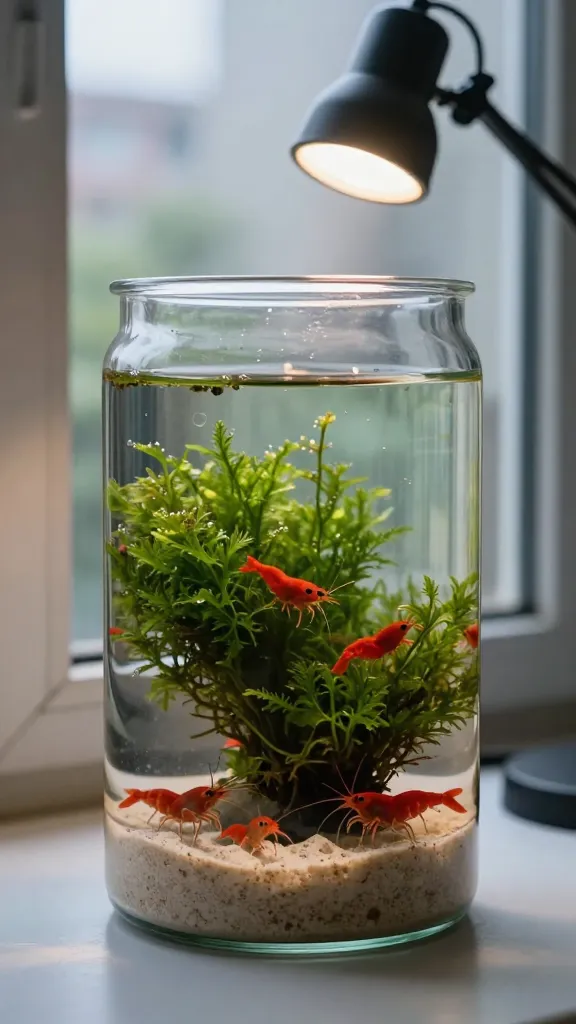
A clear 1-gallon jar, 1 inch of inert sand, a fistful of java moss (Taxiphyllum barbieri), and a clip-on room lamp 8 inches above the lid is all this needs. The moss grows biofilm and catches crumbs; the shrimp do the rest. Mine cost $35 total in 2023 (the jar was $12 at a home store, the moss portion $10, ten Neocaridina davidi $13 from a local swap). It ran 11 months in a north window before I moved it. The caveat is time: give it 6–8 weeks with plants and a pinch of food every few days before a single shrimp goes in, and skip direct summer sun or you’ll be trimming algae every 3 days.
2. 2.5-Gallon Desk Tank with Sponge Filter: – All-In
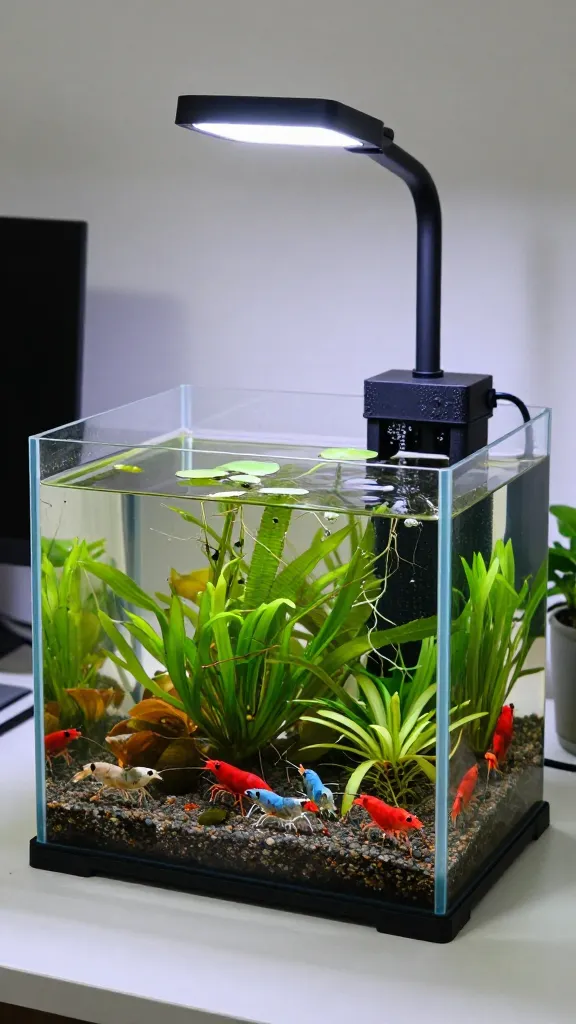
This is the classic starter: a 2.5-gallon rectangular tank, fine gravel, a small sponge filter with an air pump, and a basic clip-on light at 8–10 hours. Plant it thick with Subwassertang (Lomariopsis lineata), floating Salvinia, and a stem bundle. Expect $60–$90 depending on the glass and light you choose; I spent $78 last fall, shrimp not included. It’s stable by week 4–6 if you seed the sponge in dechlorinated water and feed the empty tank lightly. The only real “no” is heavy feeding; in 2.5 gallons, extra pellets mean parameters swing fast.
3. 3-Gallon Shallow Breeder for Grazing: Horizontal Space Wins

A 3-gallon shallow basin gives shrimp more floor to graze: 1 inch of active shrimp substrate, a small sponge filter, and a low, even light. Add a cholla log and a mat of Christmas moss (Vesicularia montagnei). I ran this format for 14 months and watched my colony stabilize around 60–80 shrimp without adding food more than every other day. Expect $85–$120 based on the specialty substrate and light. The tradeoff is evaporation: shallow water loses 0.1–0.2 gallons per week in dry homes, so top-offs with remineralized water become routine.
4. Blackwater Leaf Litter Bowl, 1.5 Gallons: Tannins On Purpose
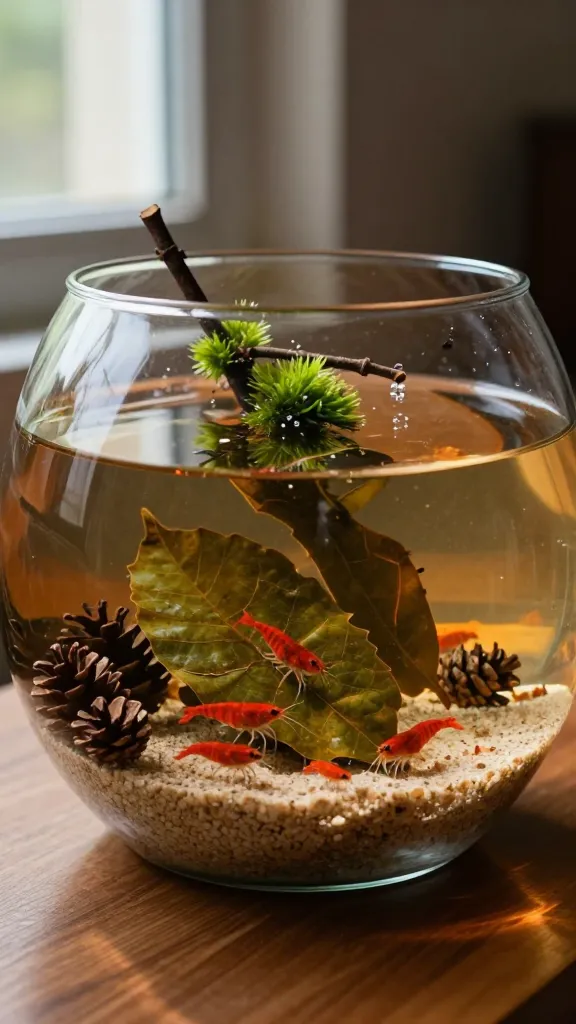
For a cozy, low-light look, use a 1.5-gallon bowl, inert sand, a small pile of Indian almond leaves (Terminalia catappa), alder cones, and a tuft of moss tied to a twig. No filter, just a gentle airstone. My leaf pack cost $9 and lasted 6–8 weeks before I swapped half of it; the full build runs $40–$55 plus shrimp. It’s beautiful and the biofilm explodes, but you must test: aim for pH 6.6–7.2 for Neocaridina and keep ammonia/nitrite at 0. If water turns tea-dark and you can’t see through it, you’ve over-leafed it; pull some out and add fresh water slowly.
5. Cold-Room 2-Gallon for Neocaridina: No Heater, Real Numbers
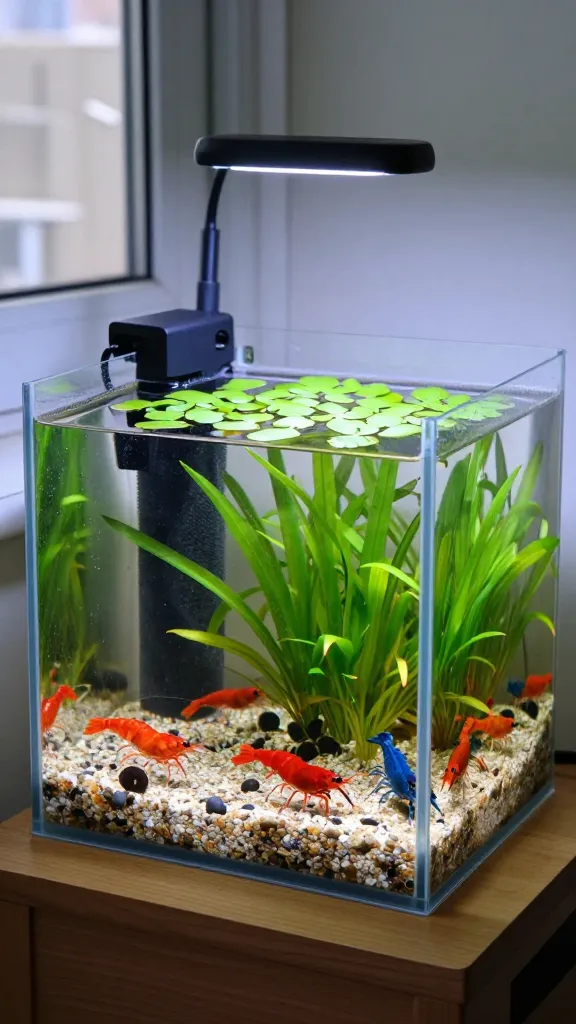
If your room sits at 68–72°F most days, a 2-gallon with sponge filter, fine gravel, and hornwort (Ceratophyllum demersum) plus duckweed can run unheated. Mine held 70–72°F November through March and the shrimp bred at a slower clip; I saw 2–3 berried females per month instead of 4–5. Expect $55–$85 to set up. The catch is stability: if your nights dip below 66°F or swing more than 3°F in 24 hours, add a small adjustable heater and set it to 72–74°F or skip this approach.
6. 4-Gallon “Green Mat” Carpet: Monte Carlo on a Budget

For plants-forward, use a 4-gallon rimless tank, active soil substrate, a sponge filter, and a brighter clip-on light to grow a low carpet of Micranthemum tweediei (“Monte Carlo”). I spent $110 on glass, soil, and light; plant portions were $18. The carpet took 10 weeks to fill with CO2-free care and weekly trims, and shrimp started grazing on day 3. This is not the cheapest option and it needs 8–10 hours of consistent light; if algae shows up in sheets, reduce light by 1 hour and add more floaters to buffer nutrients.
7. 5-Gallon Long “Moss River”: Two Filters, Quiet Flow

A 5-gallon long with a corner sponge filter on one end and a small air-driven matten panel on the other creates a slow “river” for constant grazing. Pile river stones and tie on java fern (Microsorum pteropus) and moss. My colony hit 100+ shrimp in 8 months with zero supplemental powders, just shrimp pellets 3–4 times per week and blanched zucchini once weekly. Expect $95–$140 to build because of the extra foam. The caveat is trimming: flow collects mulm behind stones; plan on a 15–20% water change weekly plus a turkey baster clean.
8. The “Dry-Start Then Flood” 3-Gallon

If patience is your superpower, lay active soil, plant Hydrocotyle tripartita and Monte Carlo, mist, cover, and let it root in air for 4–6 weeks before flooding with dechlorinated water. Add a sponge filter when you flood; run the light 8 hours. My dry-start gear was just plastic wrap and a mist bottle; I spent $50–$75 total depending on soil and plants. The upside is instant plant mass for shrimp; the risk is mold if you over-mist. Crack the cover daily, and if you see fuzz, increase air time to 1 hour per day.
9. Minimal-Tech Breeder Box Add-On: and Your Existing Tank
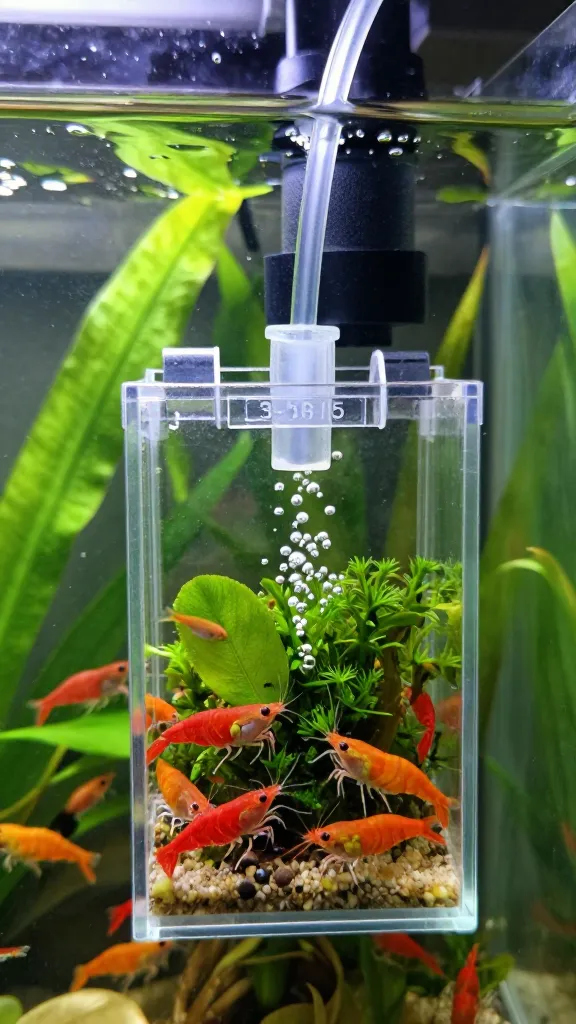
Hang a air-driven breeder box on the rim of your established aquarium and run shrimp in 0.3–0.5 gallons of circulating water with a wad of moss and a leaf. I paid $20 for the box and moved 15 Neocaridina in after quarantining plants. It cycled off the main tank’s water and I had my first berried female at week 5. This only works if that host tank is healthy and the intake is guarded; never try this on a tank with big fish that can stress shrimp through the divider, and keep feeding tiny — one pellet every other day is enough.
10. “Caridina on Training Wheels” 4-Gallon with RO Blend

If you want to try Caridina cantonensis (crystal reds/ blacks) under 5 gallons, use a 4-gallon with active shrimp soil, a sponge filter, a tight lid, and remineralized RO/DI water. Target GH 4–6, KH 0–1, pH 6.0–6.6, 70–72°F. My first attempt cost $120–$160 because of soil and salts; I kept the tank empty but planted for 6 weeks before adding 10 shrimp, and I saw steady survival but slower breeding than Neocaridina. The honest limit: this is not the “first ever tank,” and water prep adds weekly steps; if your tap is hard or swings seasonally, stick to Neocaridina for your first colony. I think that’s the kindest on your budget and on the animals.
Frequently Asked Questions
How many shrimp can I keep in a 5-gallon shrimp tank?
A reasonable starting target is 20–30 Neocaridina in a 5-gallon, then let the colony grow into the space. With heavy plants and a sponge filter, many keep 60–100, but start light and watch parameters. Feed tiny amounts and rehome as the tank fills.
Do I need a heater for a nano shrimp tank?
Only if your room drops below about 68°F or swings more than 3°F daily. Neocaridina do fine at 70–74°F with stable temps; Caridina prefer the low 70s and more stability. A small adjustable heater is $15–$25 and buys you consistency.
How long to cycle before adding shrimp to a 2–5 gallon setup?
Plan on 4–8 weeks with plants, a filter running if you use one, and a tiny pinch of food every few days to feed bacteria. Add shrimp only when ammonia and nitrite are 0 for two tests a few days apart. In tiny volumes, patience prevents swings.
What substrate works best for a small shrimp tank?
For Neocaridina, inert sand or fine gravel is simplest and cheaper at $10–$20 per tank. For Caridina, use an active shrimp soil that buffers pH; that runs $20–$35 for a small bag and lasts about 12–18 months before it weakens.
Can I keep fish with shrimp in under 5 gallons?
You can keep snails and micro inverts safely, but fish are risky in such small volumes. Even tiny fish will eat shrimplets, and 5 gallons leaves no escape room. If you want fish, step up to a larger, heavily planted tank and research adult sizes first.
Start Small, Start Planted
The one thing that matters is plant mass first, shrimp second — in small water, plants and time are your filter. If you want to begin this week, grab a 1-gallon jar, a wad of java moss, and dechlorinator; set it by a calm window, feed a pinch every few days, and circle a date 6 weeks out to buy your first ten shrimp.
Questions about your own build? Drop them in the comments — I answer all of them. — Maya