10 Shrimp Tank Aquascape Ideas — Scapes Shrimp Actually Graze

My smallest shrimp tank aquascape sits on a bookshelf, and the first week I watched a shed exoskeleton drift and thought I’d lost one. These shrimp tank aquascape ideas are built for real grazing: biofilm, algae fuzz, and edible plant bits your shrimp will actually work all day. By the end you’ll know exactly what to buy, what to skip, and roughly what each scape costs to set up. Most land in the $45–$160 band depending on glass size and light, and all of them are doable on one shelf. If you cycle first and seed with plants for 4–6 weeks, the shrimp do the rest.
1. The Moss Tangle in 3 Gallons: Maximum Graze, Minimum Gear

A 3-gallon rectangle, a fist-sized tangle of java moss (Taxiphyllum barbieri) zip-tied to short twigs, a small sponge filter, and a clip-on light set low is the whole build. The moss catches mulm, grows biofilm, and presents endless edges for shrimp to comb. Mine ran 12 months before I trimmed it hard, and the shrimp colony doubled from 12 to about 25 without extra feed. Skip if you want crystal-clear water every day; moss traps fine particles, so you’ll live with a gentle tea tint and do 20% weekly changes.
2. Rock Ledges Under 0: Anabiosis on Stone

Stack two to three flat pieces of inert dark stone into shallow shelves, leaving 0.5–1 inch gaps where detritus can settle and biofilm grows thick. Plant Microsorum pteropus (java fern) and Bucephalandra on the faces; add a sponge filter and an adjustable heater if your room dips below 70°F. Expect $80–$100 for a 5-gallon with hardscape and plants. The graze shows up in week 3 as a soft film—don’t scrub it. If you run high light chasing carpeting, you’ll outcompete the biofilm and lose the whole point of the ledges.
3. The Window Shelf “Algae Farm” (No Filter, No Heater)
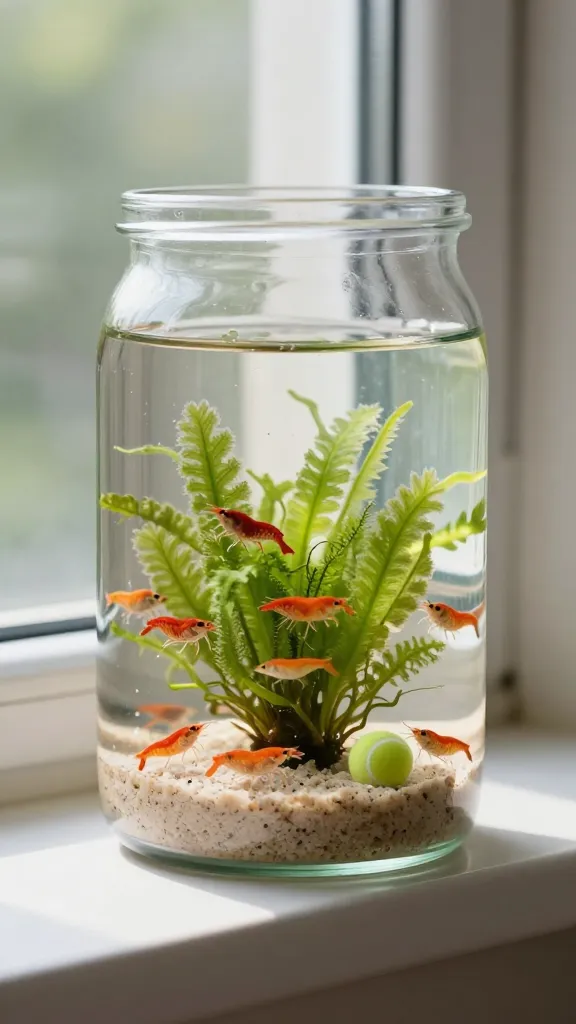
A 2-gallon glass cookie jar on a bright north-facing window, 1 inch of inert sand, and a tennis-ball clump of Subwassertang (Lomariopsis cf. lineata) will grow edible fuzz with daylight only. I spent $40 total and let it mature for 6 weeks before adding 8 Neocaridina at room temps of 68–72°F. It works because algae happens on purpose here. Don’t try this if your summer room exceeds 80°F or if your window blasts direct sun longer than 2 hours — overheating and green water will win.
4. Fallen Branch Canyon in 5 Gallons: Leaves Feed the Microfauna
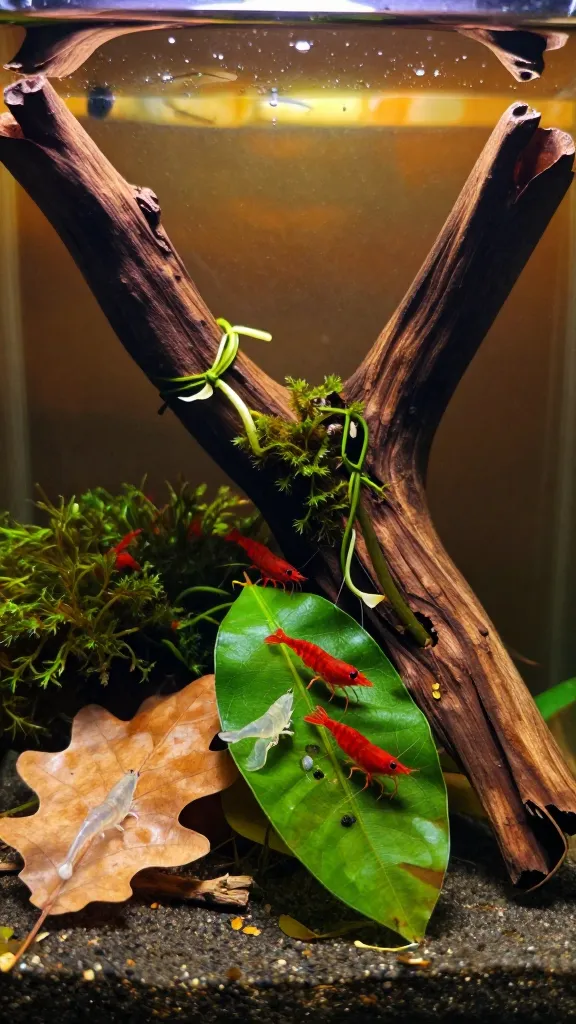
Lay two forked pieces of inert driftwood to form a “V”, then pack the valley with Catappa (Indian almond) leaves, a handful of oak leaves, and a touch of cholla wood. Clip moss and Anubias barteri var. nana onto the branches; run a sponge filter gently. Expect $90–$120 depending on wood and plants. Over the first 8 weeks, leaves soften and biofilm peaks, and my shrimp ignored pellets for days. If tannins bother you, this won’t be your look; the tea color is the feature, not a flaw.
5. The Grass Patch: Vallisneria and a Sand Path for Constant Picking

In a 4–5 gallon, push a small group of Vallisneria nana into fluorite or fine gravel at the back and keep the front a bare sand lane. A modest clip-on light at 6–7 hours/day creates slow algae on the sand grains—shrimp gold. My first run cost about $75 and took 5 weeks to look “lived in.” Don’t plant too densely up front; shrimp need open substrate to graze. If your tap pushes KH 0–1, add a mineral source because Vallisneria sulks soft.
6. Micro Cliff with Buce and Shade: and Low-Maintenance Trimming
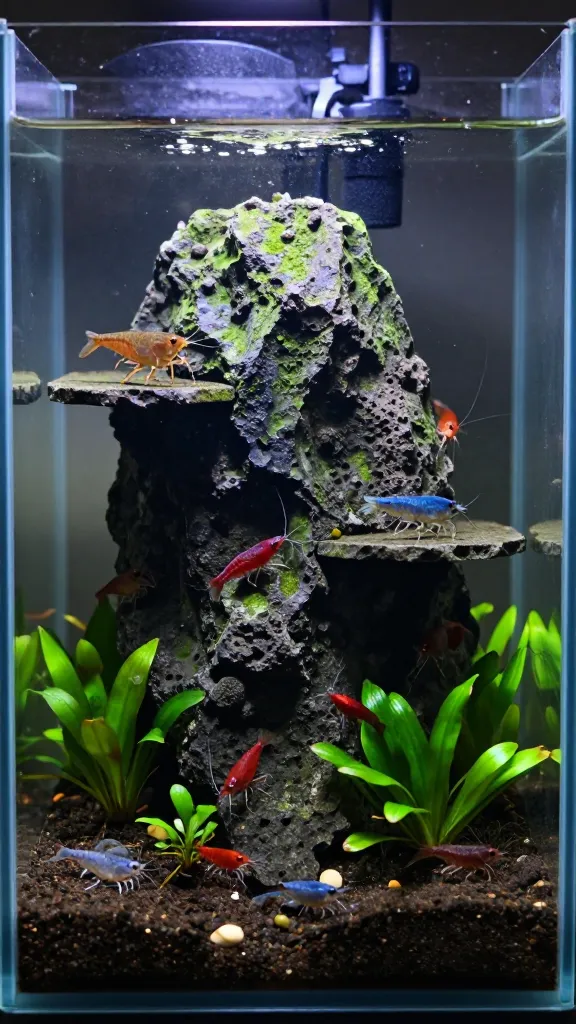
Build a single 4–5 inch cliff from lava rock, then epoxy two small shelves into it. Glue Bucephalandra mini forms and a few Cryptocoryne parva tufts at the base; set the light modest so the cliff face grows soft green. I spent $95 for a 5-gallon including the rock, plants, and a sponge filter. The shaded nooks grow the good slime within 3–4 weeks. If you like white, spotless rock, this will frustrate you—the patina is the food source; scraping it defeats the scape.
7. The Floating Farm: Salvinia + Skin of Life
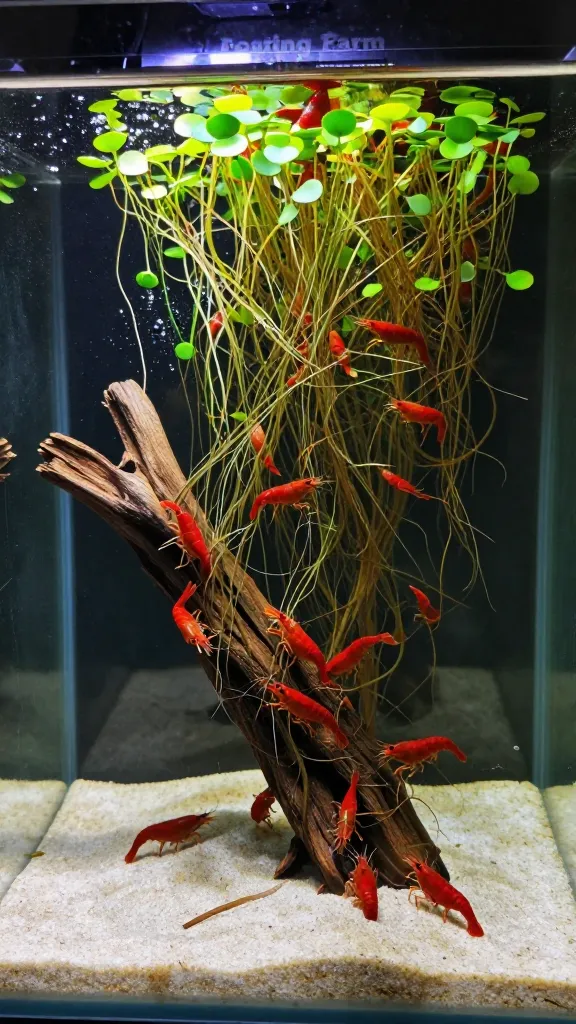
Run a 3-gallon with a plain sand bottom, a single rooty piece of wood, and heavy Salvinia minima cover up top. The floating roots trap dust and feed biofilm; shrimp rain down from them like confetti at feeding time. Mine cost $55 and stabilized in 4 weeks. Keep the sponge filter’s bubbles small; large bursts wet the floaters and they crash. If your room is dim, add a small clip-on light or the roots stay stubby and won’t harvest much.
8. 0 Riverbank Run: Flow, Pebbles, and Aufwuchs

In a 6–7 gallon long, lay a gentle slope of mixed pebbles (3–10 mm), scatter rounded stones, and set the sponge filter outlet to create a mild current left to right. Plant Bolbitis heudelotii and small Anubias on stones; dust the surfaces with powdered food twice a week to seed. Expect $120–$140 including a better clip-on light for the extra width. After 6 weeks, you’ll see pale films and green freckles that shrimp scrape constantly. If you push strong flow, shrimplets get pinned; keep it gentle.
9. The 5-Gallon “Treetop” with Moss Canopy: and Zero Carpets

Stand a branched root upright, cable-tie Taxiphyllum “Flame” moss along the limbs, and leave the floor open except for a thin leaf scatter. The canopy becomes a slow buffet as mulm settles onto moss tips. Mine cost $85 and needed 7 weeks before first berried females showed up. If you crave a trimmed, golf-green carpet, skip this—canopies shed bits and need a monthly haircut to prevent clogging the filter intake.
10. The Bare-Back Wall with Anubias Rows: , Ultra-Simple Cleaning
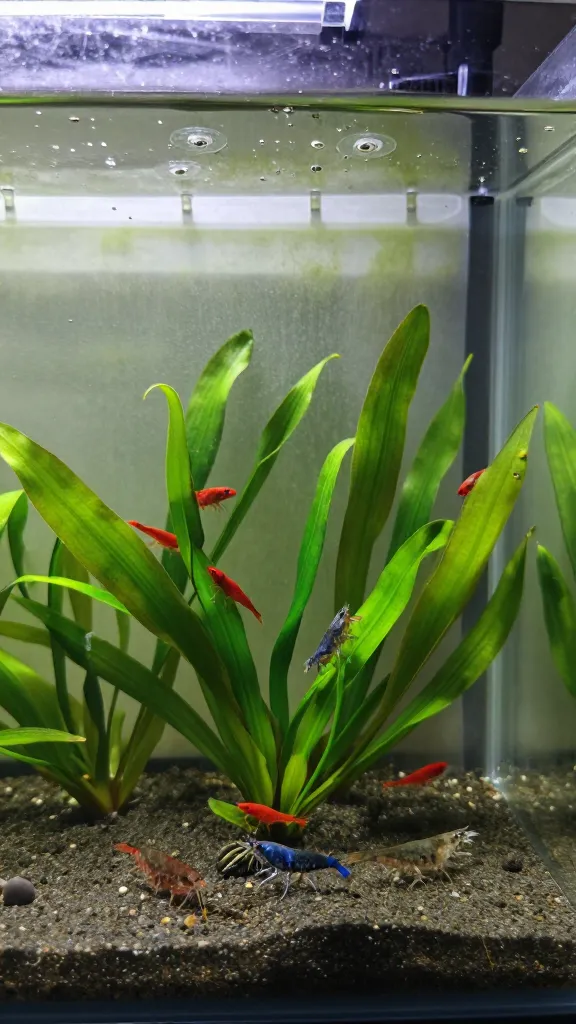
Line the back glass with 5–7 small Anubias nana petite tied to suction-cup clips or mini hooks, keep the substrate thin and open, and let the back glass grow film. A gentle light at 6 hours/day strikes the sweet spot where green haze returns weekly after wipes. I spent $65 including plants, using a hand-me-down 4-gallon cube. If you run 10+ hours of light or dose heavy fertilizers, you’ll push harder algae your shrimp ignore until it’s old; short photoperiod wins here. One opinion, said kindly: chasing a perfect carpet in tiny volumes usually replaces shrimp food with plant chores—give them surfaces, not lawn.
Frequently Asked Questions
How long should a shrimp tank aquascape run before adding shrimp?
Give it 4–6 weeks with plants and light before shrimp go in. That window lets the biofilm, algae film, and microfauna establish and ensures the cycle can process waste. Test for 0 ppm ammonia and 0 ppm nitrite and some measurable nitrate before stocking.
What size is best for a beginner shrimp tank?
5 gallons is a forgiving floor for Neocaridina because parameters swing slower than in jars. A 3-gallon works if your room temperature is stable and you’re consistent with 20–30% weekly water changes. Under 3 gallons demands tighter control and is better as a second project.
Do I need a heater for a shrimp tank?
Only if your room drops below the species’ comfort band. Neocaridina are fine at 68–74°F and breed well at 70–72°F; Caridina often prefer 70–73°F but need stable parameters more than heat. A small adjustable heater is cheap insurance if your nights swing by more than 5°F.
What plants grow the best graze for shrimp?
Slow epiphytes with texture: java moss, Subwassertang, Bucephalandra, Anubias, Bolbitis. Their rough surfaces collect biofilm within 3–6 weeks and don’t demand heavy fertilizers. Floaters like Salvinia add suspended roots that trap edible dust in days.
How many shrimp should I start with in a 5-gallon shrimp tank?
Start with 10–15 Neocaridina after cycling, then wait 6–8 weeks to see how the scape feeds them before adding more. That number provides social behavior without overloading a young biofilm base. Feed lightly—two pea-sized pinches per week is plenty once films establish.
Start With Surfaces, Not Stuff
If the glass and plants grow a soft film, you’ve built a shrimp buffet; the rest is tuning light and patience. This week, buy one small sponge filter, a fist of moss or Subwassertang, and pick a 3–5 gallon you can let mature for 4–6 weeks before a single shrimp arrives.
Questions about your own scape? Leave them in the comments — I answer all of them. — Maya