10 Shrimp Tank Setup Ideas — From Jar to Planted Colony

My first month with shrimp was a wobble of excitement and panic — a molt looked like a death, and I almost netted “the body.” Shrimp tank setup ideas can feel expensive or technical, but the small ones aren’t: the glass is cheap, the patience is the cost, and plants do most of the work. By the end of this, you can choose a setup that fits your shelf and your budget, from a $25 jar to a 10-gallon planted colony under $200. I keep every tank on one desk and one bookshelf, and I’ve crashed one and kept one running 14 months — you don’t need a fish room to do this.
1. The Windowsill Jar: Moss, Snails, and Time Doing the Work
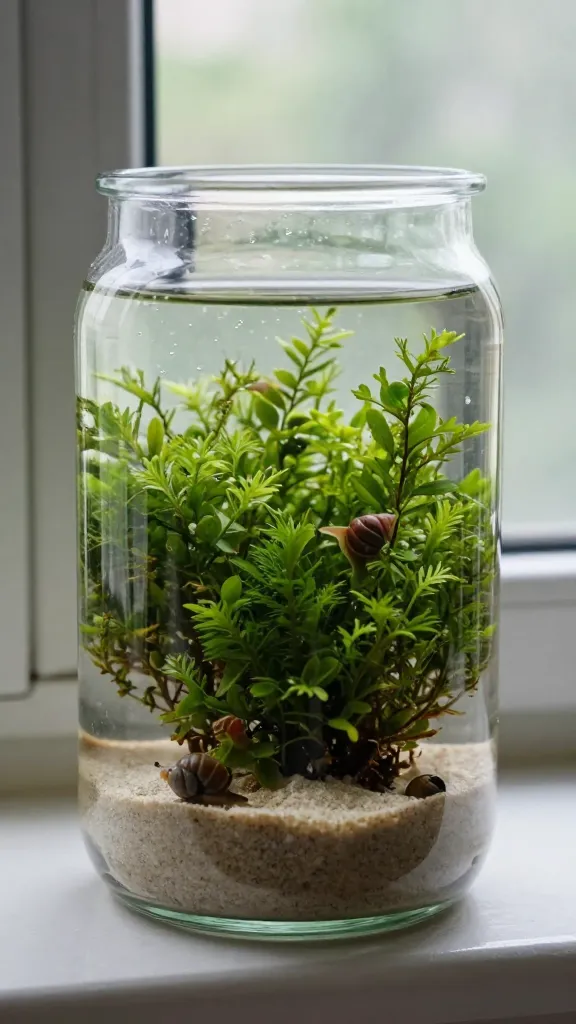
A clear 1-gallon jar, an inch of inert sand, and a softball of java moss (Taxiphyllum barbieri) under indirect light builds a tiny ecozystem. I ran one 12 months on a north window; total outlay was about $25 for the jar, sand, and plants, plus free hitchhiker ramshorn snails. The patience cost is real: give it 6–8 weeks with plants and no animals, and don’t stock shrimp if your room drops under 68°F — small volumes swing fast and you’ll need a heater you can’t easily fit.
2. 2.5-Gallon Nano Cube: Gentle Sponge, Gentle Light
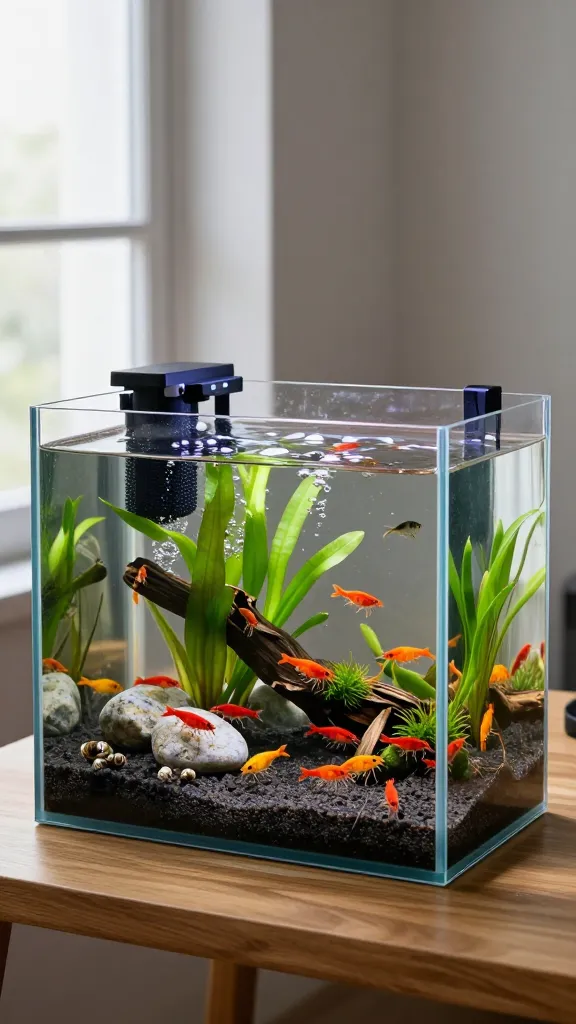
A 2.5-gallon cube with a small sponge filter, inert substrate, a clip-on light at 6–8 hours/day, and slow plants like Anubias barteri var. nana and Subwassertang (Lomariopsis lineata) is the first “equipment” step up. Expect $55–$85 all-in without livestock, depending on the light. This size is for a small Neocaridina starter group (10–15), after a 4–6 week cycle — but skip if your tap is very soft (KH 0–1) and you don’t want to remineralize; shrimp need stable minerals.
3. Shrimp-Only 5-Gallon: The Simple Heater You Actually Use

A 5-gallon rectangular tank with a sponge filter, adjustable heater set to 74–76°F, and a mat of java fern (Microsorum pteropus), moss, and floating Salvinia minima makes a forgiving colony starter. I paid $18 for my heater; the rest landed around $90–$130 without shrimp. The missing piece is still patience: cycle for 4–6 weeks, and plan weekly 15–20% water changes — if you travel often, a smaller weekly change beats a big fortnightly swing.
4. The “Dirted” 3-Gallon Low-Light Grower

A 3-gallon with a thin cap of sand over a ½-inch layer of mineralized organic soil powers rooted plants like Cryptocoryne wendtii and Sagittaria subulata at low light. Budget $45–$70 for tank, substrate, and a basic clip-on; plants add $15–$30. It takes 6 weeks for the soil to settle — cap well and don’t uproot crypts early or you’ll release muck; if you’re nervous about soil, use root tabs instead and keep the peace of mind.
5. 10-Gallon Planted Colony: Breeding Room and Stable Water

A standard 10-gallon with a double-sponge filter, heater at 74–76°F, and a dense midground of water wisteria (Hygrophila difformis), pearl weed (Hemianthus micranthemoides), and moss gives shrimp grazing and baby hideouts. The build runs $140–$200 before livestock; I’ve seen colonies triple from 20 to ~60 shrimp in 5–7 months with weekly small changes. Skip fish entirely if breeding is your goal — even tiny fish pick off shrimplets.
6. The Shelf Bowl With Air-Only Flow
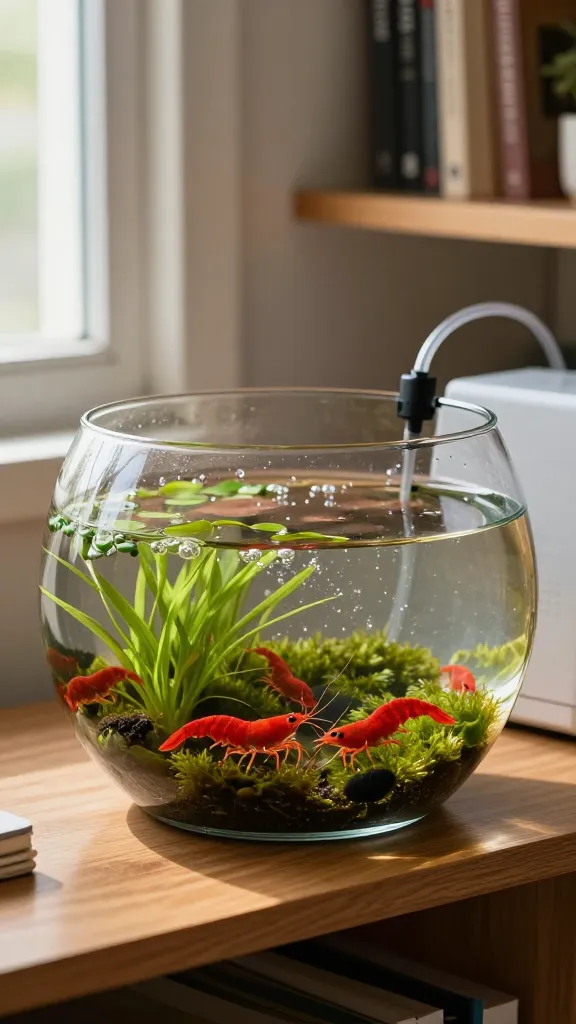
A 2-gallon wide bowl, a nano air stone on low, and floating plants to shade the surface can sit on a bookshelf without bristling with gear. My bowl cost $60 including air pump, line, check valve, and a handful of Ceratophyllum demersum and moss; it ran 8 months before I rescaped. Evaporation is the gotcha: top off with dechlorinated water only, not tap straight, and never let the air stone blast — shrimp fight current.
7. Hardscape-First 4-Gallon: Rock, Wood, and Three Plants

A 4-gallon rimless with a simple slope of small dragon stone, a fork of spider wood, and just three plants — Bucephalandra mini clumps, Anubias nana ‘petite’, and Taxiphyllum sp. moss — keeps maintenance low and the look clean. Expect $110–$160 depending on the hardscape weight; my last scape used 4 lbs of rock. This is not for carpeting dreams without pressurized CO₂; keep the light modest or you’ll buy a $15–$25 bottle of liquid carbon and still grow algae.
8. No-CO₂ 5-Gallon “Green Cloud” with Floaters

A 5-gallon with a tall thicket of Rotala rotundifolia left untrimmed at the back and a mat of frogbit (Limnobium laevigatum) on top turns extra light into shrimp-safe shade. Parts land around $90–$140; frogbit usually costs $5–$10 for a starter handful. You’ll have to thin floaters every 2–3 weeks or they choke gas exchange; if your room humidity is low, use a lid to keep floaters from crisping under dry air.
9. Parameter-Friendly Neocaridina on Tap

If your tap runs around GH 6–8, KH 3–5, pH 6.8–7.6, a 5–10 gallon Neocaridina tank is the least fussy way to start: inert substrate, sponge filter, heater, and moss forests. I’ve paid $2–$4 per shrimp at swaps; starting with 10–15 is a safe band. If your KH is 0–1, remineralize or use a different plan — swinging minerals with random tap mixes stresses molts and you’ll see stuck saddles and failed releases.
10. Caridina on Active Substrate, Done Small but Right

For Caridina cf. cantonensis (crystal reds and blacks), a 10-gallon with active buffering substrate, RO water remineralized to GH 4–6, KH 0–1, pH 6.0–6.6, sponge filtration, and a tight lid is the humane minimum. Budget $180–$260 including RO access (home unit or refill fees) and active soil; colonies stabilize over 2–3 months if you feed lightly and keep TDS consistent. This is the one setup where I defer details to a deep Caridina parameter guide — tiny mistakes matter more here than with Neocaridina.
Frequently Asked Questions
How many shrimp in a 5-gallon shrimp tank setup?
Start with 10–15 Neocaridina in a 5-gallon and let them tell you when to add more by surviving and grazing well for 4–6 weeks. A stable, planted 5-gallon typically supports 30–50 adults over time, but growth is slower if you keep the light low and water changes small.
Do I need a heater for a shrimp tank?
Usually yes, unless your room holds a steady 70–76°F year-round. Shrimp handle cool better than swings; an adjustable heater set to 74–76°F smooths nights and cold snaps, and mine cost $18 and has paid for itself in zero molt failures during winter.
How long to cycle before adding shrimp?
Plan 4–6 weeks with plants and a pinch of food to feed bacteria, longer for soil-based or brand-new setups. Stability beats speed: add your first 10 shrimp only after ammonia and nitrite stay at 0 ppm for a full week and you see biofilm on wood and glass.
What’s the cheapest shrimp tank setup that still works?
A planted 1-gallon jar with moss and no filter runs about $25–$35 for materials, plus $2–$4 per shrimp. It needs 6–8 weeks before stocking and careful room temperature control; if your room swings, a 2.5–5 gallon with a tiny heater is a safer budget at $55–$130.
Can I keep fish with a shrimp tank?
You can, but every fish eats baby shrimp — even tiny ones. If breeding matters, run shrimp-only; if you just want activity, a group of 6–8 pygmy corydoras in a 10-gallon will still reduce shrimplets, and you’ll need to feed and change water more often to match their waste.
Start Smaller Than You Think, Then Wait
The plant mass and the waiting are what make shrimp work, not the price tag. If you want to move this week, rinse a jar, add sand and moss, and set it in a bright but not sunny spot — your first water change is in 2 weeks, and the shrimp arrive in about 6.
Questions about your own setup? Leave them in the comments — Maya