8 Aesthetic Goldfish Tank Setups — Looks That Survive a Goldfish
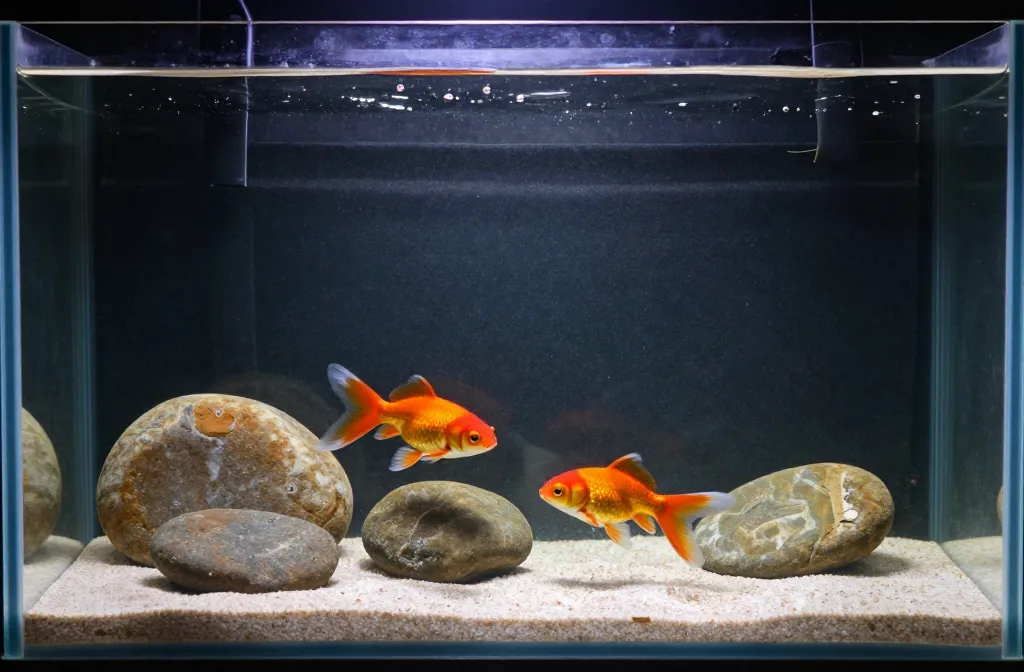
Most aesthetic goldfish tank setups fail for one plain reason: goldfish are heavy waste producers that upend anything not anchored or oversized. To make an aesthetic layout that lasts, you match the look to filtration, flow, and materials that tolerate constant grazing and 0.5-inch mouth tests. By the end, you’ll be able to specify hardscape, plants, substrate, and the filter and heater capacity that keep the look intact past week four. I ran two “identical look” 40-breeders for 8 weeks — one with light flow, one with high — and only the higher turnover kept the water clear with the same feeding.
1. Riverbed Stones + Matten Filter Wall: Flow Turns the Scene Alive
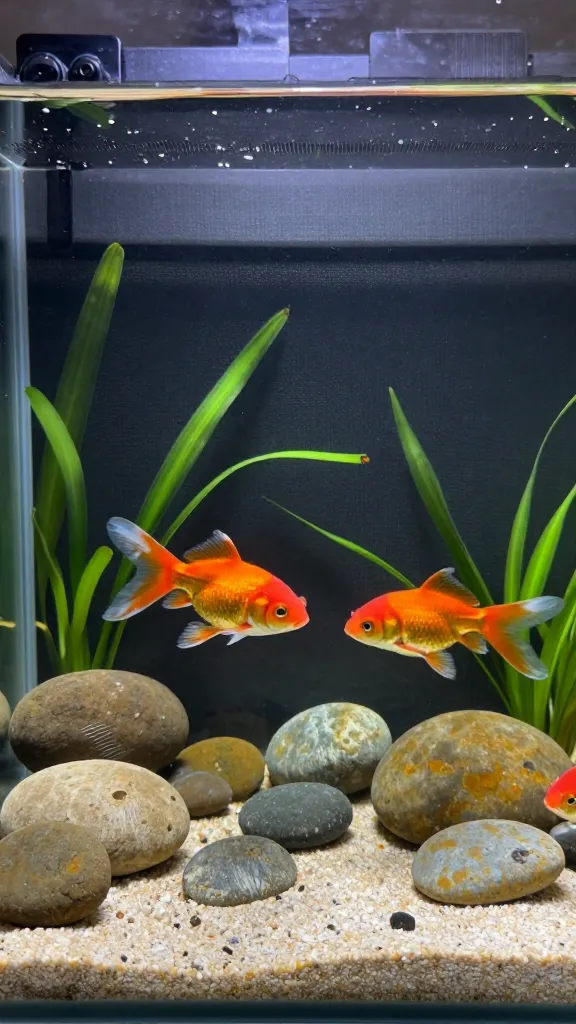
Goldfish exhale CO2 and emit ammonia; high turnover carries that waste to bacteria and pulls oxygen-rich water back across the fish, which reduces gasping and the biofilm sheen that ruins a clear look. A full-height foam wall (matten) turns the entire back pane into low-velocity intake, so debris doesn’t collect in dead spots behind rocks. That keeps the “riverbed” clean lines intact instead of dusted in mulm.
Specify 6–8x tank volume per hour total flow for single-tail swimmers in 40–75 gallons, and use a foam sheet 1.5–2 inches thick, 20–30 PPI spanning the back. Feed it with a small pump at 250–450 GPH depending on volume. Cost is mid-range: foam, rails, and a modest pump. The limit: you lose 1–1.5 inches of depth to the wall, so plan rock sizes accordingly or it will look crowded.
2. Coarse Sand Cap Over Pea Gravel: Weight Beats Sifting
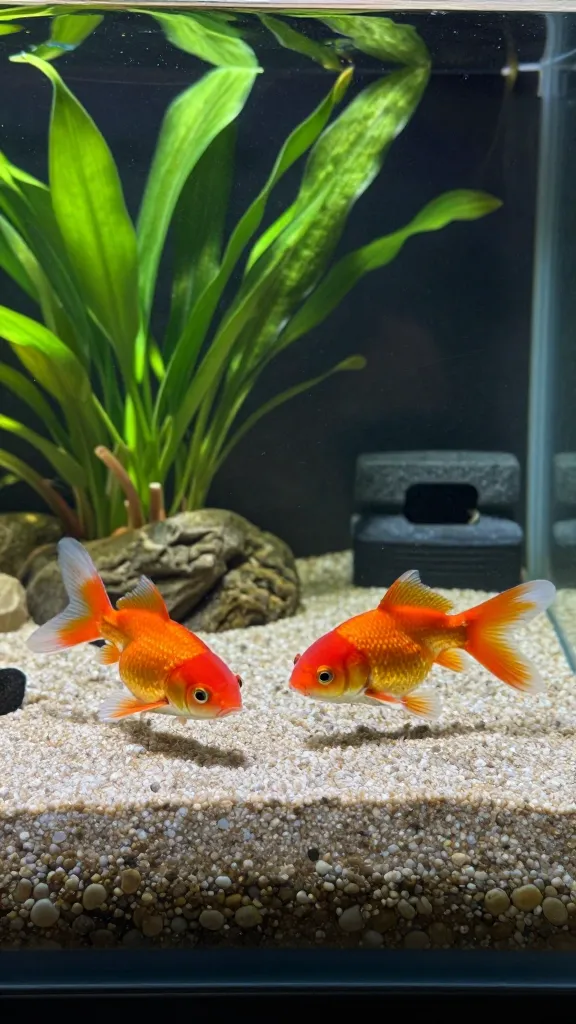
Carp mouths are sifters; anything below a certain grain size gets taken in, tumbled, and spit on your decor, clouding the scape and burying plants. A two-layer bed lets you keep a clean visual without daily craters: coarse material below resists fluidizing, and a thin cap stops detritus from vanishing into the depths where it ferments.
Lay 1.5–2 inches pea gravel (6–10 mm) topped with 0.5 inch coarse sand (1–2 mm). Vacuum only the top 0.25 inch during changes to avoid collapsing the bed’s pore space. This costs less than specialty substrates and survives digging better. The tradeoff: rooted stems struggle in the cap; use rhizome plants on hardscape or baskets for rooted accent greens.
3. Potted Plant Islands: Roots Protected, Layout Stays Put
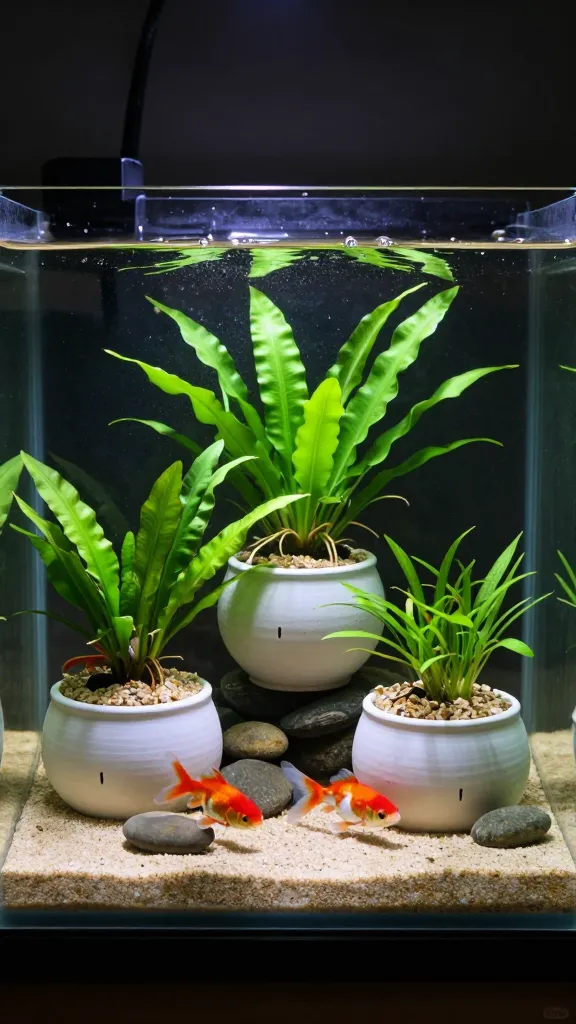
When a goldfish yanks on a stem, the leverage uproots plants and releases fine substrate that fogs the water and coats leaves. Planting in containers decouples roots from the digging zone and lets you lift, trim, or rotate growth without tearing the scene apart.
Use 4–6 inch ceramic or plastic pots with side slits drilled for flow, filled with inert gravel 3–5 mm plus root tabs. Sink pots slightly and mask with stones. Three to five islands in a 55–75 gallon read as a designed element, not “pots in a tank.” Budget-friendly and modular. The limit: you see the pot rim unless you plan rock skirts; don’t bury more than 1 inch or you trap anaerobic pockets.
4. Hardscape-First Woods and Boulders: Grazing Without Uprooting
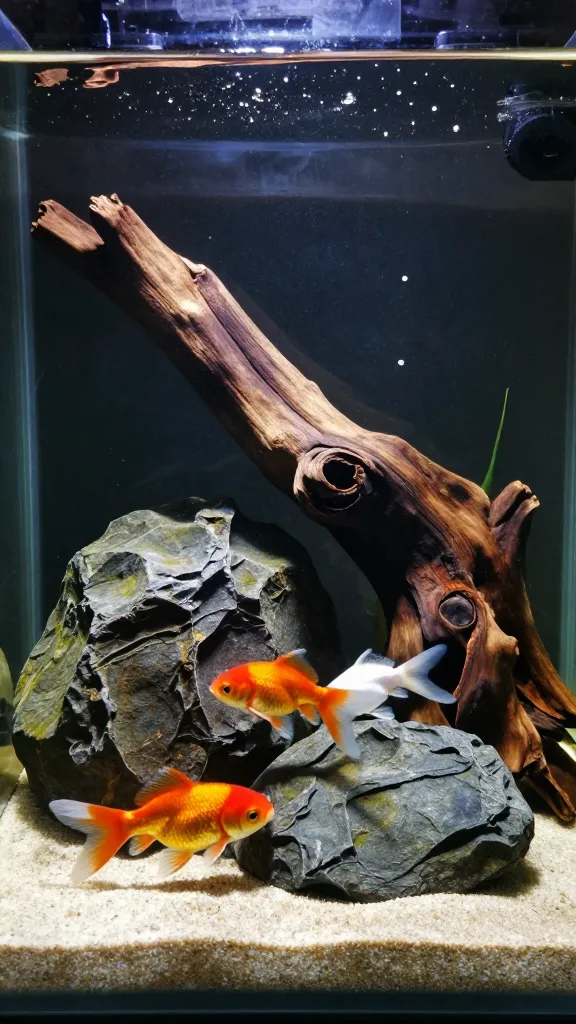
Goldfish scrape surfaces for biofilm; textured wood and rock turn that instinct into maintenance, not destruction. Smooth decor grows uniform biofilm that peels in sheets and uglifies fast, while ridged pieces shear it off in tiny, invisible bites that the filter clears.
Pick 2–3 anchor stones at 8–12 inches and branching hardwood pieces that you can wedge together, not stack precariously. Pre-soak wood for 7–14 days to reduce buoyancy and tannins; if you like tea-stain, leave it shorter. Secure joints with zip-ties or inert epoxy and bury bases 1–2 inches into the gravel. Cost scales with size; one big statement stone beats a pile of pebbles. The failure mode is collapse during a spook—test stability by jostling before water fills.
5. Low-Tech Greens That Tolerate Browsing: Rhizomes and Floaters
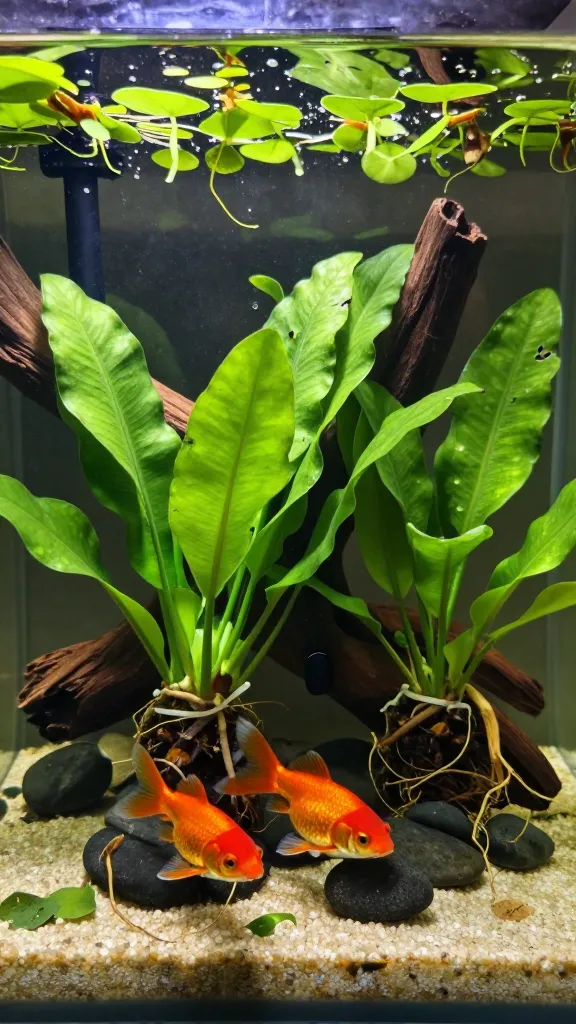
Goldfish tear soft leaves and uproot thin stems; plants with tough rhizomes or free-floating roots survive nibbling because their energy stores aren’t in fragile anchoring tissue. Leaves regrow from a protected rhizome, and floaters reproduce above the dig zone while shading algae fuel.
Mount rhizomes like Anubias and Microsorum (Java fern) on wood/rock with ties, spacing clumps at 4–6 inches so fronds can splay. Add floaters like Salvinia or water lettuce to cover 30–50% of the surface for nitrate uptake; thin weekly to maintain light. No CO2 required; aim for 40–60 PAR at substrate with a daylight LED on 7–8 hours. The limit: some varieties blacken if flow is stagnant—keep surface rippling so roots don’t slime.
6. Cold-Color LED at 7–8 Hours: Color Without Inviting Algae
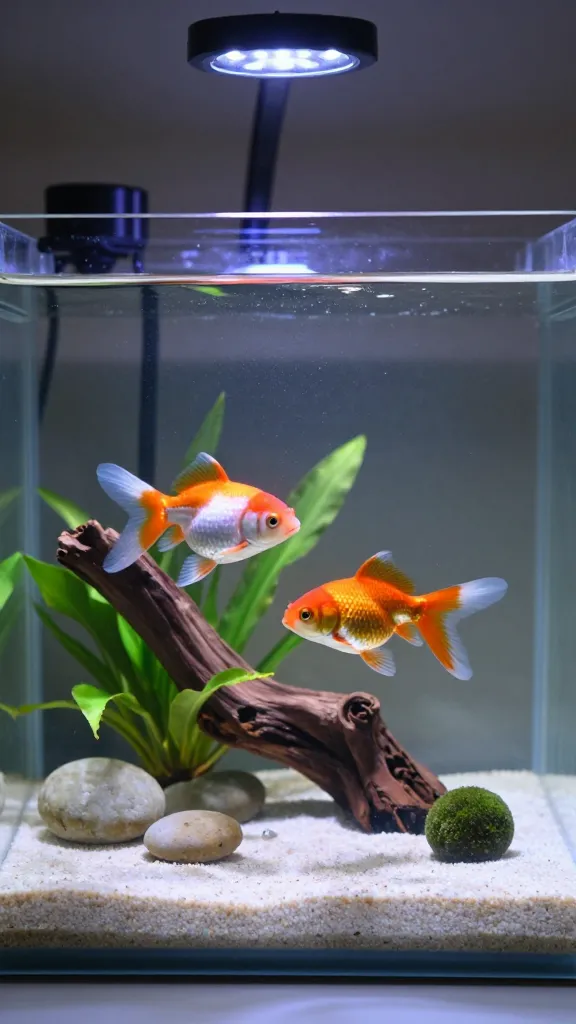
Light drives algae faster than slow-growing goldfish-safe plants can use nutrients; keeping intensity and spectrum in check lets you enjoy bright scales without painting the glass green. Higher blue content makes whites and metallic oranges pop while not over-stimulating red algae species common in warm, high-PAR setups.
Choose an adjustable LED delivering 40–60 PAR at substrate on a 7–8 hour photoperiod. Set color around a neutral-cool 6,500–7,500 K and add a 30-minute ramp to avoid spooking. Electricity cost stays low; LED wattage typically runs 0.4–0.6 watts per gallon at these PAR targets. Too high or too long and you’ll see filament algae in 10–14 days, especially on wood—dial back 10% and scrape once; the scene should hold.
7. Goldfish Filter Choices: Turnover and Media Volume Over Marketing
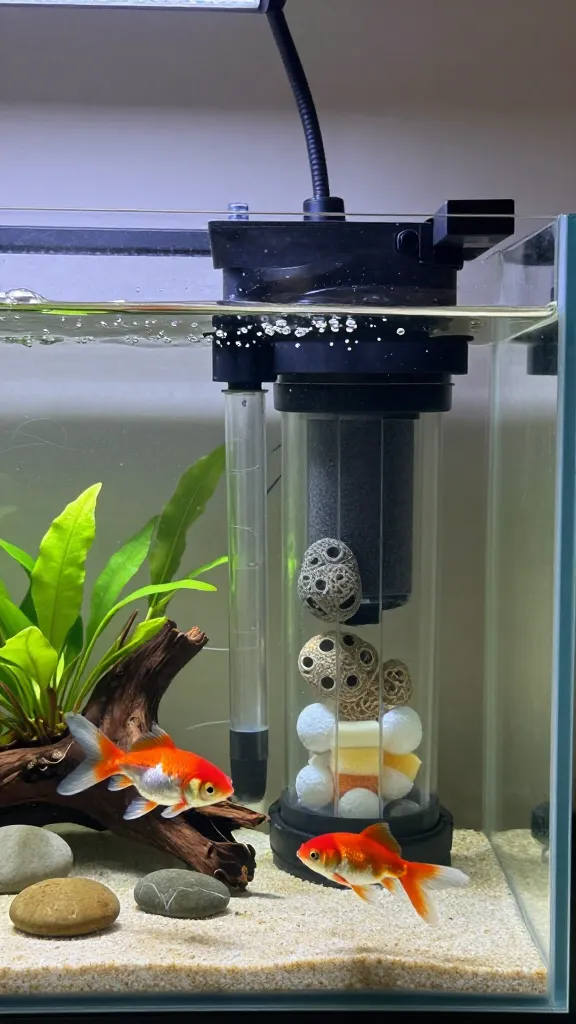
Ammonia from messy feeders spikes quickly; efficient biofiltration needs both enough water moving past bacteria and enough pore volume to host those colonies. Units with big media baskets at modest velocity process more waste per watt than small, fast boxes because contact time and surface area scale with media volume, not spray intensity.
Target a total turnover of 6–8x per hour for slim-bodied fish and 5–6x for delicate fancy types to avoid pinwheeling. For a 55 gallon with two fancies, that’s 275–330 GPH actual flow; if you use two filters, split it. Favor canisters or sumps with at least 0.5–1.0 liters of biomedia per 10 gallons. Pre-filter sponges on intakes extend maintenance to 2–4 weeks. If you under-size media, you’ll read 0.25 ppm ammonia by day three after a feeding increase—solve it with more media volume, not just more pump.
8. Open-Swim Negative Space: Inches Matter More Than Ornaments
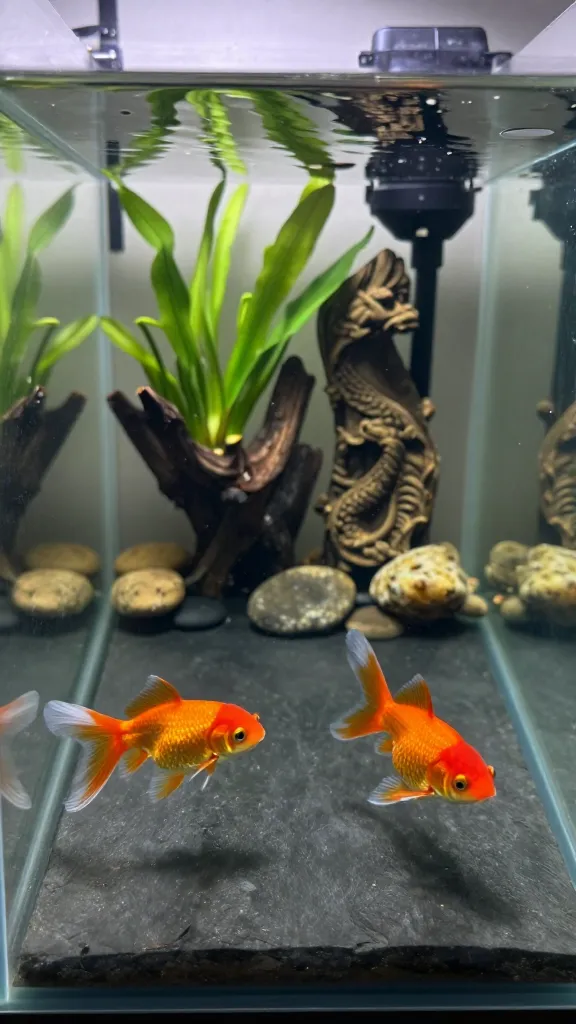
Goldfish generate thrust with a broad caudal peduncle; crowding costs them turning radius and bumps fins that then fray or fungalize. Staged open lanes reduce startle collisions and keep suspended waste moving to the intake instead of eddying mid-water.
Leave a clear corridor at least 1.5 body lengths wide (for 7-inch adults, that’s 10–12 inches) along the front or through the center. For stocking, plan water volume first: single-tails reach 10–12 inches and need 75 gallons+ for two; round-bodied fancies reach 6–8 inches and do well as a pair in 55 gallons. This layout costs nothing and prevents torn fins. Pack the middle with ornaments and you’ll trap mulm and see fines hanging in the water column after every lap.
Frequently Asked Questions
How big should a goldfish tank be for an aesthetic setup that stays clean?
Start at 55 gallons for two fancies or 75 gallons for two single-tails. Bigger water volume dilutes waste and gives you room for open swim lanes and large hardscape that doesn’t crowd fish. Pair the volume with 5–8x turnover and you’ll keep water clear and decor stable.
Which plants actually survive goldfish?
Rhizome plants like Anubias and Java fern and floaters like Salvinia survive because their growing points aren’t easily uprooted and they regrow after nibbling. Mount rhizomes on hardscape and let floaters cover 30–50% of the surface. Avoid fine stems unless potted; they’re usually uprooted in a week.
What filter is best for a goldfish tank if I want it to look neat?
Pick by media volume and real flow, not labels: aim for 6–8x turnover and at least 0.5–1.0 liters of biomedia per 10 gallons. Canisters and sumps hide equipment and give big baskets, while a matten wall blends into the background and spreads intake so debris doesn’t pile. Add a pre-filter sponge to keep the display tidy between cleanings.
Can I keep goldfish with sand without constant clouds?
Yes, if the grains are heavy and layered. Use 1.5–2 inches of pea gravel capped with 0.5 inch of coarse sand (1–2 mm) so sifting doesn’t fluidize the whole bed. Vacuum lightly; if you stir deep, you’ll release fines and sulfur smell from anoxic pockets.
Do goldfish need a heater in aesthetic tanks with plants?
Often no, but stability matters more than the exact number. Keep water between 68–74°F for most fancies and single-tails; use an adjustable heater at 3–5 watts per gallon only if your room swings more than 4°F day to night. Plants listed here tolerate that range without CO2.
Make the Scene, Then Move the Water Through It
The governing number is turnover: 6–8x per hour moves waste off decor, across bacteria, and back to the fish as clear water. Tonight, time your filter output into a bucket — if it doesn’t fill a 5-gallon bucket in under a minute on a 30–40 gallon tank, you’re below spec and the look will drift.
Questions about your own setup? Leave them in the comments and I will work through them. — Nate