8 Peaceful Community Tank Combos — Stocking Lists That Get Along
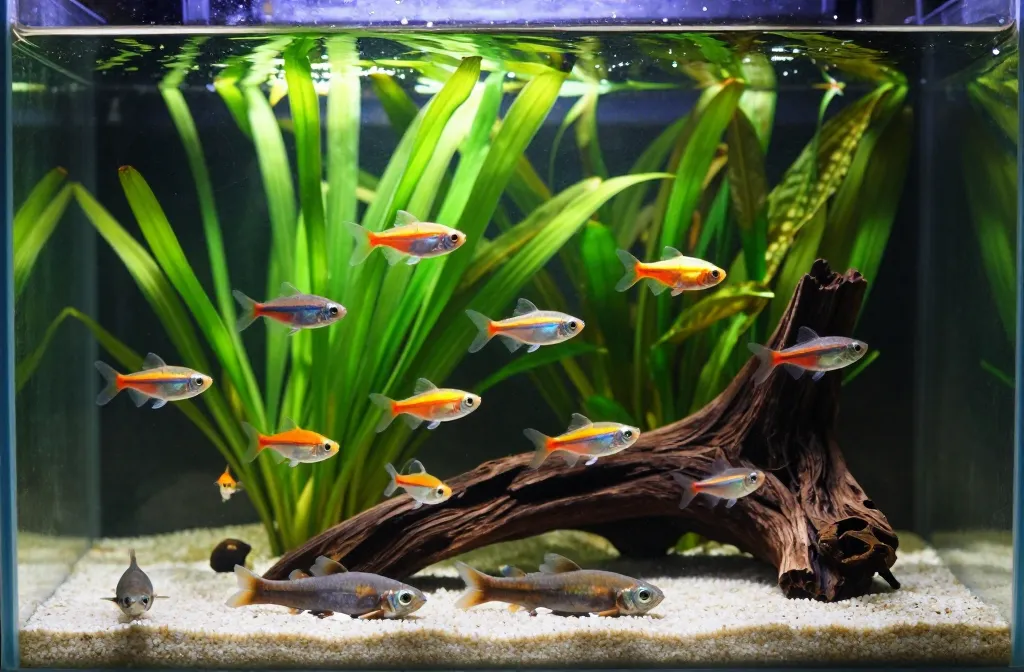
Most peaceful community tank combos fail on chemistry and territory, not because the fish hate each other. These stocking lists are built around how species divide the tank by level, how much waste the biofilter can process, and the parameters they share. By the end, you’ll be able to specify a mix by bioload, adult size, and behavior — and know the gallonage, flow, and planting density that keep the peace. I kept two of these lineups side by side for 6 weeks in 20-longs to confirm real-world space use and feeding competition. The numbers below assume a fully cycled tank with 0 ppm ammonia and 0 ppm nitrite at all times.
1. 20-Gallon Planted Calm: Nano School, Centerpiece, Cleanup by Zone
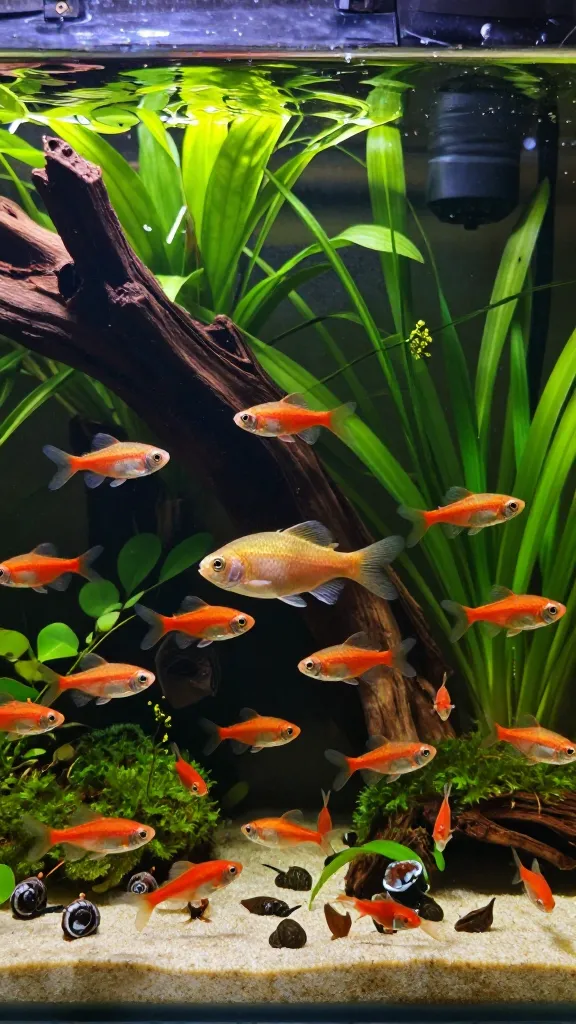
Peace holds when fish partition the space vertically and do not compete at feeding time. A small midwater school reduces stress through shoaling, a single centerpiece avoids conspecific sparring, and bottom grazers stay busy on the substrate and wood. Plants create line-of-sight breaks that lower aggression hormones because fish simply stop seeing each other constantly.
Spec it as: 20 gallons, gentle flow at 5–7× turnover (100–140 GPH), temp 75–77°F, pH 6.6–7.4, KH 2–6 dKH, stocked with 12 ember tetras (Hyphessobrycon amandae, adult 0.8″), 1 honey gourami (Trichogaster chuna, 2.0″), 6 pygmy corydoras (Corydoras pygmaeus, 1.0″), and 1 bristlenose pleco (Ancistrus sp., 4.5″). Feed a fine-grain pellet for the school, a small floating pellet for the gourami, and wafer/veggies for bottom fish. The limit here is surface area — in a tall 20-high, the bottom feels crowded; use a 20-long footprint if you can.
2. 29-Gallon Soft-Water Driftwood: Blackwater School and Gentle Surface
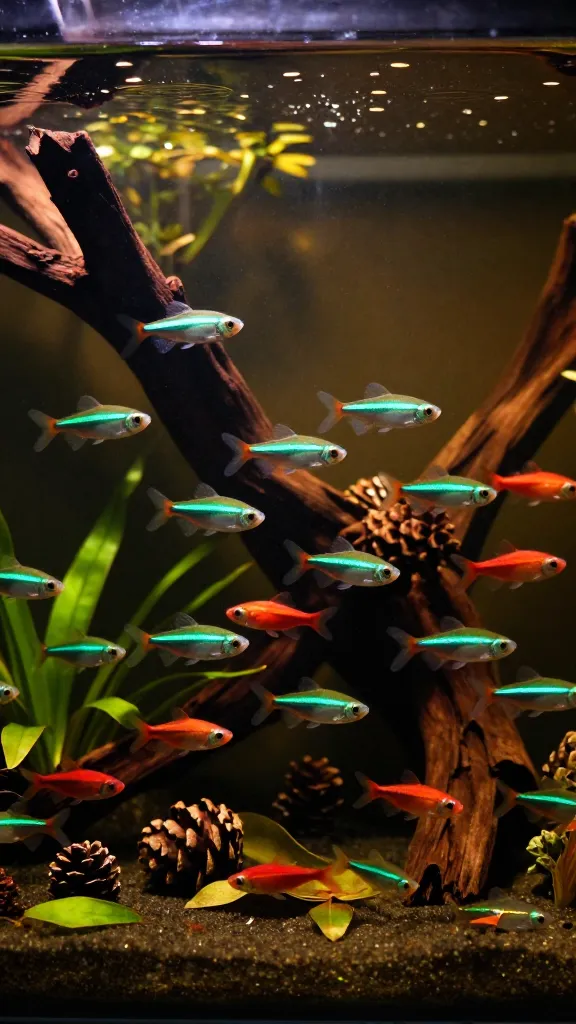
Tannins from wood and leaves lower pH and slightly reduce light penetration, which calms visually driven fish and favors soft-water species’ osmoregulation. A calm surface maintains the labyrinth fish’s ability to breathe while still allowing enough exchange to keep CO2 and O2 balanced for plants.
Run it as: 29 gallons, temp 77–79°F, pH 6.0–6.8, GH 3–6 dGH, with moderate planting and leaf litter, stocked with 15 green neon tetras (Paracheirodon simulans, 1.0″), 10 chili rasboras (Boraras brigittae, 0.7″), 1 thick-lipped gourami (Trichogaster labiosus, 4.0″) or 1 pearl gourami (Trichopodus leerii, 4.5″) as the single centerpiece, and 10 kuhli loaches (Pangio semicincta, 3.5″). Flow at 4–6× turnover (120–180 GPH) with a spray bar angled to dimple, not break, the surface. The tradeoff is harder plant choices under tea-stained water; pick shade-tolerant species. Fast surface agitation will frustrate the gourami’s bubble-nesting drive.
3. 40-Breeder Busy Bottom: Cory Horde and Midwater Dither
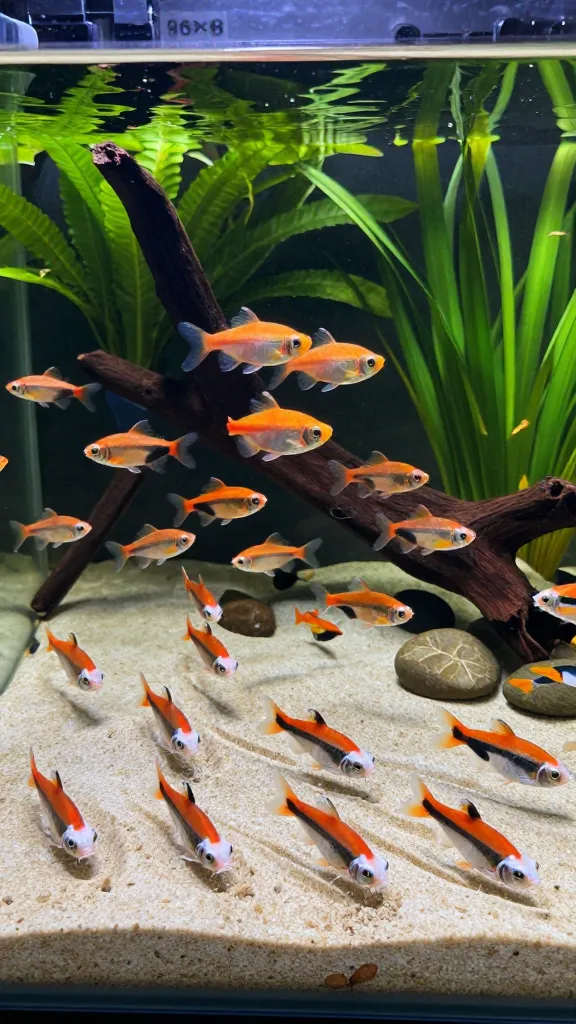
A wide footprint increases foraging lanes for bottom shoalers and reduces the frequency of head-on encounters that escalate into nips. Dither fish in the water column broadcast “all clear,” lowering cortisol in shy bottom dwellers so they feed and grow normally — a behavior effect you can see within days.
Build it around: 40 breeder (36×18″), sand substrate, temp 74–76°F, pH 6.8–7.6, stocked with 16–20 Corydoras sterbai (2.5″), 20–25 harlequin rasboras (Trigonostigma heteromorpha, 1.75″), and 1 pair of Bolivian rams (Mikrogeophagus altispinosus, 3.0″). Flow at 6–8× turnover (240–320 GPH) split across two returns to avoid blasting the sand. Feed multiple small meals so bottom fish get their share. The limit is substrate fineness — any gravel sharper than 2–3 mm damages barbels and invites infection.
4. 10-Gallon Nano Club: Shrimp-Safe, Micro-School, Gentle Filter
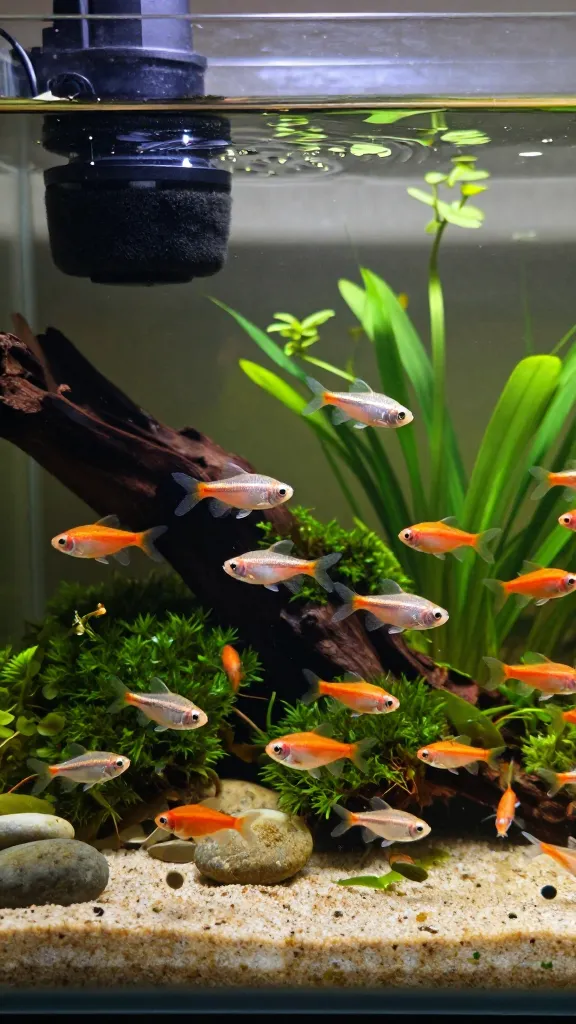
Nano inverts and micro fish stay peaceful when the intake cannot physically capture them and when food particles reach the bottom without being whipped back up. Biofilm and moss beds provide microfauna for shrimp, which convert it into slow, steady bioload rather than spikes.
Set it as: 10 gallons, sponge or baffled HOB at 4–5× turnover (40–50 GPH), temp 72–76°F, pH 6.8–7.6, GH 6–10 dGH for Neocaridina, stocked with 12 celestial pearl danios (Danio margaritatus, 1.0″), 8 phoenix rasboras (Brevibora dorsiocellata, 0.9″), and a starting colony of 20–30 Neocaridina shrimp. Offer powdered or crushed foods; add botanicals for biofilm. The limit is capacity — do not add a centerpiece fish in 10 gallons; every extra inch pushes feeding competition up sharply.
5. 55-Gallon “Everyone Has a Job”: Algae Crew, Upper Glide, Mid Shoal
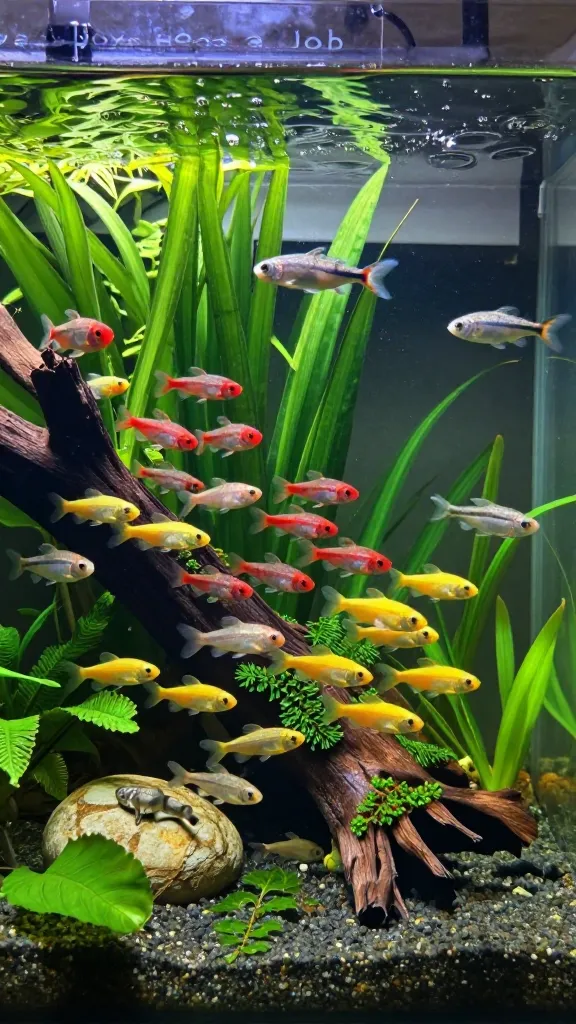
Algae forms in high-light zones first; distributing grazers by surface preference (glass, leaves, wood) spreads maintenance naturalistically. A large midwater shoal spreads fin-nipping “attention” across many bodies, which mathematically lowers the chance any single fish gets targeted.
Spec it: 55 gallons, strong planting, temp 75–78°F, pH 6.8–7.6, stocked with 25 rummy-nose tetras (Hemigrammus rhodostomus, 2.0″), 12 lemon tetras (Hyphessobrycon pulchripinnis, 1.75″), 3 Siamese algae eaters (Crossocheilus oblongus, 6.0″), 12 otocinclus (Otocinclus affinis group, 1.5″), and 1 male + 2 female pearl gourami (4.5″) for upper glide. Flow at 6–8× turnover (330–440 GPH) with good surface movement for oxygenation. The limit is adult size of the algae eaters — at 6.0″, three is the ceiling in a 55; replace with a bristlenose if you prefer under 5″.
6. 75-Gallon River Calm: Current-Lovers Without Conflict
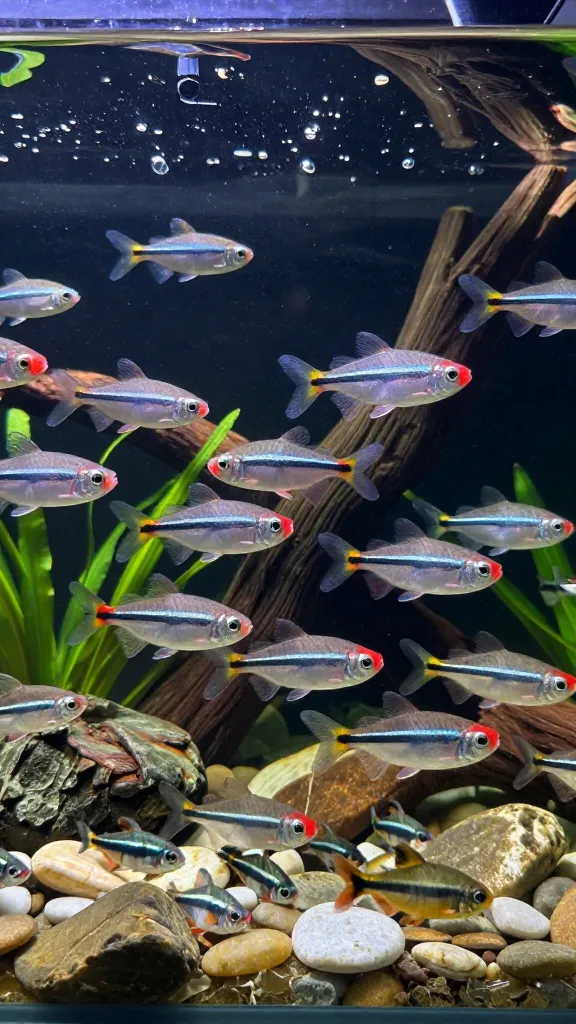
Laminar flow channels energy; fish designed for current can hold station with less muscular effort, reducing stress and sparring. A long run length lets multiple territories fit end to end, so semi-territorial species stake rocks without colliding every hour.
Run: 75 gallons, river manifold or dual returns for a directional lane, 8–10× turnover (600–750 GPH), temp 72–75°F, pH 6.8–7.6, stocked with 20 roseline barbs (Sahyadria denisonii, 5.5″), 20 zebra danios (Danio rerio, 2.0″), 12 panda garra (Garra flavatra, 3.0″), and 12 hillstream loaches (Sewellia lineolata, 2.5″). Smooth stones and high dissolved oxygen are non-negotiable; use an airstone if nighttime plant respiration drops O2. The limit is temperature — keep it under 75°F long term to avoid denisonii aggression spikes.
7. 32-Gallon Tall Calm Labyrinth Mix: Air Access and Quiet Midwater
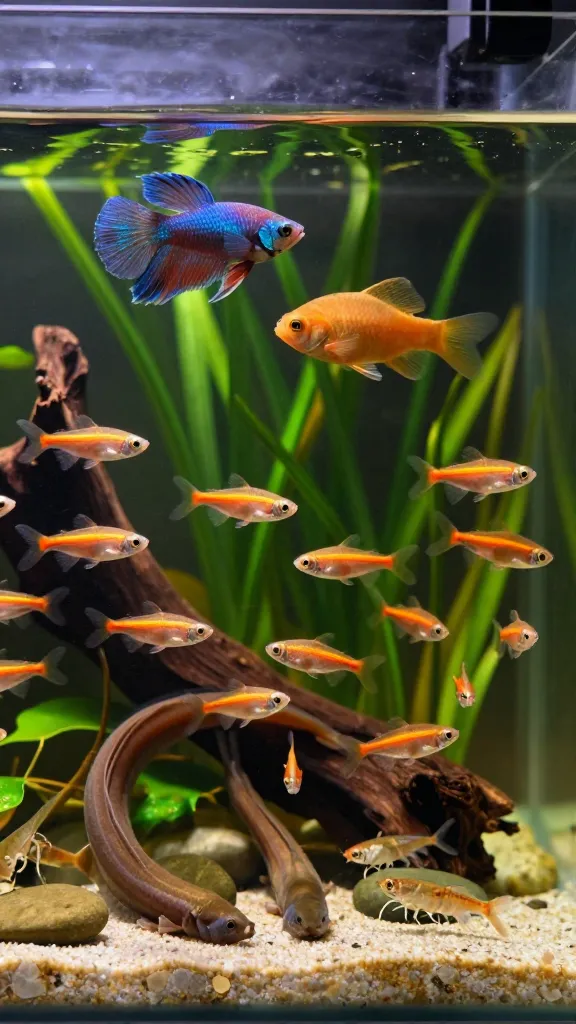
Labyrinth fish surface-breathe; easy access and low splash cut stress and prevent fin fray. Tall tanks compress bottom space, so keeping the benthic roster light avoids resource overlap, while midwater shoals give motion without crowding the surface film.
32 gallons tall, temp 77–80°F, pH 6.6–7.4, stocked with 1 female betta splendens (2.5″) or 1 male honey gourami (2.0″), 16 glowlight tetras (Hemigrammus erythrozonus, 1.6″), 10 kuhli loaches (3.5″), and 8 Amano shrimp (Caridina multidentata, 2.0″). Flow at 4–5× turnover (130–160 GPH) with a lily pipe or spray bar that wrinkles, not pounds, the surface. The limit is male bettas with long fins; avoid fin-nippers like serpae tetras here. My one clear opinion: a single centerpiece labyrinth fish in a planted tall under gentle flow is the most reliable “calm tank” anchor you can choose.
8. 15-Gallon Hard-Water Livebearer Garden: Fry Control by Ratios
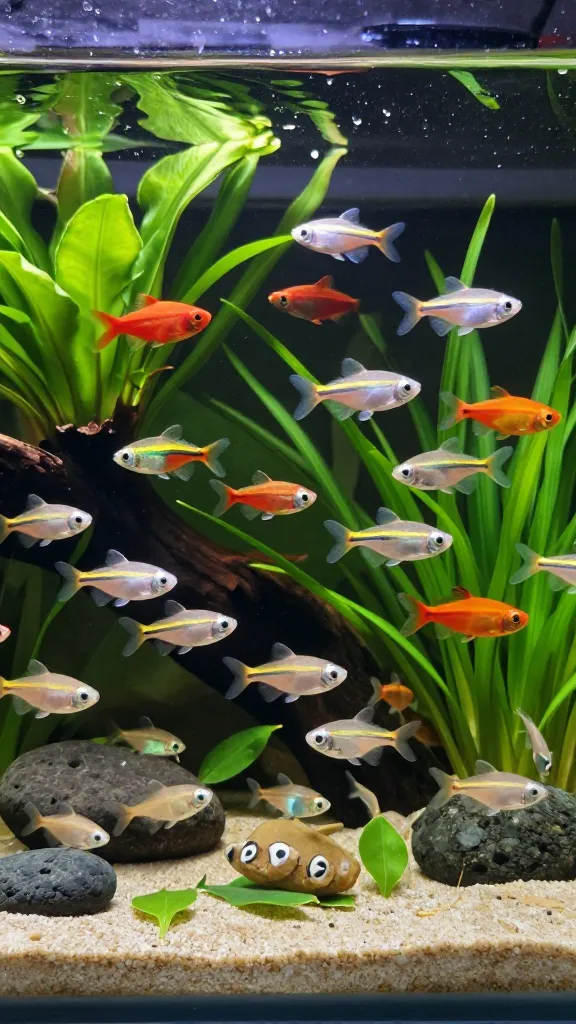
Livebearers breed readily; skewing sex ratios and adding mild-predation dithers balance population without aggression. Harder water supports their ion exchange and prevents shimmying that shows up when KH/GH are too low.
Set: 15 gallons, temp 74–76°F, pH 7.2–8.0, GH 10–15 dGH, KH 6–10 dKH, stocked with 1 male + 3 female platies (Xiphophorus maculatus, 2.5″), 10 endlers (Poecilia wingei, 1.2″), 12 x-ray tetras (Pristella maxillaris, 2.0″) as gentle fry control, and 6 panda corys (Corydoras panda, 2.0″) if KH allows closer to 6–8 dKH. Feed moderately; prune plants to maintain open chase corridors. The limit is nitrate creep from livebearer feeding — keep NO3 under 20 ppm with weekly 30–40% water changes.
Frequently Asked Questions
How many fish can I keep in a peaceful community tank?
Count adult sizes and feed paths, not heads. A safe starting point is roughly 1 inch of small-bodied fish per gallon in planted tanks with 5–7× turnover, then adjust down for species over 3″ or up for nano fish under 1″. The mechanism is waste processing: your biofilter must keep ammonia and nitrite at 0 ppm and nitrates under 20 ppm between weekly 30–40% changes.
What water parameters fit most community fish?
A broad, workable range is temp 75–78°F, pH 6.8–7.6, GH 6–10 dGH, KH 3–6 dKH. That range keeps tetras, rasboras, corydoras, gouramis, and most livebearers comfortable, but pick species that match your tap so you aren’t chasing numbers. Stability matters more than a perfect target — a pH swing of more than 0.3 in a day is stressful.
Do I need a specific aquarium filter type for a community tank?
No single aquarium filter type is mandatory; match flow and media volume to the bioload. Aim for 5–8× turnover and enough biomedia to process your feeding schedule, then shape flow so surface is agitated without pinning fish. Sponge, hang-on-back, and canister can all work if they meet those numbers and the intake is prefiltered for shrimp and fry.
Can a betta live in a community aquarium?
Yes, with conditions: choose a female betta or a very mellow male, avoid fin-nipping tankmates, and keep flow gentle at 4–5× turnover. Keep temp at 78–80°F and offer surface cover; do not mix with flashy male livebearers that trigger displays. Watch for chasing the first week and be ready to separate.
How do I prevent aggression when adding new fish to a stocked community?
Rearrange hardscape to erase territories and introduce after lights out to lower visual triggers. Feed a small meal first, match temp within 1°F, and drip acclimate to avoid osmotic shock. Quarantine 2–4 weeks so you do not import pathogens that spike stress and nipping.
Choose by Space, Not Hype
The peaceful mix is the one that fits your footprint, divides the water column, and stays inside 0 ppm ammonia, 0 ppm nitrite, and < 20 ppm nitrate. Tonight, measure your tank’s actual turnover: time how long it takes the filter to fill a 1-gallon jug at the outflow and multiply — aim for 5–8× your tank volume per hour, then tune the scape and stock to that reality.
Questions about your own setup? Leave them in the comments and I will work through them. — Nate