12 Paludarium Ideas — Builds From Nano to Room-Sized
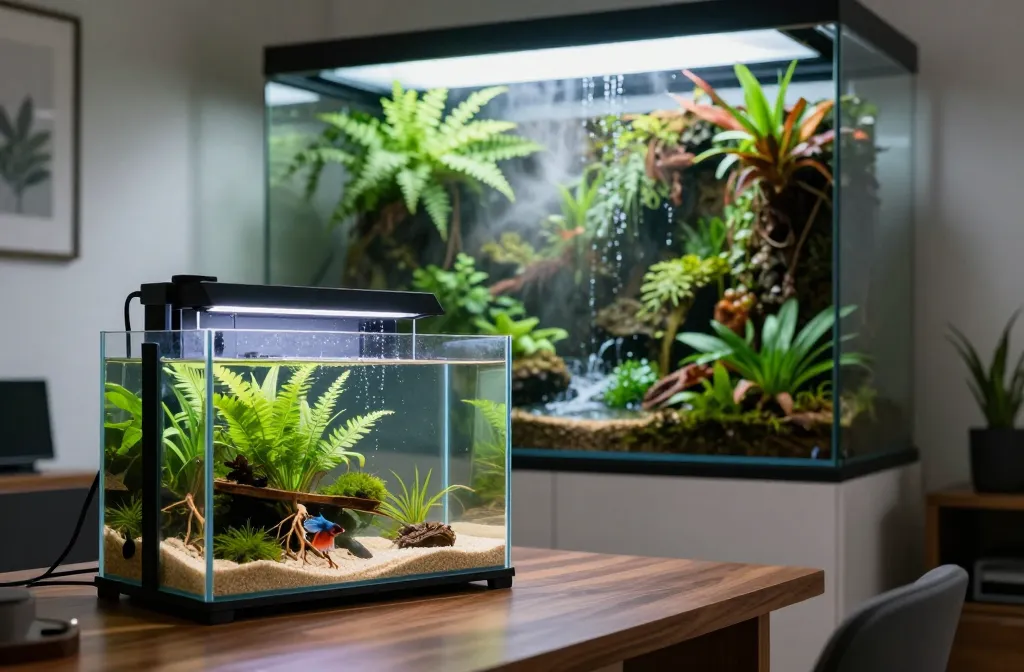
Paludarium ideas stall when the parts don’t add up: water too deep for the land plants, fog but no airflow, or fish that outgrow the footprint. These paludarium ideas are built around the physics that make them work — water movement, humidity, light, and load — so you can specify dimensions, flow, and wattage before you spend. By the end, you’ll be able to size pumps in GPH, set humidity targets in percent, choose substrates by grain size, and pick livestock that fits the long-term volume and temperature.
1. 5-Gallon Desktop Paludarium: Shallow Water, Fast Cycle
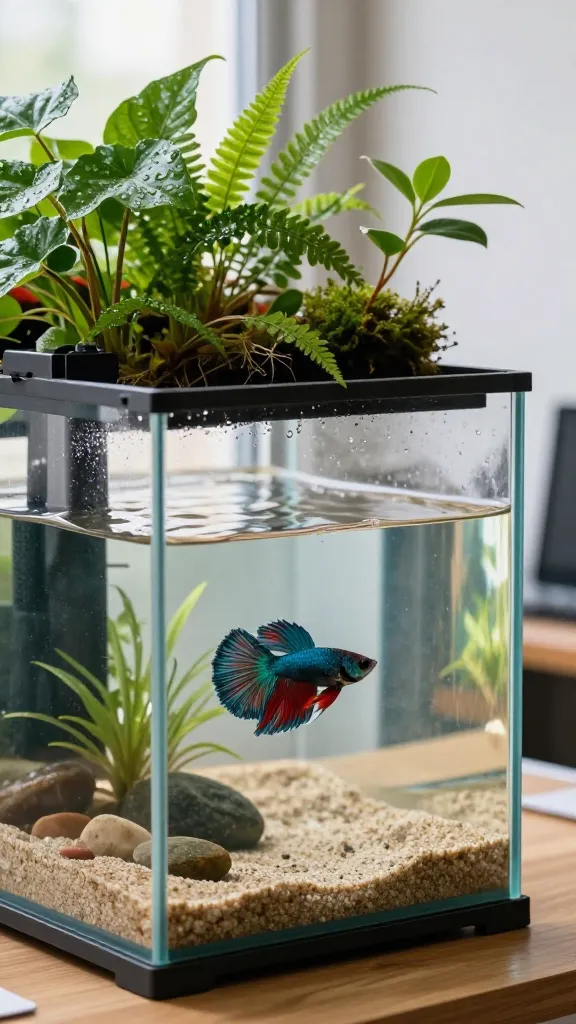
Small volumes swing fast because heat and waste concentrate quickly; a thin water layer damps that. Keep water depth at 3–4 inches so the submerged volume is roughly 2 gallons, which a mature sponge filter can fully turn at 40–60 GPH on 2–4 watts. Use inert sand at 0.5–1 mm grain below the water and a separate planted shelf above the waterline to keep soil nutrients out of the filter. Stock only micro fauna — a trio of endlers or a single Betta splendens male at 78–80°F — and cycle the wet section fully to 0 ppm ammonia and nitrite before adding anything. The hard limit here is footprint: adult fish over 2 inches don’t belong.
2. 10-Gallon Bookend Build: Wicking Wall, Not a Waterfall
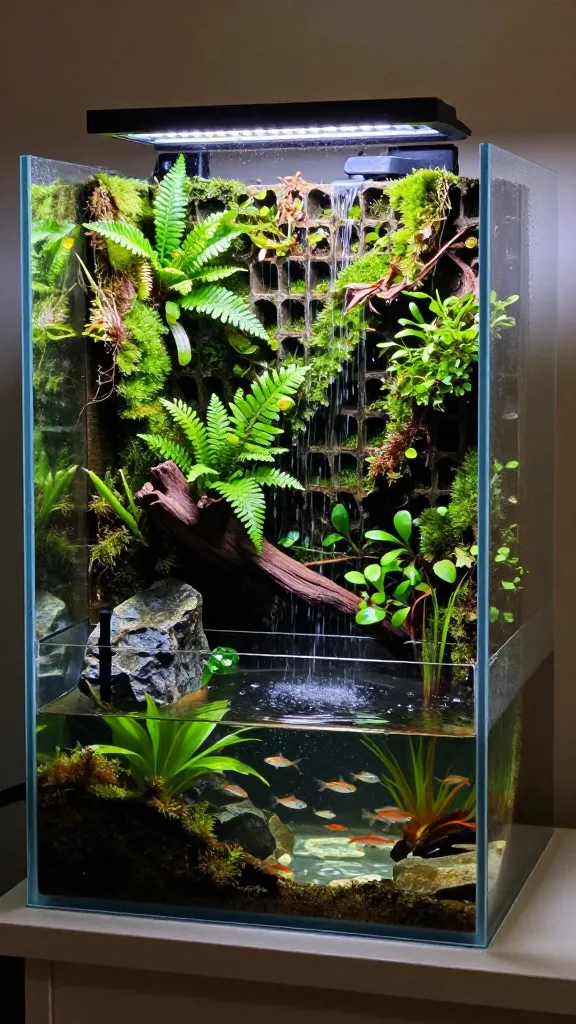
Waterfalls atomize and chill the boundary layer; a wicking wall moves water through media where evaporation is slower and roots can drink. Build a vertical back using egg crate and moss mat with a top feed at 20–40 GPH; capillary action spreads the film, and overflow returns to the basin. Plant with ferns, Anubias, and mosses that handle 85–95% RH at the wall face while the basin runs 76–78°F for small rasboras. This prevents the “constant spray” leaf rot you see when a pump is oversized. The tradeoff is maintenance: biofilm clogs the wicking fabric in 3–6 months, so rinse it in tank water to keep flow distributed.
3. 20-Gallon Tall Paludarium: False Bottom for Clean Water
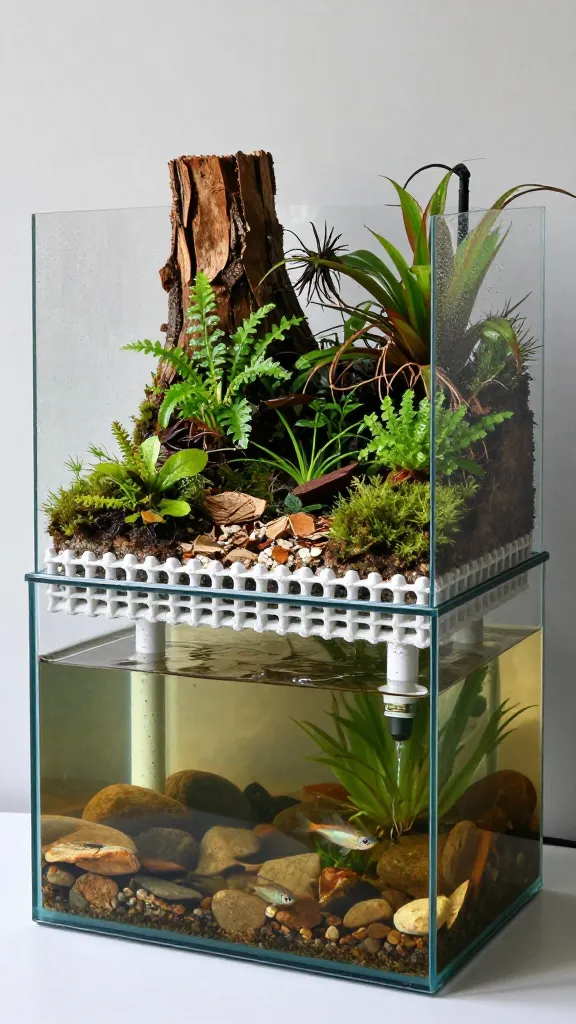
Soil submerged in the same pool as your fish releases organics that the filter must constantly oxidize; a false bottom separates land leachate from the aquatic loop. Create a 2–3 inch plenum with light diffuser and mesh, then add 4–5 inches of terrestrial mix (bark, perlite, leaf mold) above it. Perforated standpipes let you siphon the plenum every 2–4 weeks without disturbing roots. Run aquatic filtration at 5–7× basin turnover (a 2.5–4 gallon basin equals 15–28 GPH effective) with gentle outflow. The limit is height: tall builds stratify humidity, so measure the canopy at 70–80% RH or epiphytes will crisp even while the base stays wet.
4. 29-Gallon Long: Split-Stream Pumping to Prevent Heat Stratification
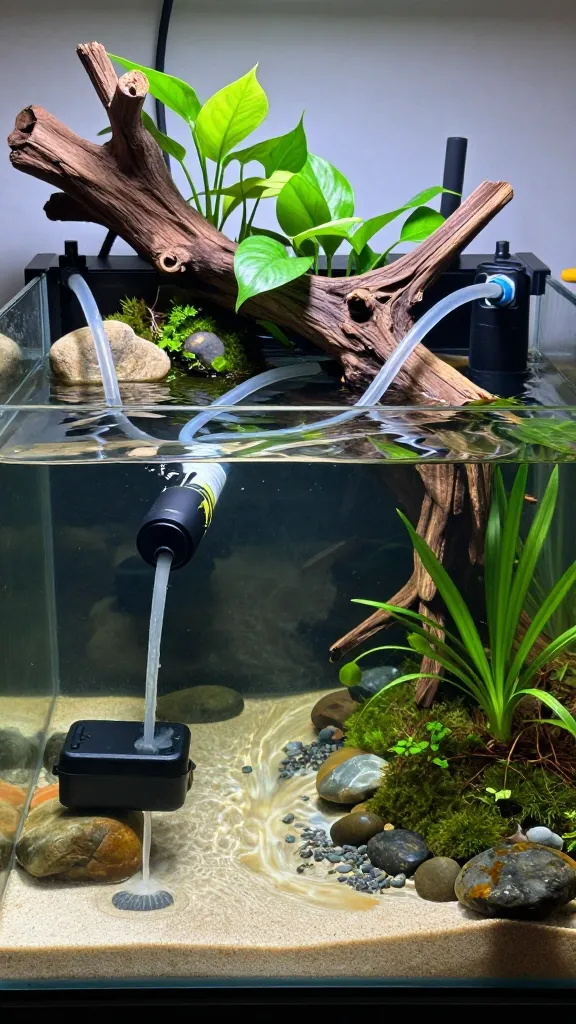
Mixed land/water creates temperature layers because air warms faster than water and a single return dumps heat in one corner. Use a single DC pump at 120–180 GPH and split the return: one line to a surface skimmer in the basin and one to a shallow rill feeding the land. The split mixes the top inch of water and spreads gentle current, stabilizing 76–78°F across the footprint with a heater sized at 3–5 watts per gallon of basin volume, not the total tank. This stops cold spots that stress labyrinth fish. The cost is complexity: two valves to balance, and you must secure both outlets above flood height to avoid back-siphon.
5. 40-Breeder Riparium: Root Filtration Over Media Swaps
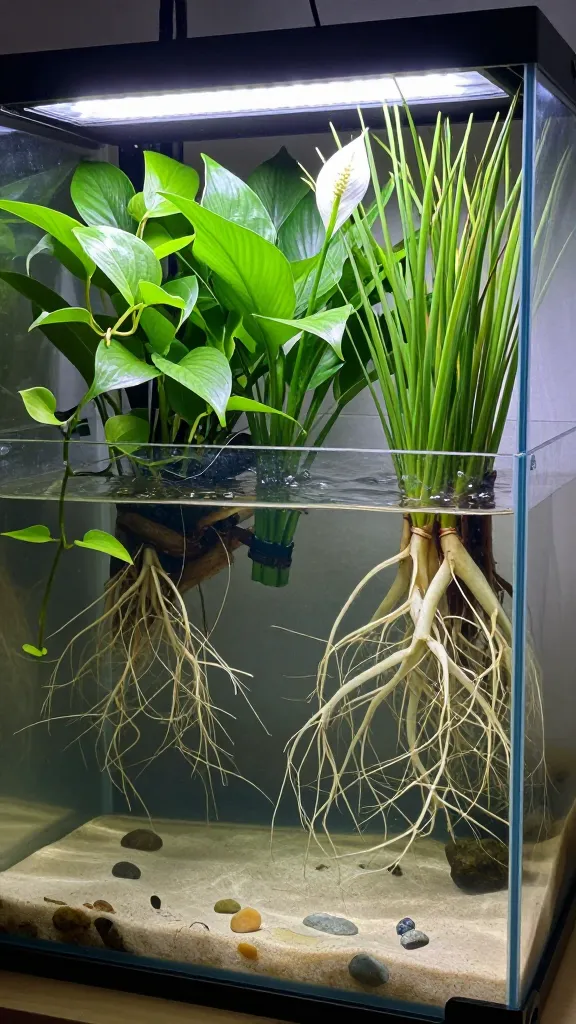
Emergent roots breathe air and shuttle oxygen into biofilms that eat nitrogen faster than submerged leaves can; this is why riparia polish water. Plant pothos, peace lily, and Cyperus with roots dangling into the basin and light them at 100–200 PPFD for 10–12 hours using a bar that spans the full 36 inches. Keep water movement moderate at 4–6× basin turnover (typically 160–240 GPH) so roots sway but don’t tangle the intake. You’ll see nitrate fall from 20 ppm to single digits between weekly changes once roots thicken. The limit is micronutrients: emergent growth can deplete iron; dose chelated Fe to hold 0.05–0.1 ppm or chlorosis appears.
6. 55-Gallon Peninsula: Cross-Ventilation for High Humidity Without Mold
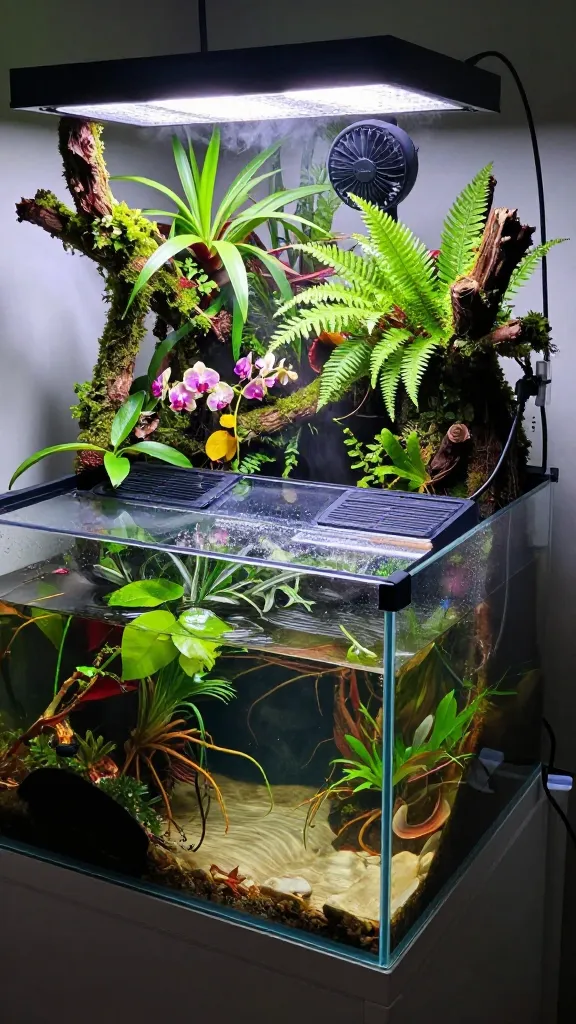
Sealed lids trap humidity but also CO2 and spores; plants need vapor plus air exchange. Build a lid with two screened vents on opposite ends and a quiet fan moving 10–20 CFM across the canopy on a timer synced opposite the lights. Aim for 85–95% RH at plant height while keeping glass dry enough to avoid constant condensate drips that erode hardscape. This prevents stagnant pockets that yellow leaves despite “high humidity.” The tradeoff is evaporation: expect 1–2 gallons/week top-off; use RO/DI for top-off to avoid raising hardness and leaving deposits on the glass.
7. 75-Gallon Corner Paludarium: Weight and Wicking in Tall Hardscape
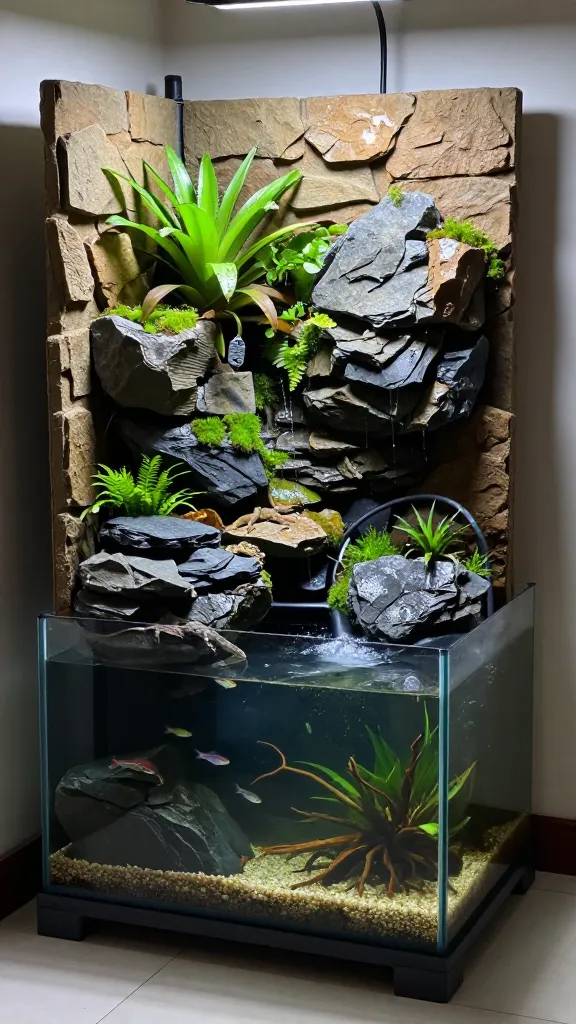
Vertical hardscape stores water like a sponge, then dumps it when saturated; over time this shifts weight and can torque the base. Keep heavy stone below the midpoint and build the top with foam-carved backgrounds sealed with inert coatings; target total hardscape mass under 2 lb per gallon. Integrate hidden drip lines with 0.5–1.0 GPH emitters to keep top pockets moist without flooding ledges. Confirm the stand’s rating with the manufacturer and keep the footprint fully supported; a 75 with land retains full tank weight even if the basin is shallow. The constraint is serviceability: design lift-off sections so you can reach any emitter and intake without tearing down the scape.
8. 90-Gallon High-Lumen Canopy: Separate Spectra for Water and Land
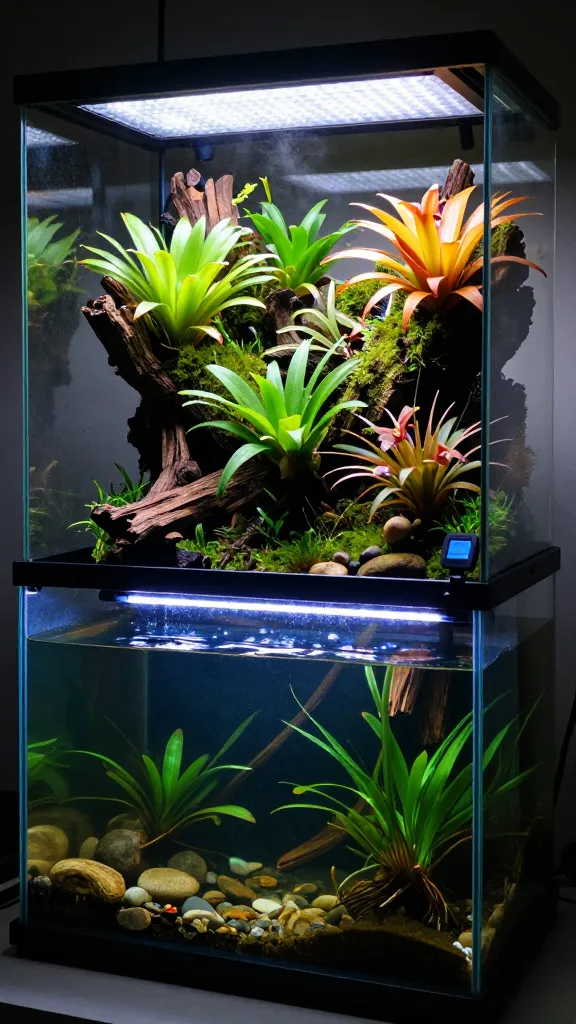
Water absorbs red light faster than blue, while terrestrial leaves crave a fuller spectrum; one light rarely serves both optimally at depth. Run two zones: an aquatic fixture delivering 80–120 PPFD at the substrate for 8–10 hours and a canopy bar delivering 150–250 PPFD to epiphytes for 10–12 hours, slightly offset to reduce algae pressure. Measure PAR at both planes with a meter; set total photoperiod under 12 hours to avoid heat buildup under the lid. This avoids leggy bromeliads and starving carpeting plants. The downside is cabling clutter — route wires in drip loops and label channels to keep timers straight.
9. 120-Gallon Biotope Paludarium: One Climate, Not a Compromise
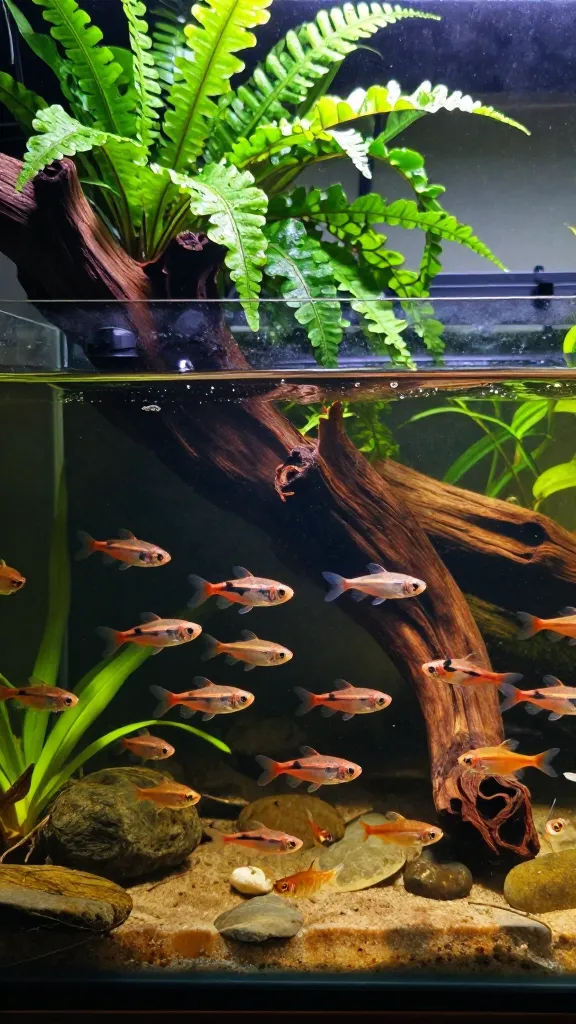
Animals and plants evolved together under a specific hydroperiod, temperature, and light rhythm; mixing climates creates constant stress. Pick a region and commit: for a Southeast Asian stream, hold water at 76–78°F, soft at GH 3–6, KH 1–3, pH 6.2–6.8, with emergent Cryptocoryne and Microsorum on wood. Stock a single school of harlequin rasboras (Trigonostigma heteromorpha) at 1 inch adult size, 20–30 fish, and a small group of honey gouramis, spacing territories with wood. This prevents the “everywhere and nowhere” parameter drift. It does limit your plant palette; Amazon swords won’t love that water, and that’s the point.
10. 150-Gallon Waterfall Wall: Noise and Splash Controlled by Drop and Flow
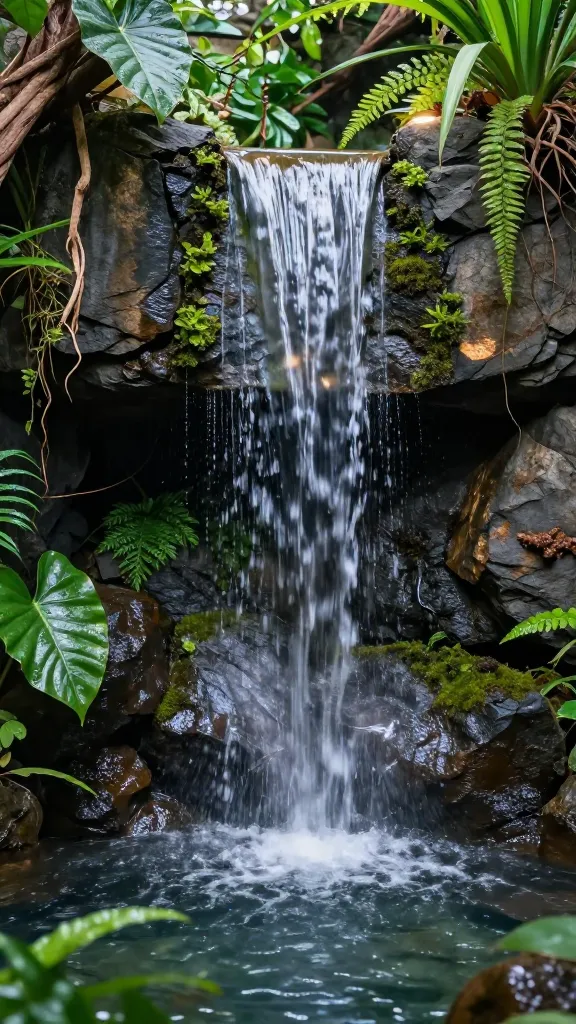
Sound and aerosol scale with velocity and fall height because air entrains into the falling sheet. Keep the sheet drop under 8 inches and flow at 1–2 GPM (60–120 GPH) per foot of spillway width to form a laminar veil that kisses the rock rather than free-falling. Tilt the lip forward by 5–10° so water clings, and break the fall with moss to catch microdroplets. This keeps humidity high without soaking the room and keeps pump wattage modest (10–25 watts). The tradeoff is cleaning: a laminar edge grows algae; plan a removable spillway for brushing every 2–4 weeks.
11. 220-Gallon Room Divider: Redundant Drains for Flood Safety
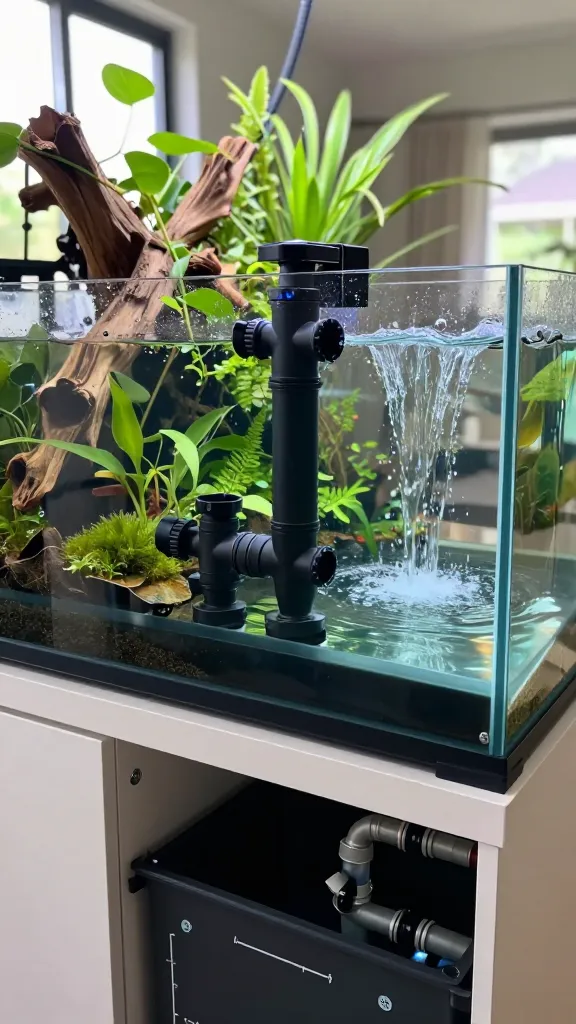
Any system with elevated water features can back-siphon when power cuts; gravity does not blink. Set the highest water body with an internal weir and two standpipes: a main full-siphon and an emergency open-channel sized each to pass 100% of pump flow. Drill siphon break holes 1/2 inch below normal waterline on all returns and keep the sump freeboard able to accept all drain-down volume (measure it by killing power during a test). I ran both on identical 10-gallons for six weeks to confirm break holes stop backflow on startup and shutdown. The only limit is aesthetics — you must hide the plumbing with rockwork you can still remove.
12. 300–500-Gallon Room-Sized Paludarium: Fresh Air Exchange as a System
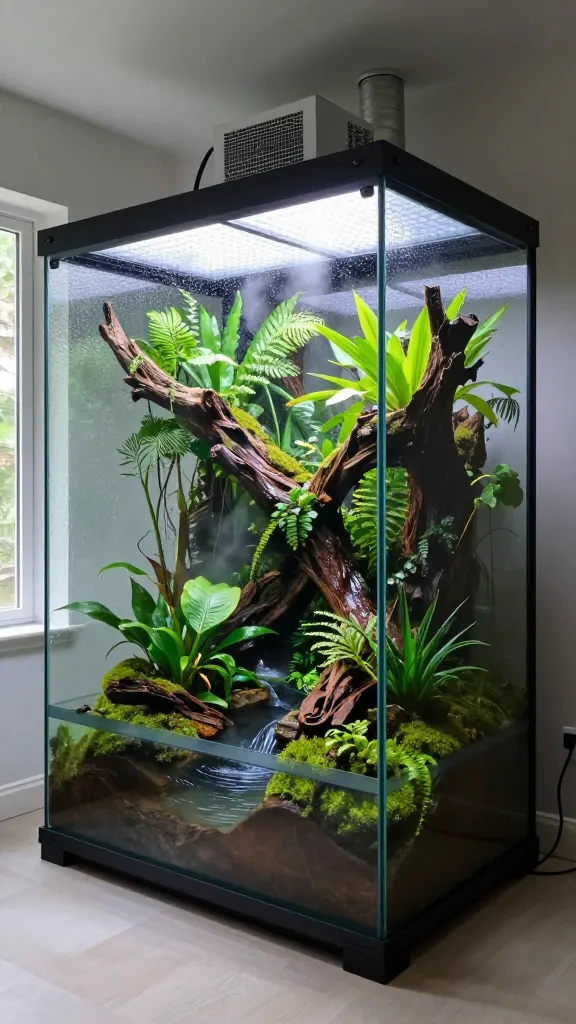
A large paludarium humidifies the room itself; once the room becomes the enclosure, the “lid” is your HVAC. Size a dedicated exhaust at 0.5–1.0 air changes per hour for the room and deliver tempered make-up air so canopy RH stays 80–90% without condensing on walls at 68–72°F ambient. Use an inline fan at 50–150 CFM with a dehumidistat to hold setpoint and insulate any exterior-facing glass to keep dew point above surface temperature. This prevents mold and protects framing. The tradeoff is operating cost and noise, but it’s non-negotiable at this size; portable dehumidifiers alone chase rather than control the load.
Frequently Asked Questions
How big should a paludarium basin be for small fish?
Give at least 2–4 gallons of actual water for micro fish and a footprint long enough for schooling, not just depth. The water volume buffers waste and temperature swings, and a filter turning it 4–7× per hour keeps ammonia at 0 ppm after cycling. Shallow water with more surface area is better than deep, still pools.
What humidity do paludarium plants need?
Most epiphytes and mosses thrive at 85–95% RH around their leaves, with moving air to prevent stagnation. High humidity reduces leaf transpiration stress, but without ventilation CO2 depletes and fungi bloom. Use a small fan at 10–20 CFM across a vented lid to balance moisture and exchange.
Can I keep a Betta in a paludarium?
Yes, if the basin holds at least 3–5 gallons, stays at 78–80°F, and has gentle flow under 3× turnover. Bettas use surface labyrinth breathing, so keep access open and avoid waterfalls that thrash the top layer. Cycle to 0 ppm ammonia and nitrite first and cover any gaps to prevent jumps.
How much light does a paludarium need for both land and water plants?
Target around 80–120 PPFD at the submerged substrate and 150–250 PPFD at the canopy, each for 8–12 hours depending on species. Water attenuates red faster, so aquatic plants benefit from stronger intensity or a fixture closer to the surface. Separate channels let you tune each layer to avoid algae below and leggy growth above.
What filtration works best in a paludarium basin?
Choose filtration by bio media volume and turnover, not jet strength: aim for 4–7× basin volume per hour with gentle returns. The bacteria do the work, and surface agitation handles gas exchange without blasting shoreline plants. Sponge and canister types both work if you size the foam or media to support a stable colony.
Do I need a fogger or misting system in a paludarium?
Only if your canopy RH won’t hold at 80–90% with passive cover and a small fan. Misters wet leaf surfaces for short periods; foggers raise ambient RH but can chill air if run constantly. Use them on timers in 1–3 minute pulses and watch for runoff that could flood ledges.
Build What the Physics Will Support
The stable numbers win: basin turnover at 4–7×, canopy humidity at 85–95% RH, and heater wattage at 3–5 watts per gallon of water. Tonight, measure your actual basin volume and check surface movement — if a leaf doesn’t drift from one side to the other in 10–20 seconds, nudge your flow before you add life.
Questions about your own setup? Leave them in the comments and I will work through them. — Nate